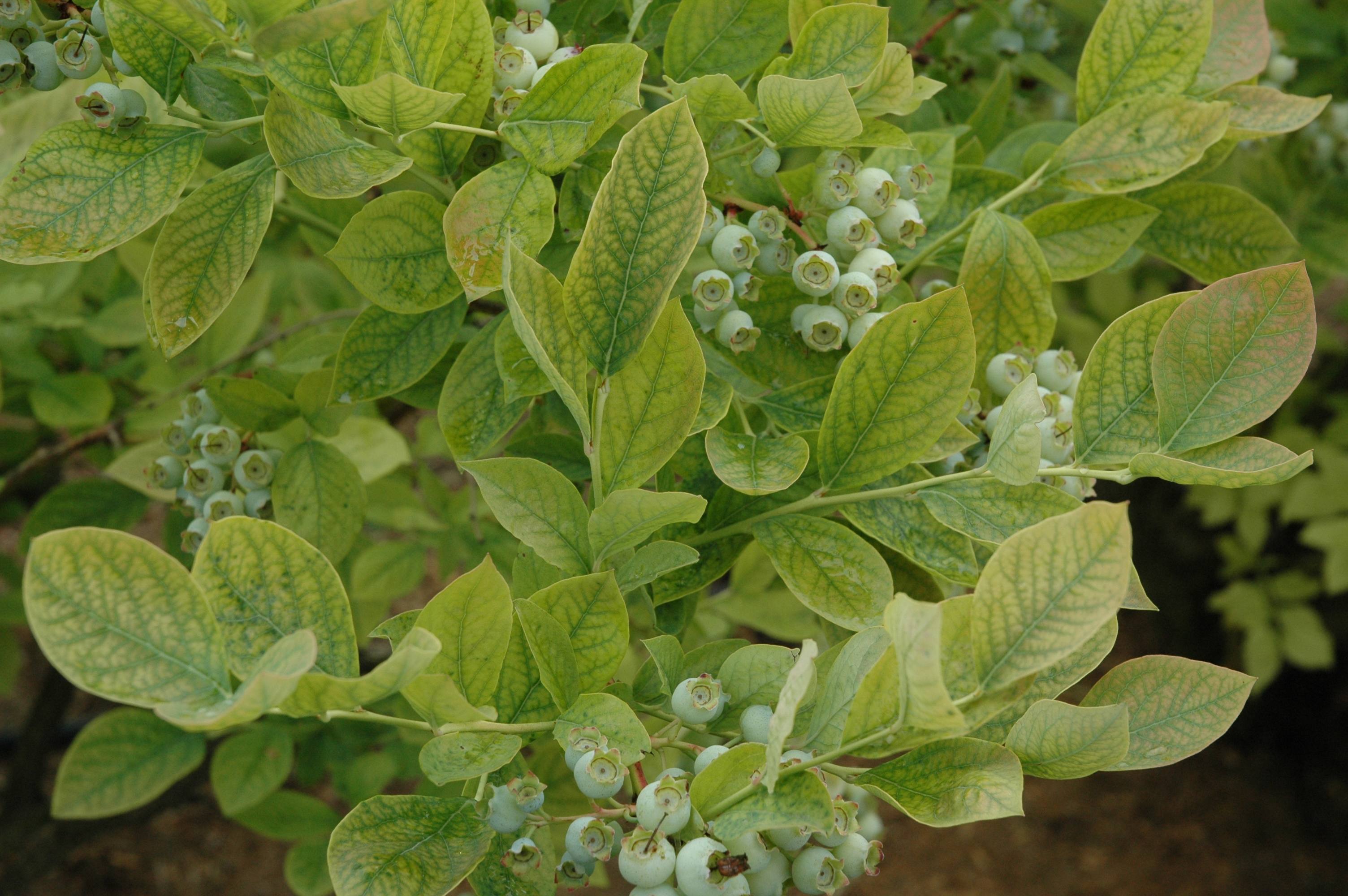
These are symptoms of iron chlorosis between the leaf veins of blueberry due to a high soil pH.
Jay W, Pscheidt, 2008.
A plant tissue characterized by frequent cell division, producing cells that become differentiated into specialized tissues.
The dikaryotic spore of a rust fungus produced in an aecium; in heteroecious rusts, a spore stage that infects the alternate host.
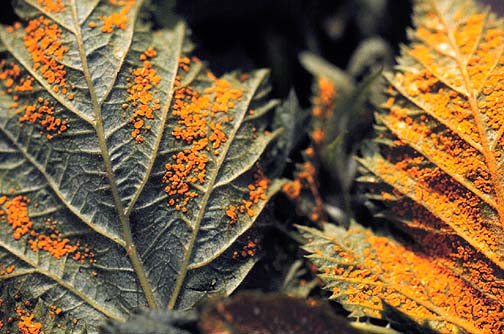
Note the bright orange aecia on 'Kotata' blackberry.
Photo by Jay W. Pscheidt, 1997.
A pore; opening in the papilla or neck of a perithecium, pseudothecium, or pycnidium through which spores are released.
The exploitation of the natural competition, parasitism and/or antagonism of organisms for management of pests and pathogens.
Having several to many disease cycles in a growing season (contrasts with monocyclic).
The noncellular outer layer of an insect or a nematode; water-repellent, waxy layer of epidermal cells of plant parts, such as leaves, stems, and fruit.
A disease symptom characterized by short, bunchy growth habit due to shortened internodes and no comparable reduction in leaf size.
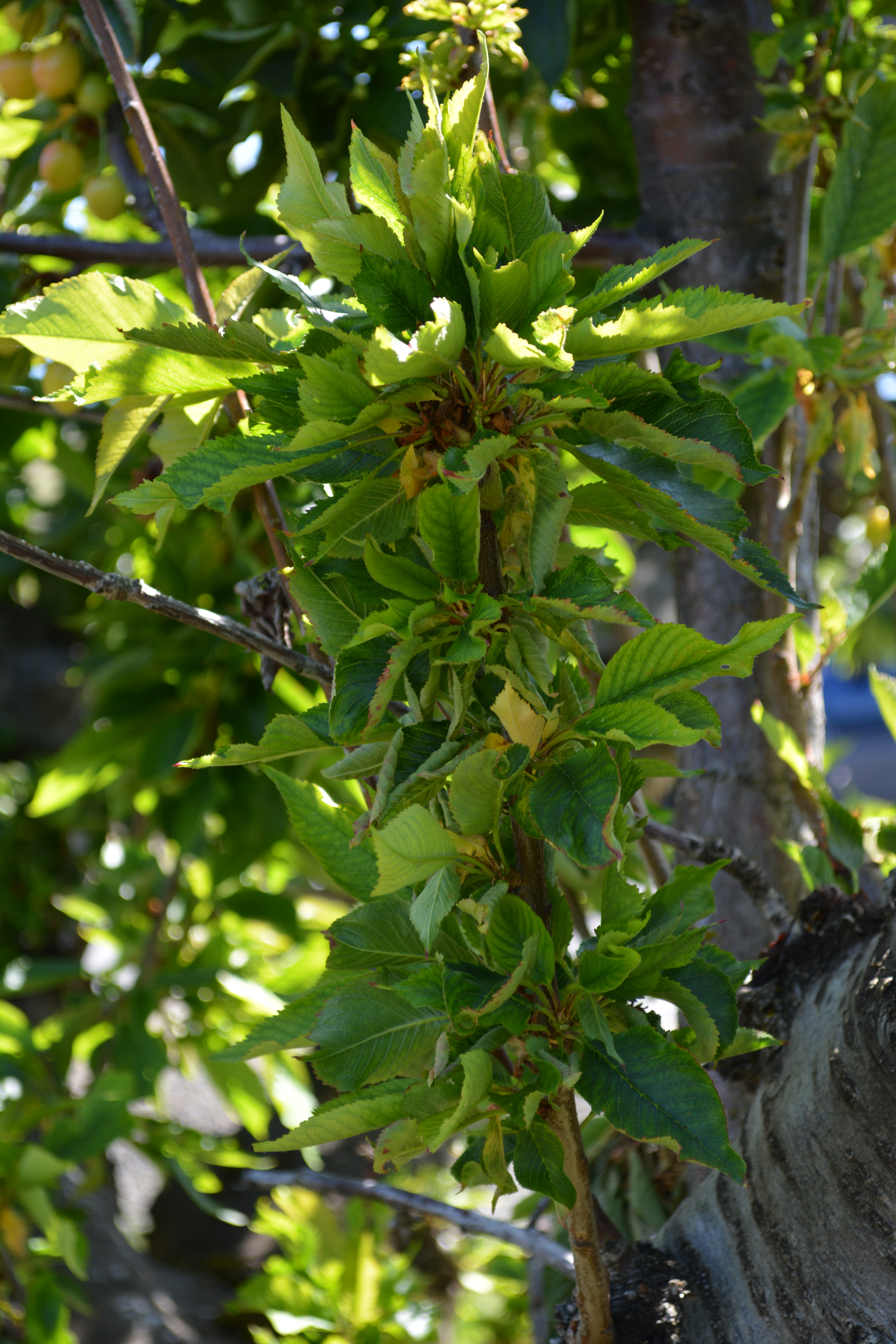
Bunchy growth of cherry shoots due to multiple virus infection.
Lauri Reinhold, 2016.
a serological test in which the sensitivity of the reaction is increased by attaching an enzyme that produces a colored product to one of the reactants.