A crop plowed under while still green and growing to improve the soil; sometimes used to enhance populations of antagonistic microorganisms for biological control.
A distinct form of an organism or virus within a species, differs from other forms of the species biologically, physically, or chemically.
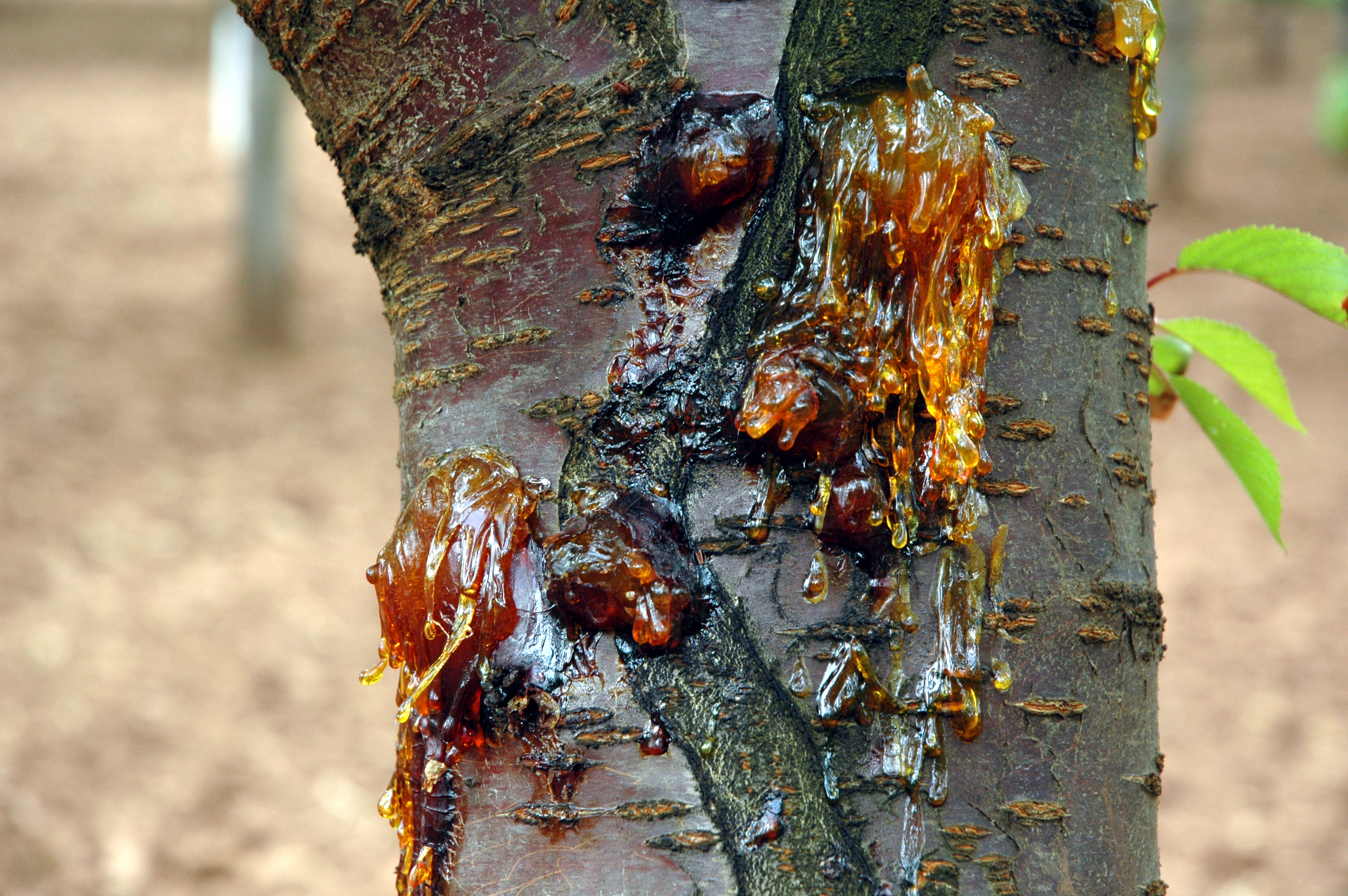
A pathologic condition in stone fruits characterized by excessive formation of gums exuding from buds, twigs, branches, or trunks.
Gumming due to bacterial canker on either side and in the middle of a score mark meant to manage the disease.
Jay W. Pscheidt, 2007.
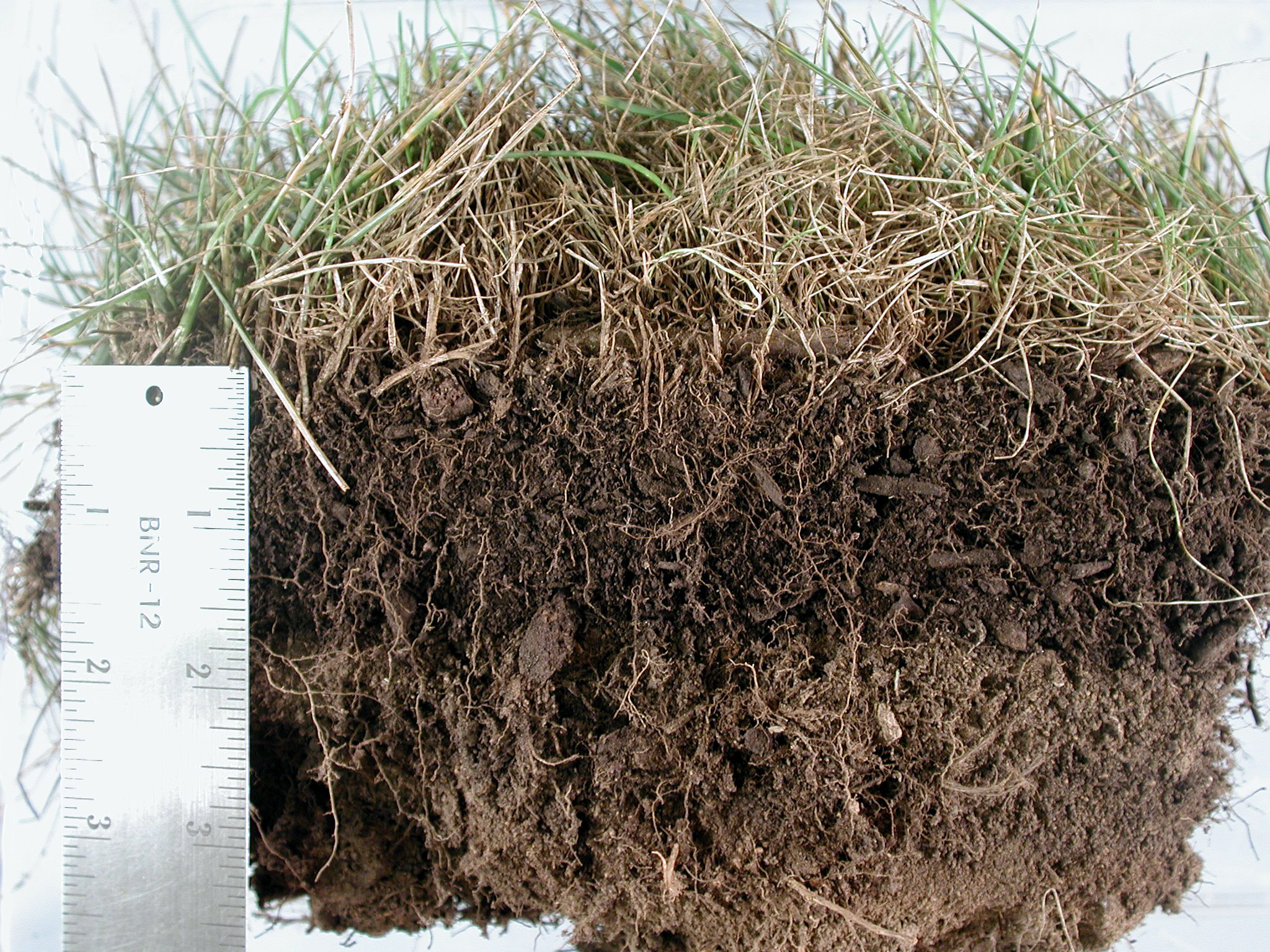
The tightly intertwined layer of plant litter (lawns and turf) from accumulations of undecomposed or partially decomposed plant residues.
The darker brown thatch layer in this image is almost 2 inches thick.
Melodie Putnam.
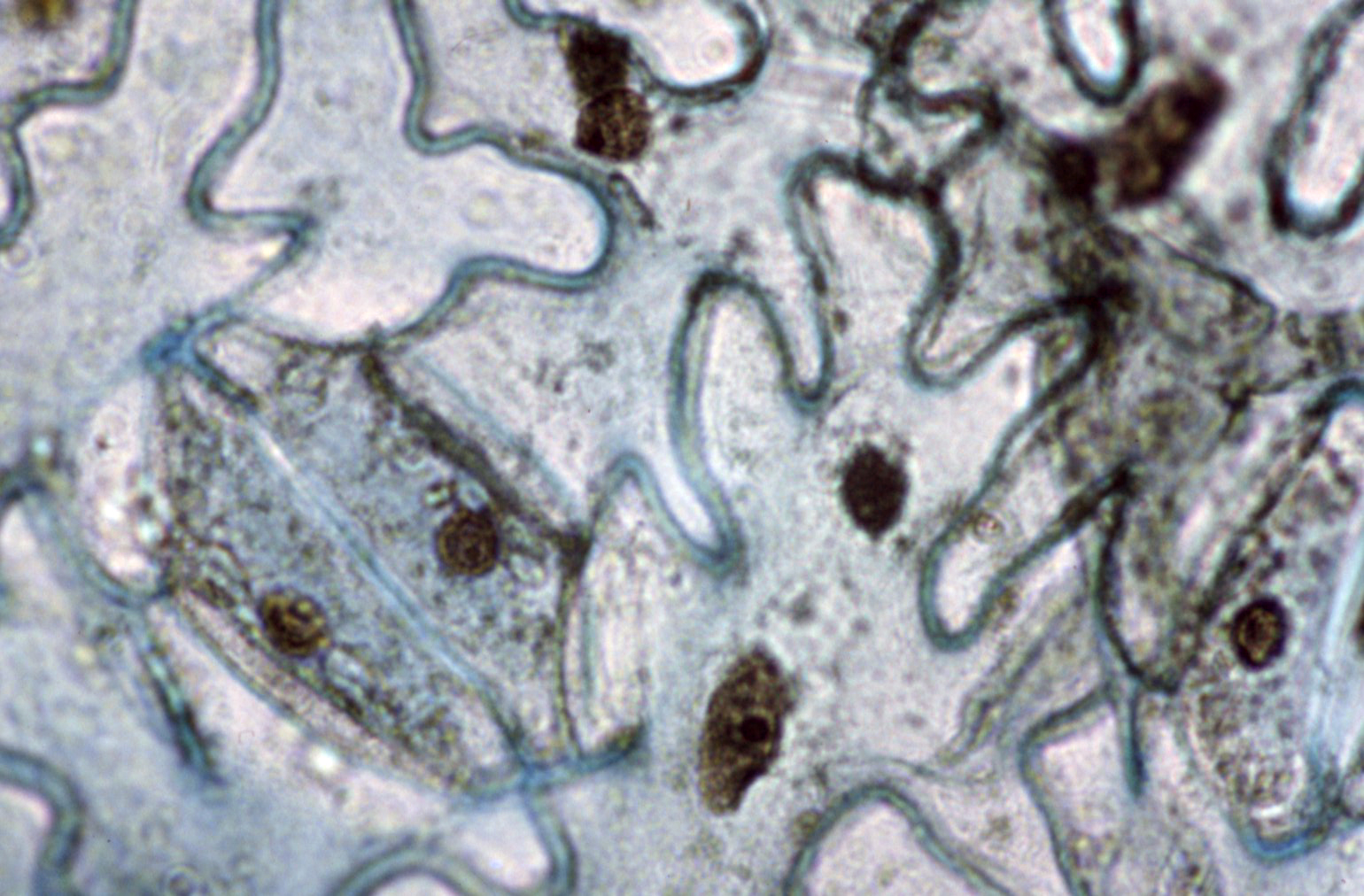
A structure developed within a plant cell as a result of infection by a virus, often useful in identifying the virus.
Inclusion bodies in pepper due to AMV. In this image you can see epidermal cells throughout and a stomate on the left side. Dark bodies are accumulations of virus and/or components of the virus.
Melodie Putnam, 1994.
a cylinder of meristematic cells (lateral meristem) that produces secondary phloem to the outside and secondary xylem (wood) to the inside of a branch or trunk of a woody plant.
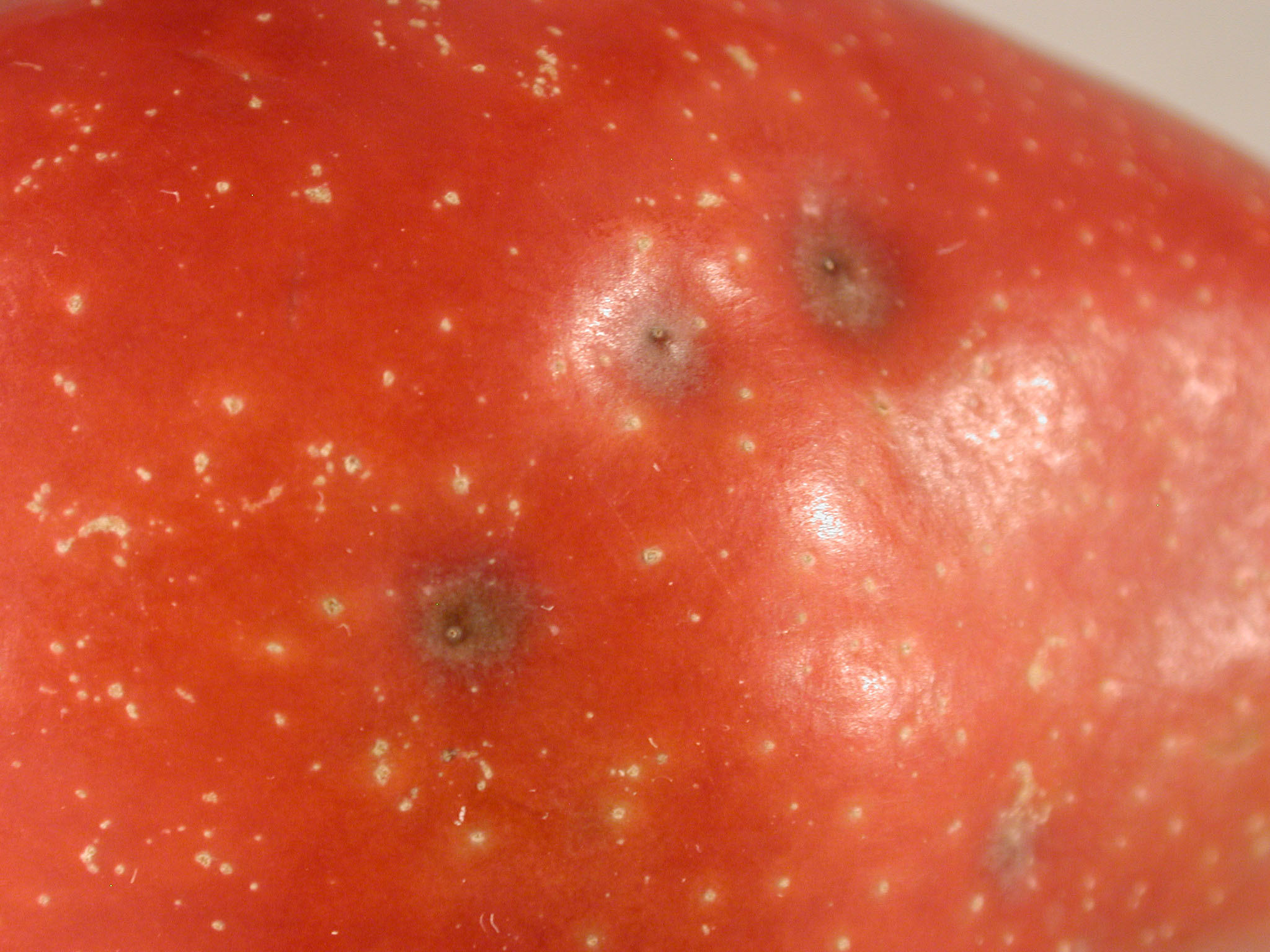
A natural opening in the surface of a fruit, root, stem, or tuber for gas exchange.
White dots on this apple are lenticels while the necrotic depressed spots are due to bitter pit.
Melodie Putnam, 2009.
A swelling or blistering on leaves and other plant parts under conditions of high moisture and restricted transpiration (see also edema).
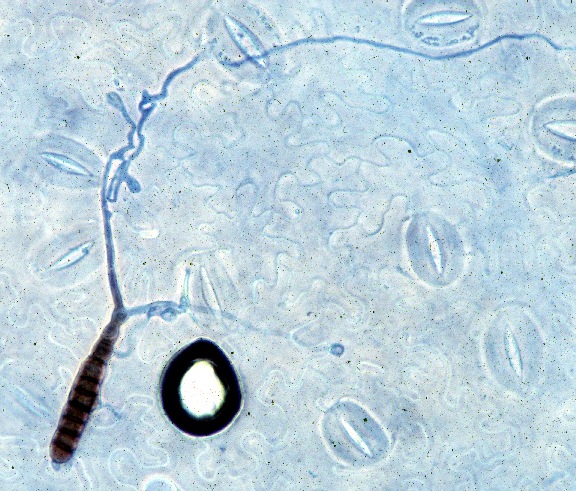
a swollen, flattened portion of a fungal hyphae that adheres to the surface of a plant, providing anchorage for penetration into the tissue.
Conidium of Alternaria solani that has germinated on a potato leaf surface and formed several appressoria. (Dark elongate structure is the conidium while the dark circular object is an air bubble.)
Jay W. Pscheidt, 1980's.
A subdivision of a plant-pathogenic bacterial species defined by host range; pathovar for bacteria is equivalent to forma specialis for fungi.