The microenvironment in the soil, immediately around roots.
A swelling or blistering on leaves and other plant parts under conditions of high moisture and restricted transpiration (see also oedema).
A necrotic condition in which tissue is usually bleached and has the appearance of having been exposed to high temperatures.
Native to a particular place; pertaining to a low and steady level of natural disease occurrence.
A disease control practice in which soil is covered with plastic sheeting and exposed to sunlight, thereby heating the soil and inhibiting or killing soilborne plant pathogens.
Laying out the tarp to trap sunlight.
Larry Moore collection 1995.
A chemical substance produced in one part of an organism and transported in minute quantities to induce a growth response in another part, such as auxins, cytokinins, and gibberellins. Some fungicides induce a growth-regulation response when applied to plants.
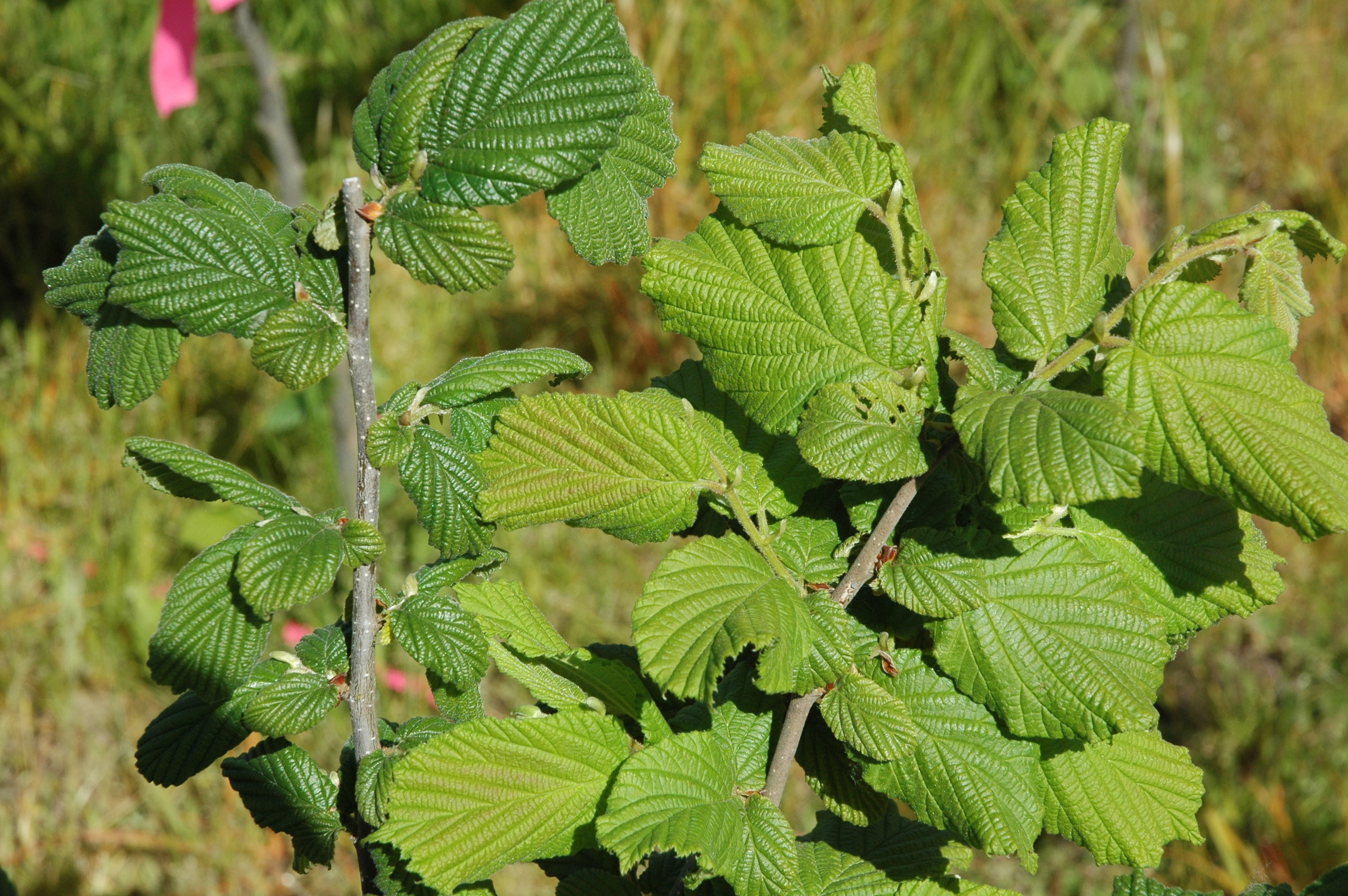
Plant Growth Regulator (PGR) effect on hazelnut from use of a group 3 fungicide. PGR effect results in darker green, smaller leaves and shoots with shorter internodes.
Jay W. Pscheidt.
To convert into cork tissue.
The exudation of watery, sticky liquid from hydathodes, especially along leaf margins.
The water (guttation) droplets you see on the edge of these leaves are coming out of hydathodes.
Jay W. Pscheidt, 2010.
A plant epidermal hair, of which several types exist.