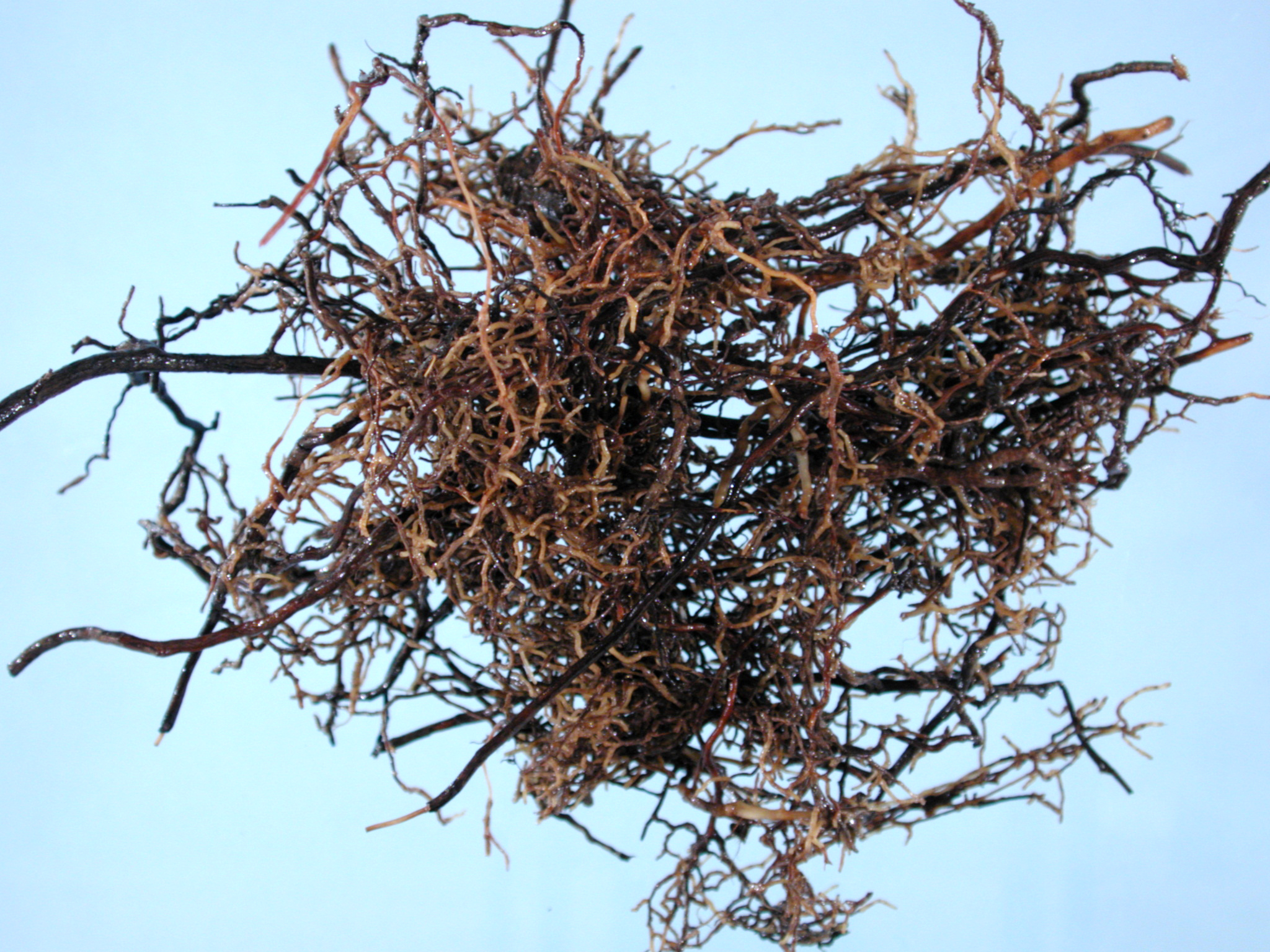
Cause There are several different root rot causing organisms occur on Viburnum with Phytophthora spp. and Rhizoctonia sp. being found most often. These soil-borne pathogens initially infect small feeder roots, and then spread to the main roots. Plant crowns may be invaded if conditions remain conducive for spread.
Phytophthora root rot on Viburnum × juddii (or Judd Viburnum).
OSU Plant Clinic Image, 2014.
Rhizoctonia root rot on Viburnum 'Spring Bouquet'.
OSU Plant Clinic Image, 2016.
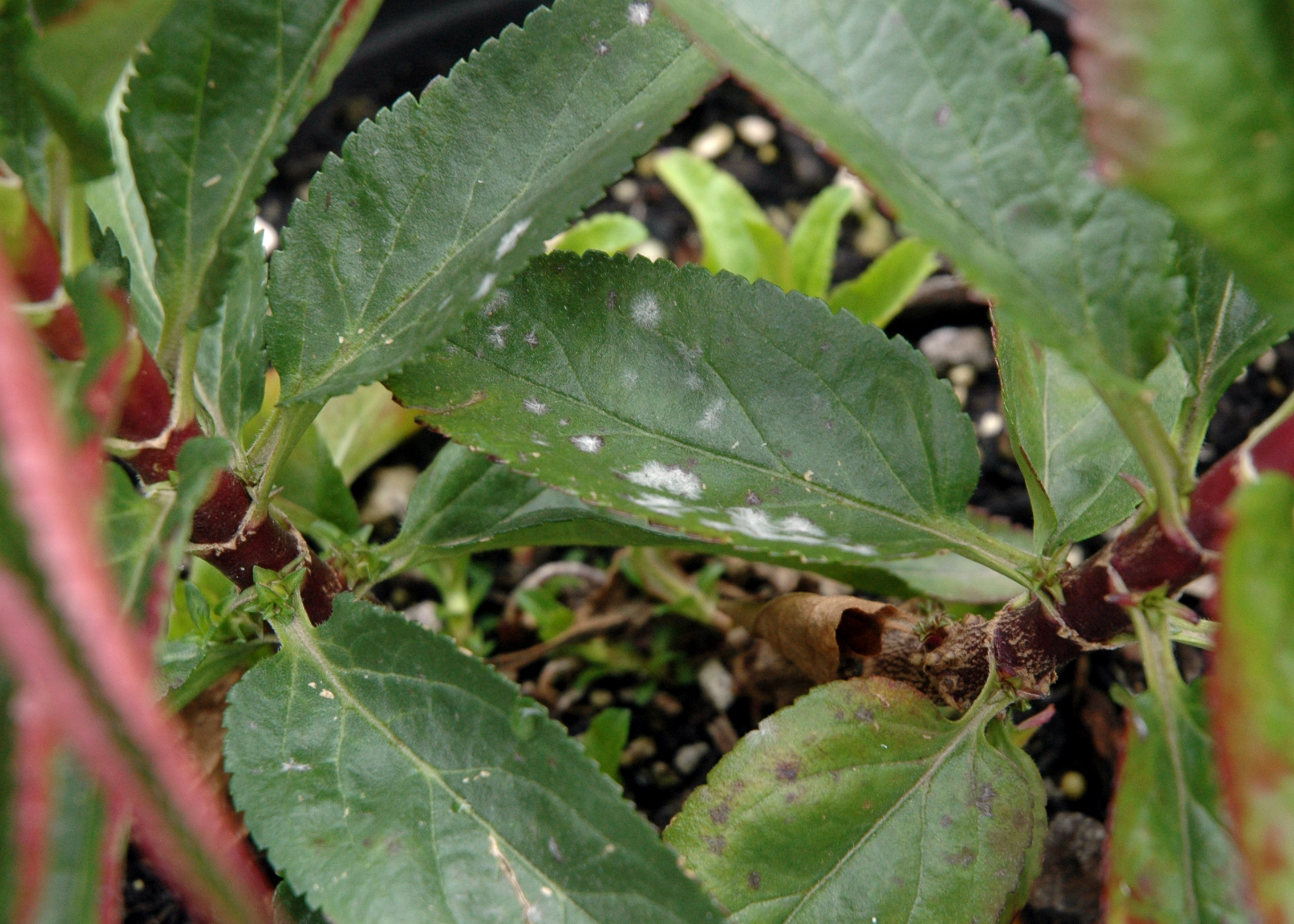
Cause Sphaerotheca sp. has been reported in Oregon and found a few times by the OSU Plant Clinic. This is a highly specialized pathogen that form a close association with the host. Conditions that favor the host also tend to favor the pathogen. The disease is favored by low light, warm conditions (60°F to 80°F) and cool nights. Overcrowding of plants is also favorable for disease development.
Powdery mildew will appear as white patches on leaves.
Jay W. Pscheidt, 2018.
On some cultivars purplish patches are seen on the upper side of leaves.
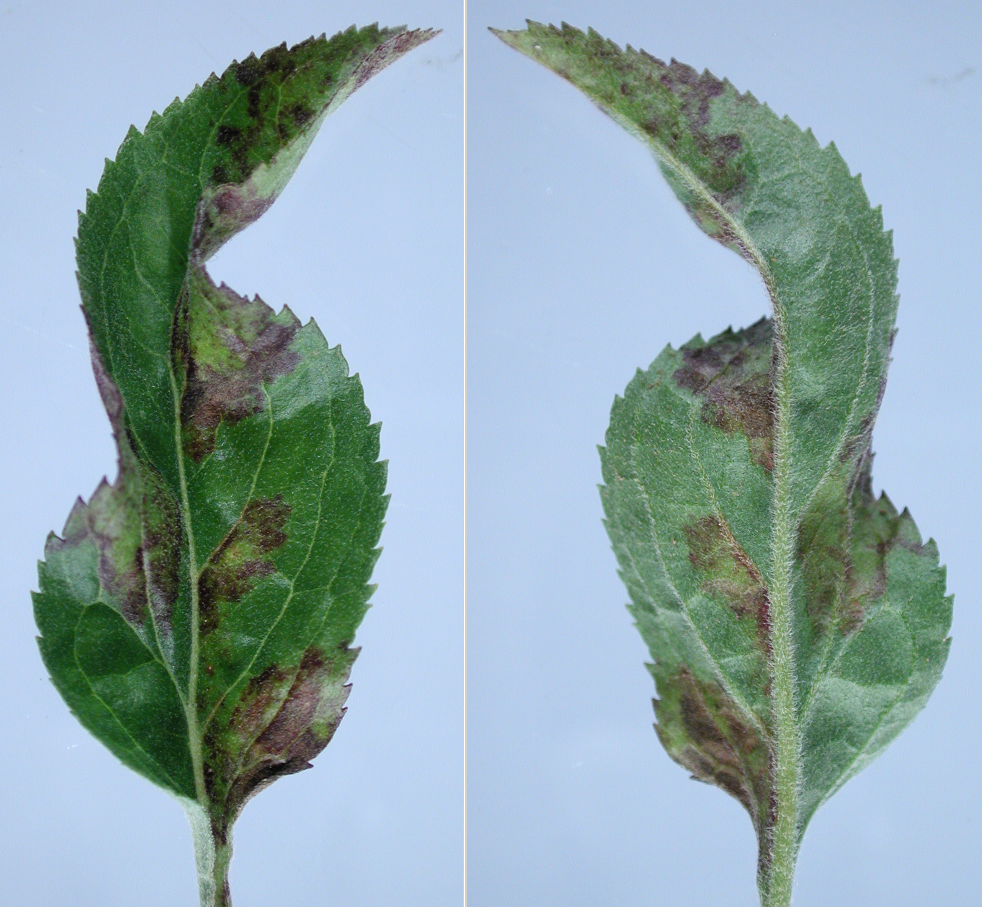
Cause Peronosporagrisea, a fungus-like organism. Moist or very humid conditions favor sporulation and disease development. Spores are dispersed by wind and splashing water. Spores germinate and infect when free water is present on the leaves.
Angular purple lesions on the upper (left) and lower (right) leaf surface of cultivar 'Purple Explosion'.
OSU Plant Clinic Image, 2013.
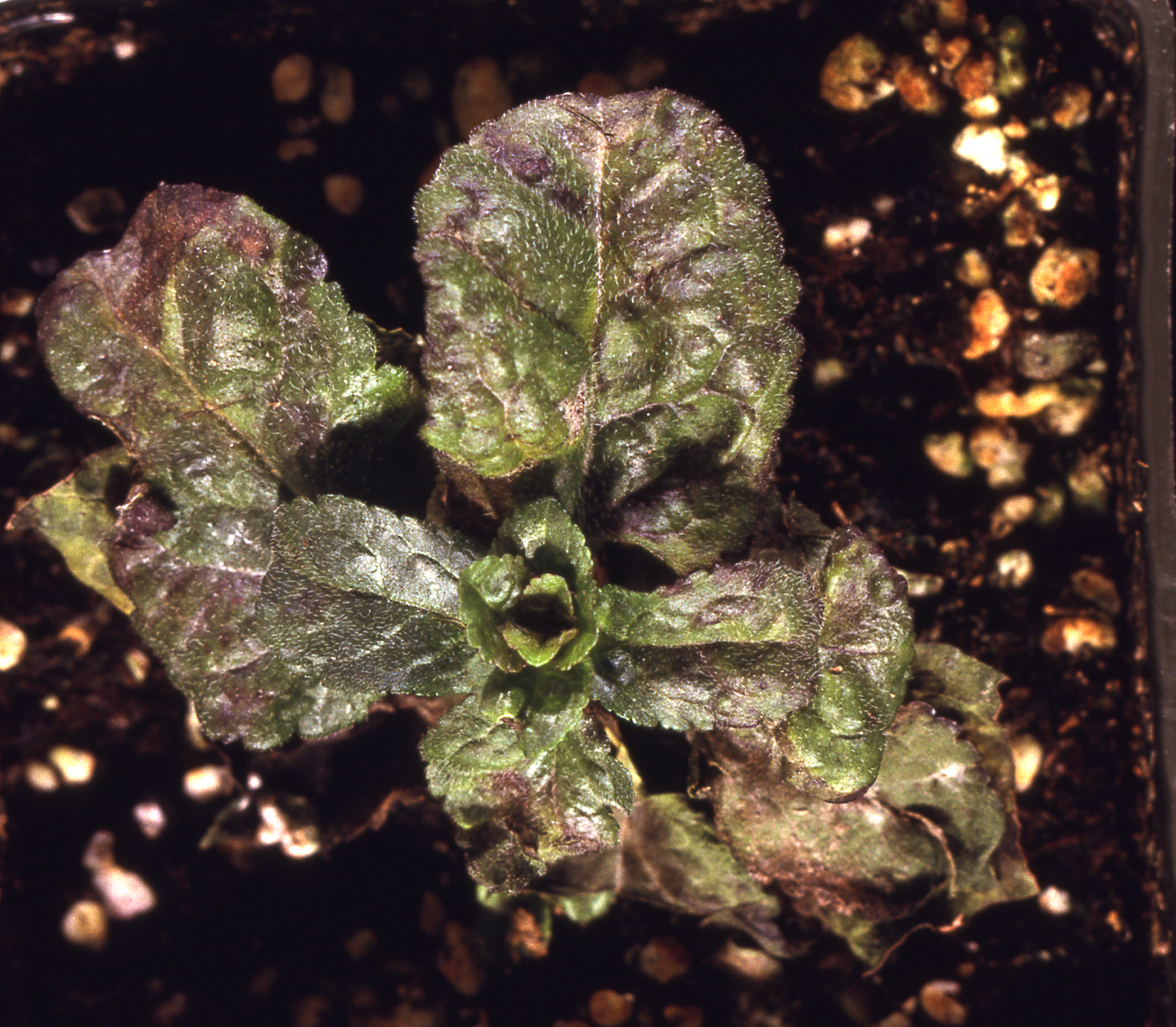
Downy mildew may start on the lower leaf surfaces.
OSU Plant Clinic Image, 2013.
Shoots may be stunted.
OSU Plant Clinic Image, 2015.
See:
Seed Crop, Crucifers (Brassica, Eruca, and Raphanus spp.) - Alternaria Diseases (Black Spot, Gray Leaf Spot, Pod Spot
Pod from a radish seed plant showing the dark lesions characteristic of black spot.
Photo by Cynthia M. Ocamb, 2011.
Cause Passalora dubia, a fungus that can survive in plant debris. Spores produced on affected leaves are disseminated by wind. Common lambsquarters can also be infected.
Symptoms Oval, brown to grey-black lesions with darker brown, reddish margins develop on leaves.