Plant Disease Management Handbook

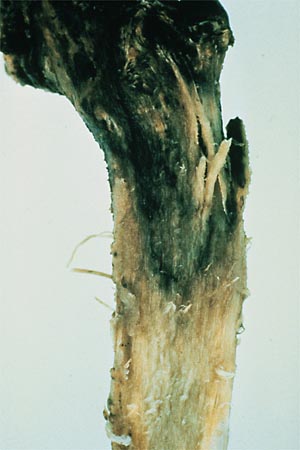
Cause Pratylenchus spp., chiefly P. penetrans, are migratory endoparasites; part of the population is in the soil and part in the roots at all times.

Symptoms Stunted plants in patches in the field. Dead spots or lesions are on roots, and the root system is reduced in size.
Cause Meloidogyne spp. are soilborne nematodes with a wide host range. Many weeds such as dandelion and nightshade are alternate hosts. Most root-knot nematodes on alfalfa in the Pacific Northwest are northern root-knot nematode (M. hapla).

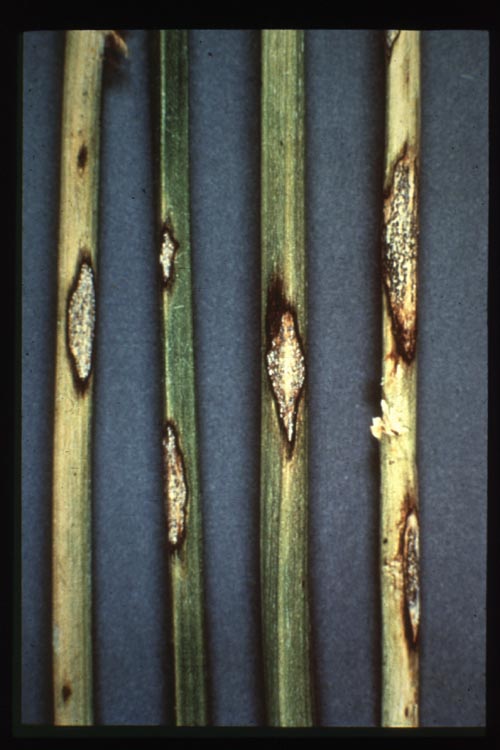
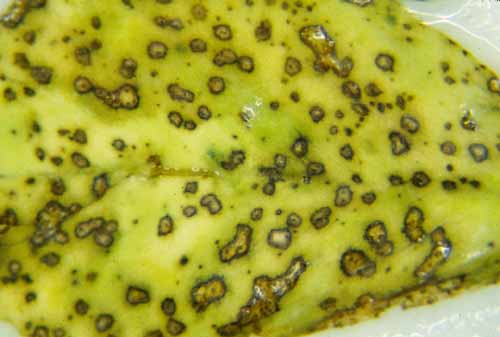
Cause Several fungal leaf spots occur on alfalfa.

Image related to Alfalfa (Medicago sativa)-Leaf Spots and Blotches

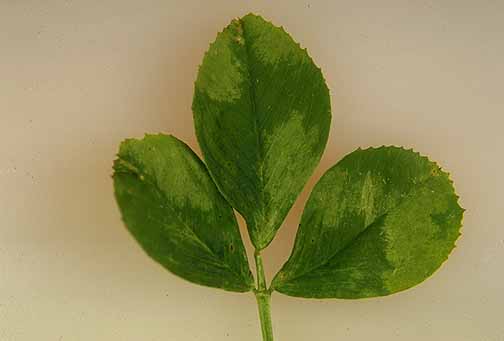
Cause This disease, caused by the fungus-like microorganism, Peronospora trifoliorum, is favored by cool, wet springs. Losses usually are restricted to the first cutting, and severe damage is seldom noted. The fungus overwinters in crown buds or as dormant spores in old, dead leaves. Only young tissue is susceptible to this fungus.

Image related to Alfalfa (Medicago sativa)-Downy Mildew

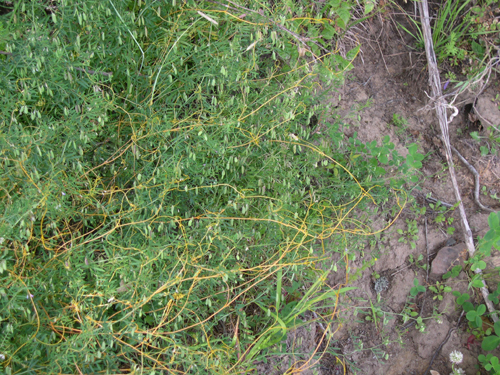
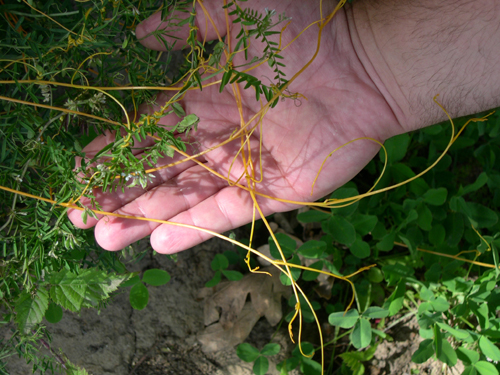
Cause Annual, parasitic seed plant belonging to the genus Cuscuta, which lives on alfalfa and other plants including commercial crops and weeds. Dodder plants have rootless, leafless stems that encircle and penetrate alfalfa stems, diverting host nutrients. Dodder is favored by high temperatures and full sunlight. Dodder seed can remain viable in the soil for 20 years. Dodder seeds are gray to brown, irregularly round with a rough surface texture, and are similar to clover and alfalfa seed in density.

Image related to Alfalfa (Medicago sativa)-Dodder

Cause Several soil fungi or fungus-like microorganisms can cause damping-off including Pythium spp., Rhizoctonia solani, and Fusarium acuminatum. The fungi can persist on infected plant debris or as saprophytes on other plant species. Conditions unfavorable for seedling growth promote the disease.

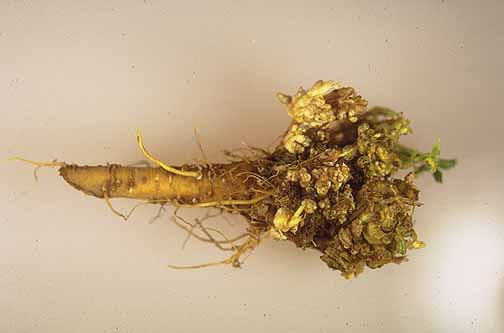
Cause Physoderma alfalfae (syn. Cladochytrium alfalfae, Urophlyctis alfalfae) is a soilborne fungus that will survive in soil indefinitely as resting sporangia. Under favorable, wet conditions, the sporangia release zoospores, which penetrate crown buds. The disease is frequent on bottomlands where there is plenty of moisture. It has not been reported from Washington.

Image related to Alfalfa (Medicago sativa)-Crown Wart

Cause Several genera of fungi: Fusarium spp., Phoma, Pythium, Rhizoctonia as well as bacteria (Pseudomonas, Serratia) are associated with crown rot of alfalfa.

Image related to Alfalfa (Medicago sativa)-Crown and Root Rot Complex

Cause A bacterium, Clavibacter michiganensis subsp. insidiosus (syn. = Corynebacterium insidiosum), which survives in living or dead alfalfa plant tissue in soil and in alfalfa seed. The disease occurs in all major alfalfa production areas of Oregon, Washington, and Idaho. Infection is through wounds in the roots or crowns or through cut stems after mowing.

Image related to Alfalfa (Medicago sativa)-Bacterial Wilt

Cause Colletotrichum trifolii, a fungus favored by wet conditions, spreads rapidly during warm, humid weather. Potentially other Colletotrichum spp. can be pathogenic. The fungus can survive in infected plant debris in the field or on equipment. Spores can be spread on contaminated seed.

Image related to Alfalfa (Medicago sativa)-Anthracnose