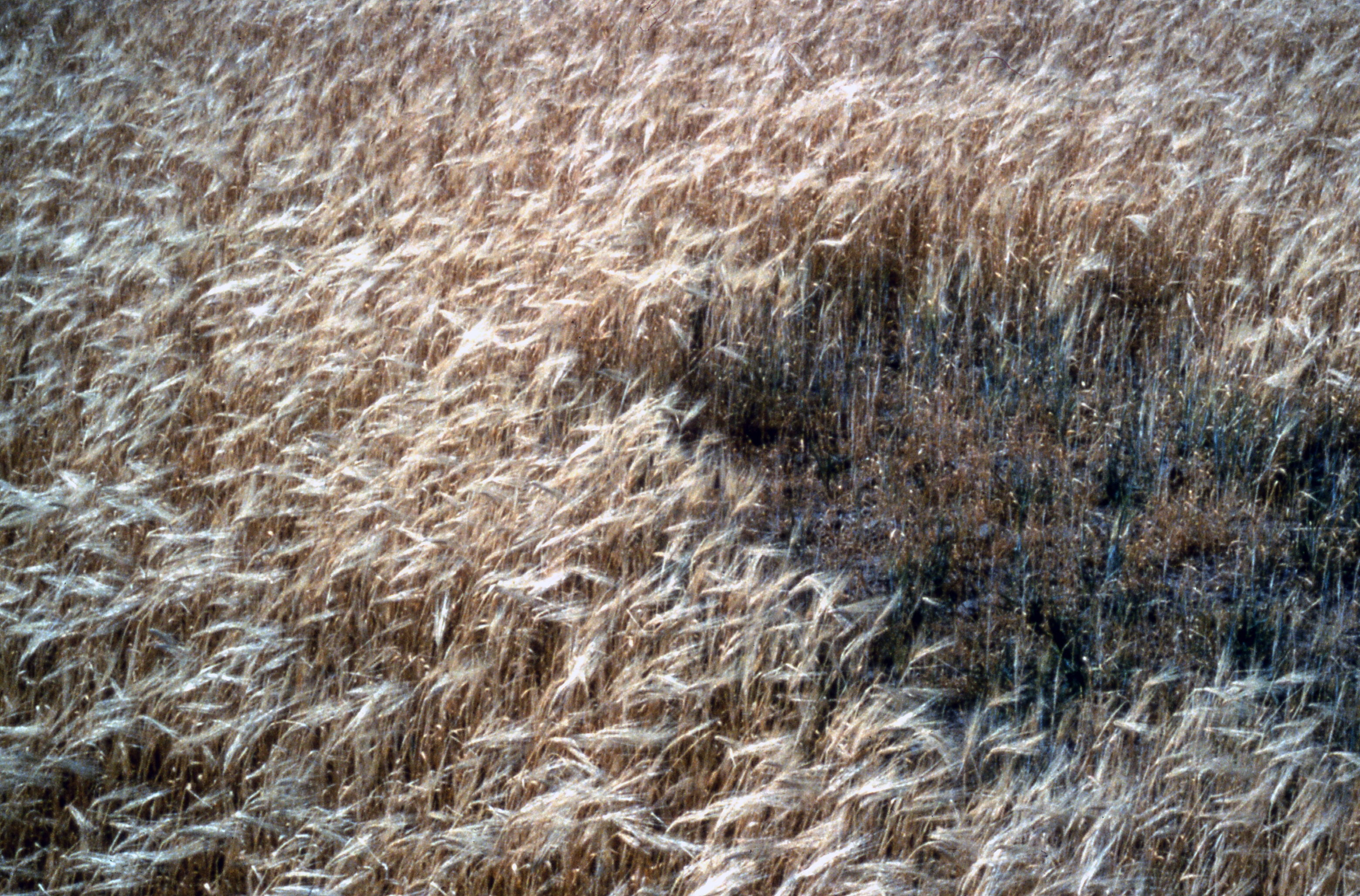
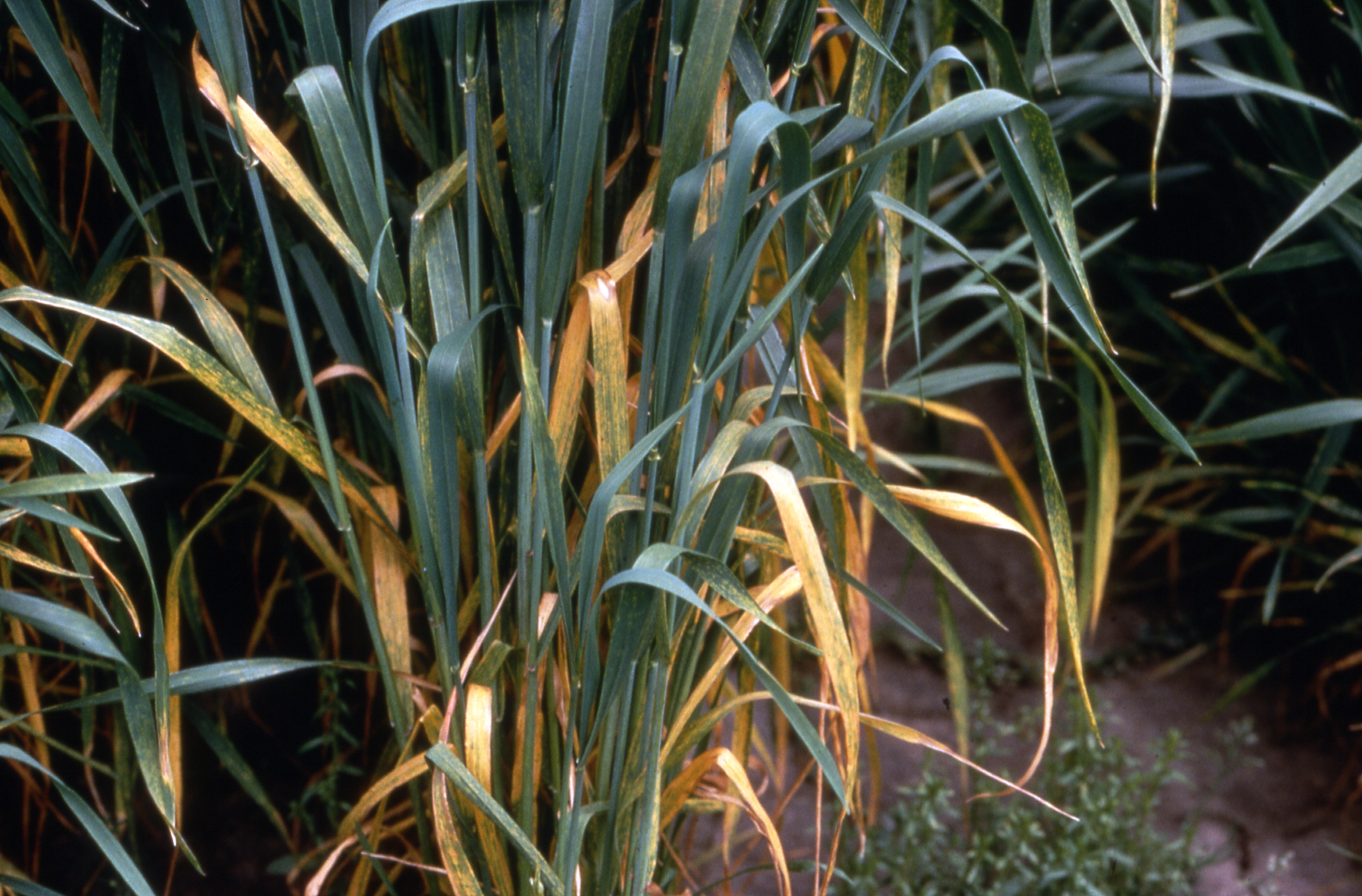
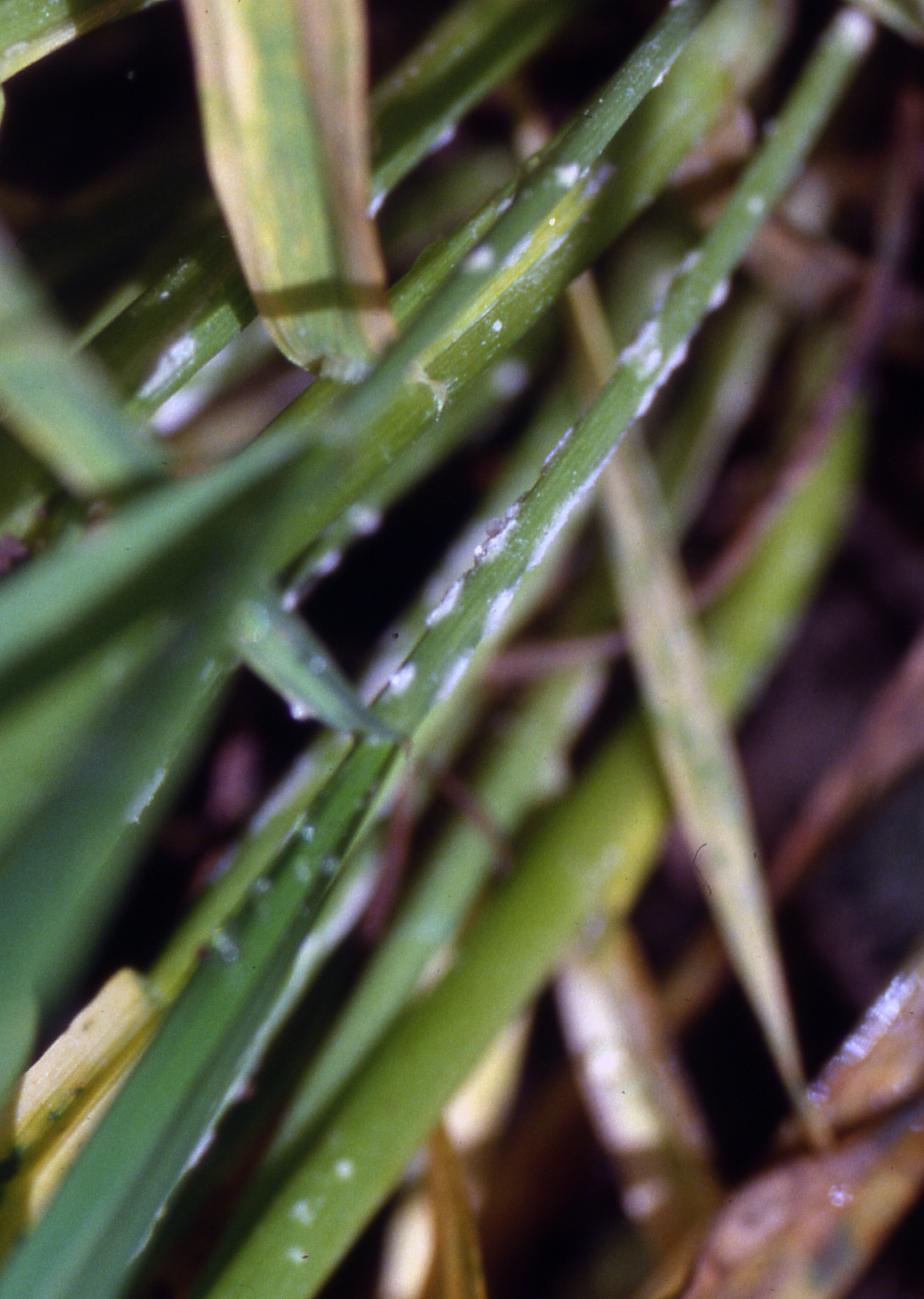
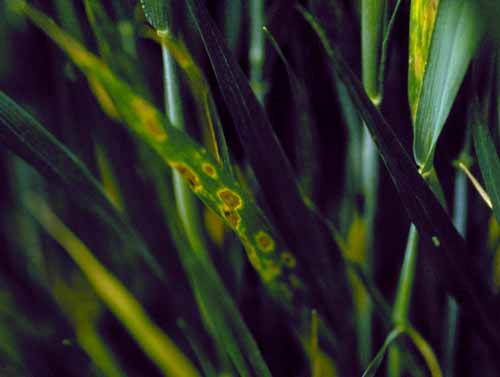
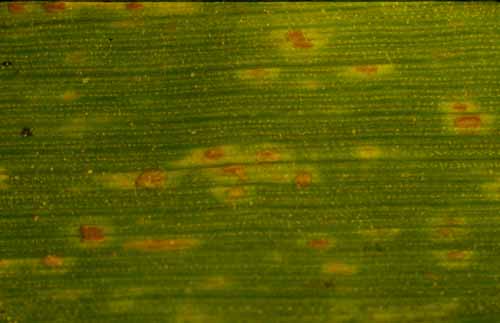
Cause The fungus, Blumeria graminis (syn. = Erysiphe graminis). Powdery mildew survives as either chasmothecia or as mycelium. Asexual (conidia) or sexual spores (ascospores formed in the chasmothecia) produced in the spring cause new infections on susceptible hosts. As colonies develop, more conidia are produced and disseminate. The powdery mildew colonies may eventually become spotted with tiny black dots, which are the chasmothecia.
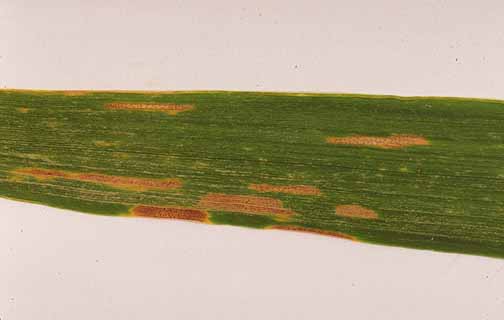
Note the yellow lesions on the leaves.
Photo part of OSU Extension Plant Pathology Slide Collection, 1974.
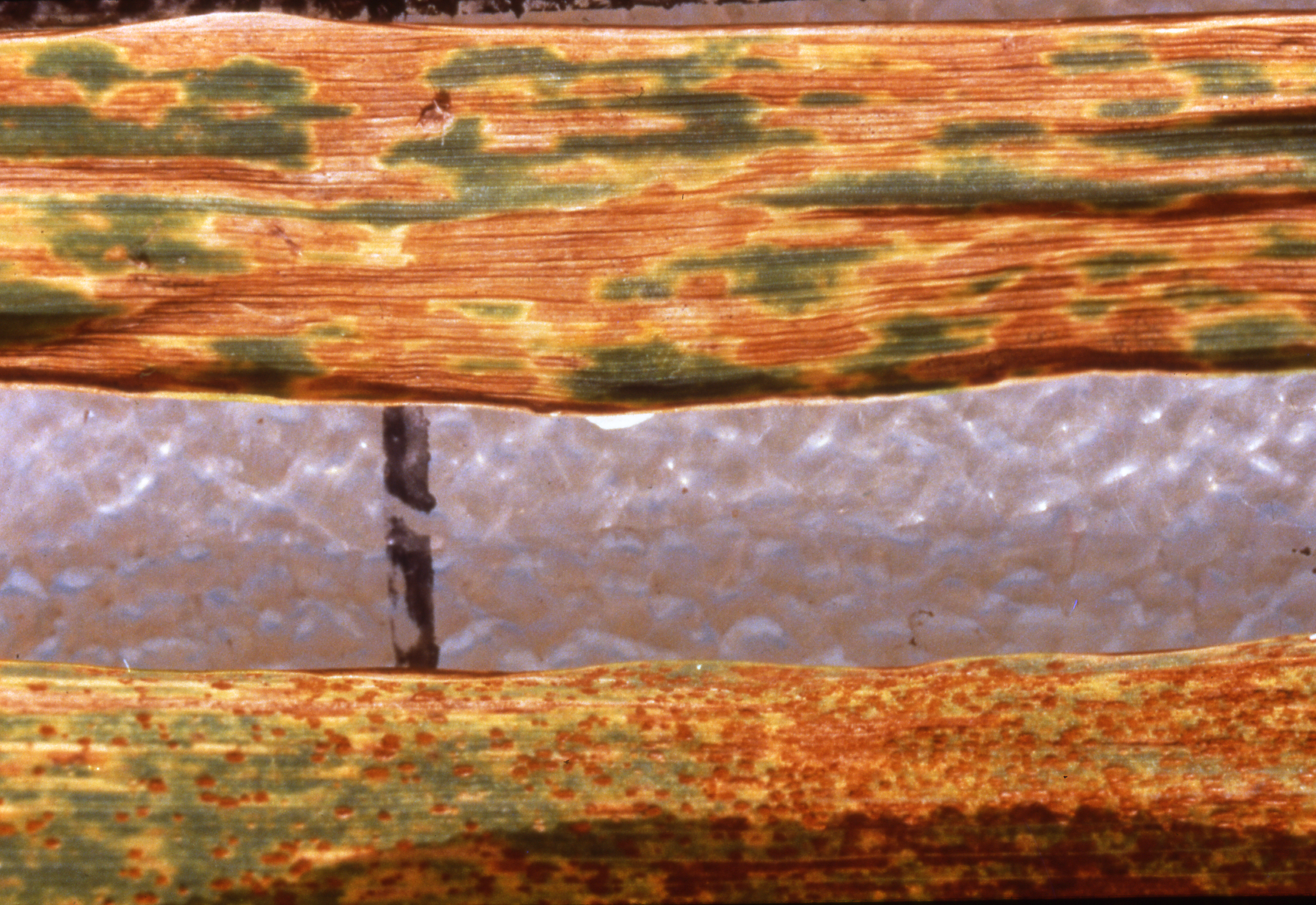
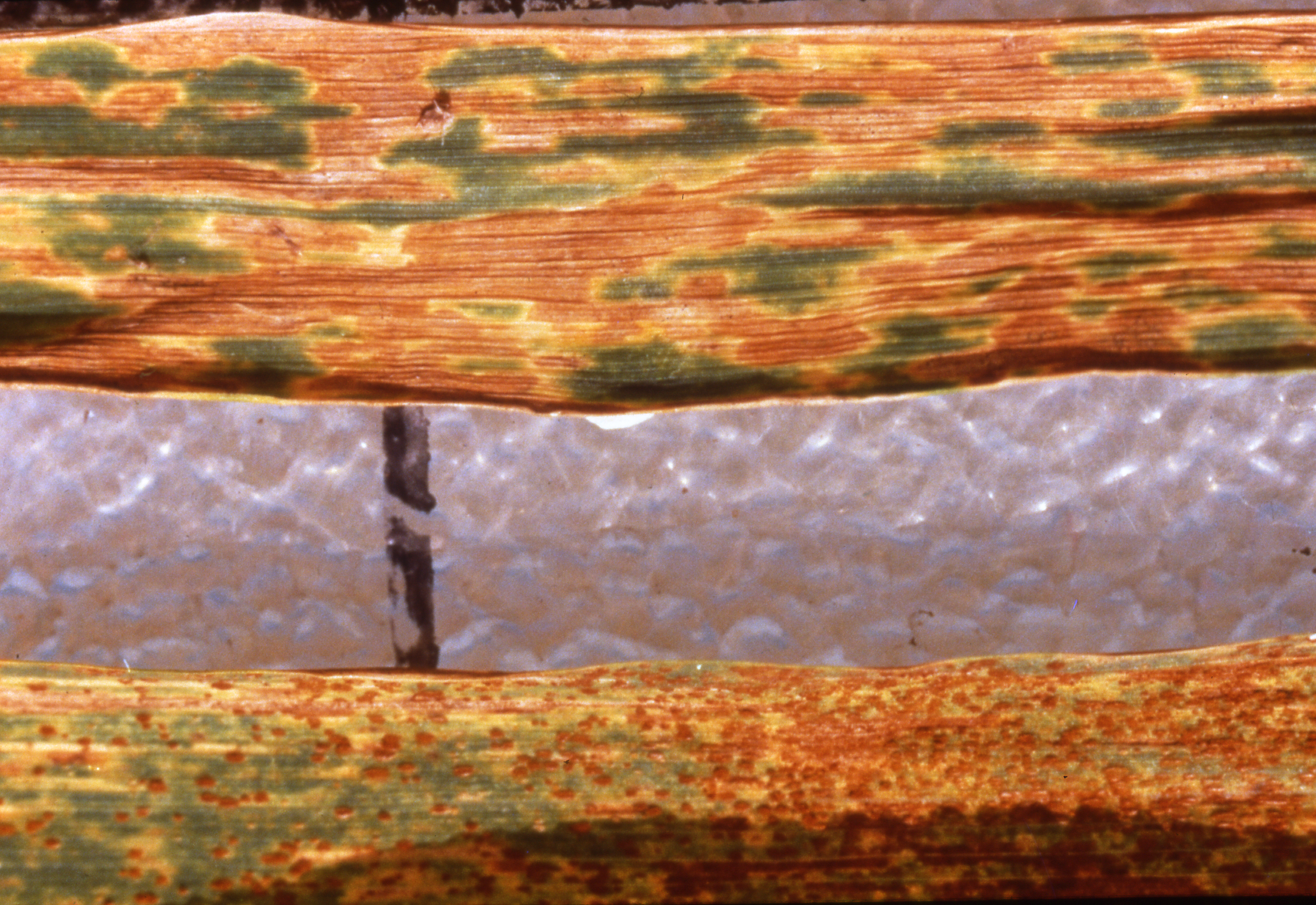
Heavily infected leaves soon yellow, brown, and die.
Table "Plant resistance to root lesion nematodes, Pratylenchus neglectus and P. thornei, in the Pacific Northwest"
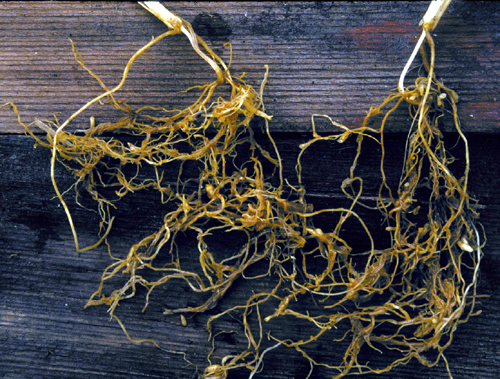
Cause The root-knot nematode, Meloidogyne naasi, lives on roots of barley, wheat, other cereals, and grasses, primarily in heavy soils. Populations of infective juveniles are large only in spring. Spring-planted varieties are more damaged than winter varieties because the latter are larger when attacked. The disease is a problem in western Oregon. The Columbia root-knot nematode (M.
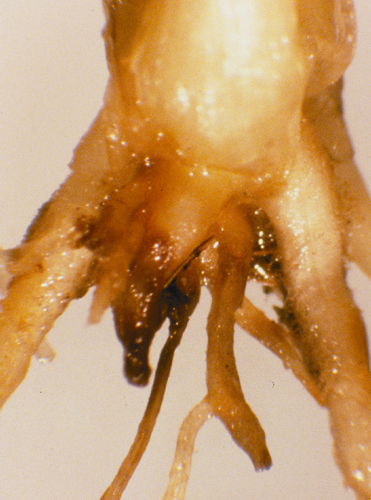
Note the small galls on the roots.
Kathy Merrifield, 2000.
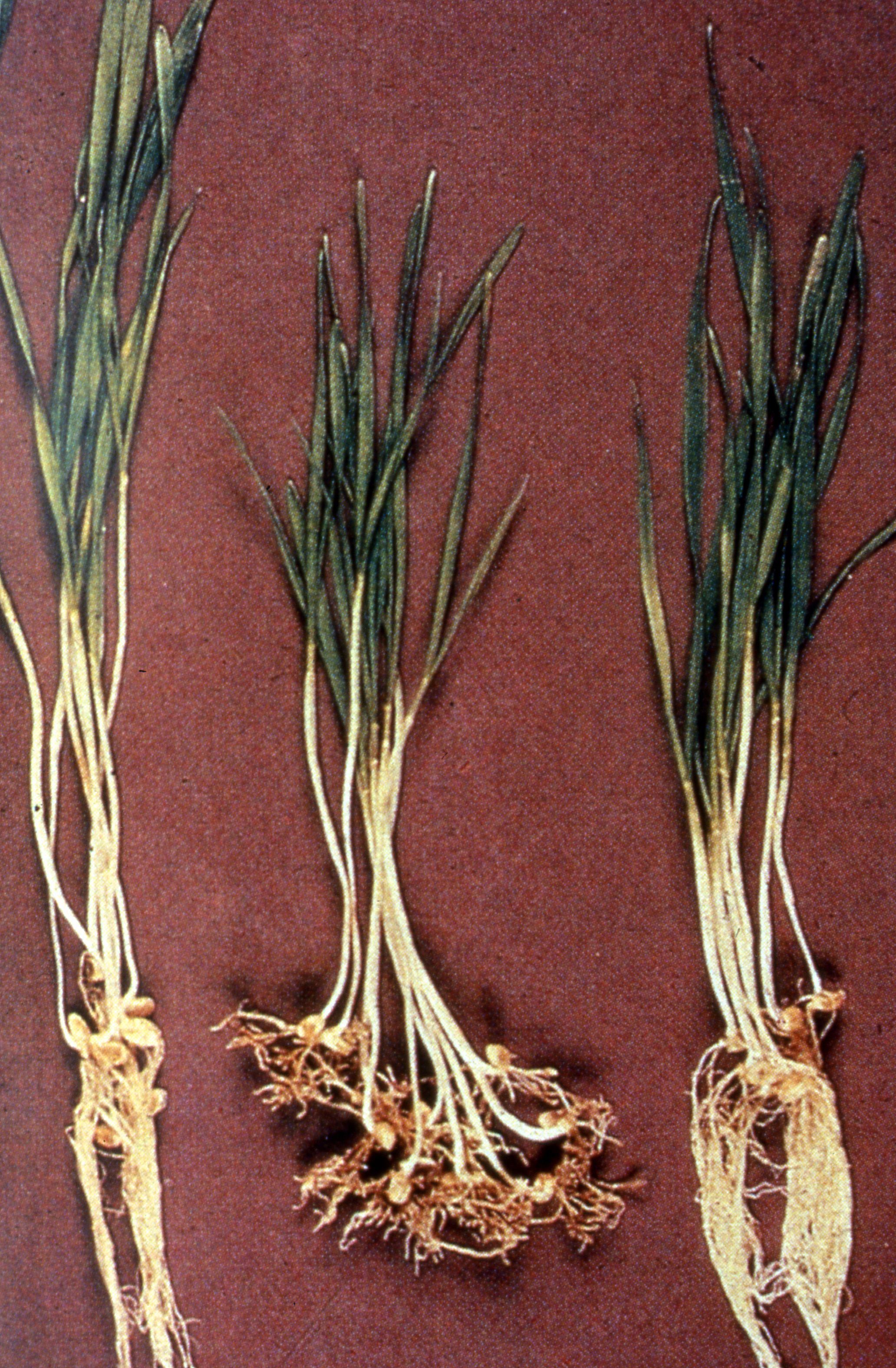
Cause The cereal cyst nematodes, Heterodera avenae and H. filipjevi, occur in at least seven western states including Idaho, Washington, Oregon, and California. This nematode has a wide host range in the Gramineae including oats, wheat, barley, rye, triticale and ryegrass. Susceptible spring grains are barley, oats, wheat, rye, and triticale. Spring varieties are more severely affected than fall varieties because the nematode attacks in spring when plants are small.
Roots of the middle plants are locally thickened and highly branched.
Cause A fungus, Ustilago tritici, carried inside seed, infects wheat, triticale, rye, and some grasses. Wind-blown spores infect flowers and grow into seed. Infection is favored by cool, humid weather.