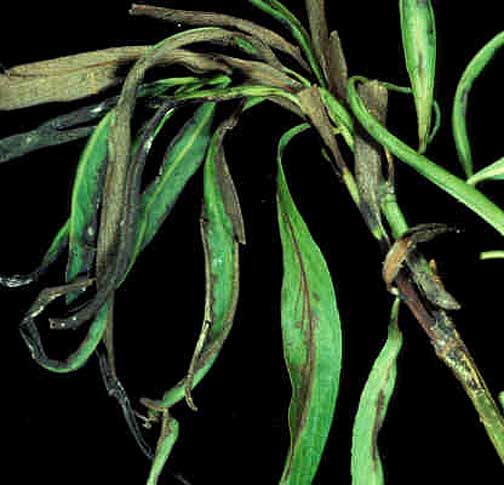
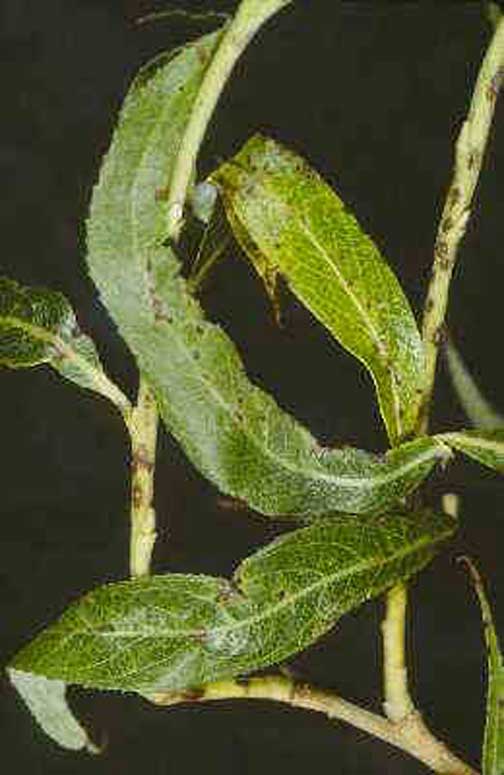
These yellowish leaf spots on willow are due to rust.
Chandalin Bennett and George Newcombe.
Willow rust has uredinia that appear on either side of leaves, later turning brown or black (telia).
Chandalin Bennett and George Newcombe.
Cause Marssonina sp. are fungi that have been reported from all states; M.kriegeriana was reported from Washington, and M.rubiginosa has been reported from Idaho. These fungi overwinter on fallen leaves and in twig lesions. The disease is widespread and common, especially in moist spring weather.
Small, brown to black spots appear on the leaves and young stems.
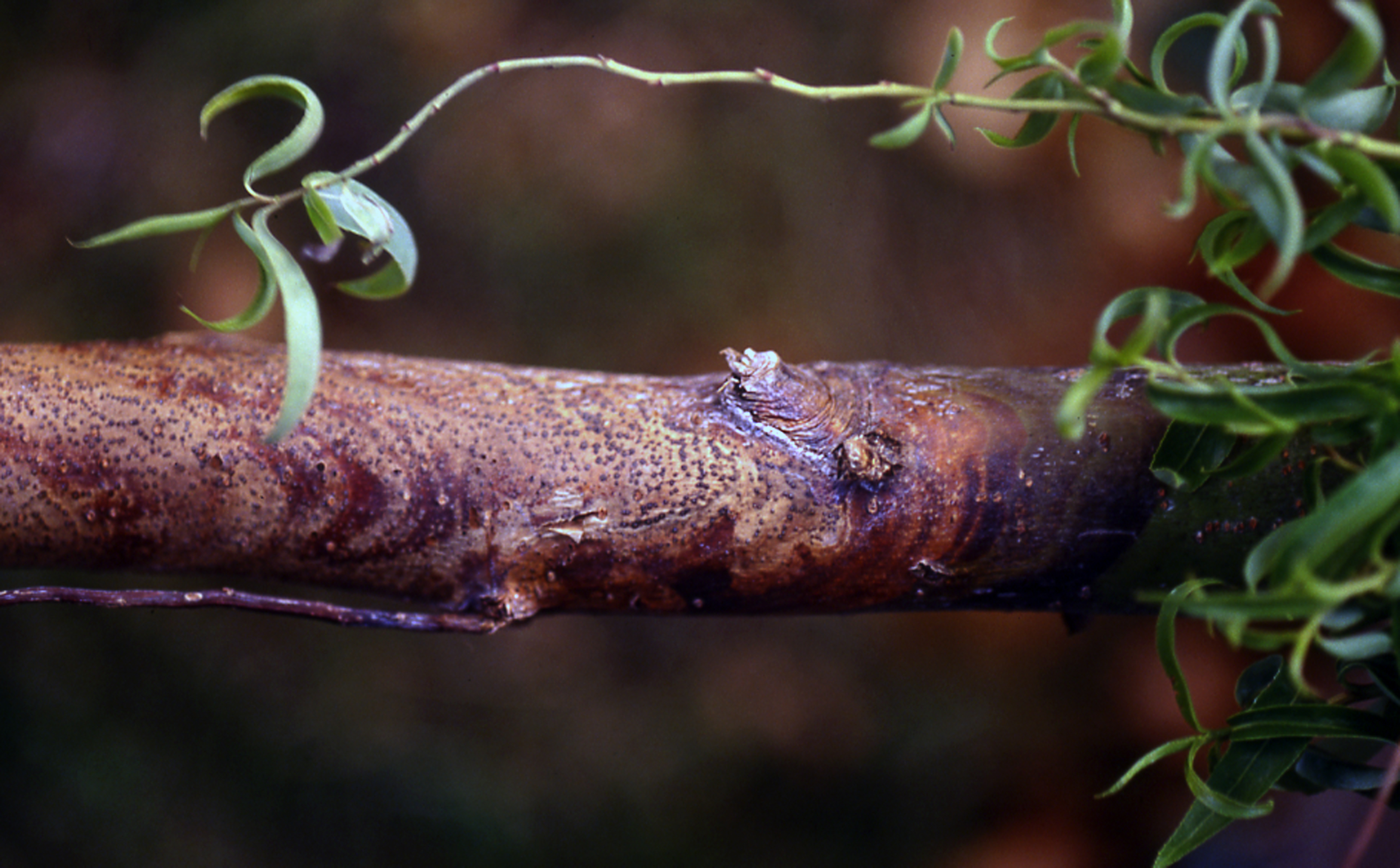
Concentric rings show the regular advance of this fungus (Cytospora) through the branch. The dark bumps are the fruiting bodies of the fungus.
Photo by Jay W. Pscheidt, 1999.
Corkscrew willow with Phomopsis cankers.
OSU Plant Clinic Image, 2016.
Cankers on this willow were due to Colletotricum.
OSU Plant Clinic Image, 2018.
See:
Lilac (Syringa spp.) - Bacterial Blight
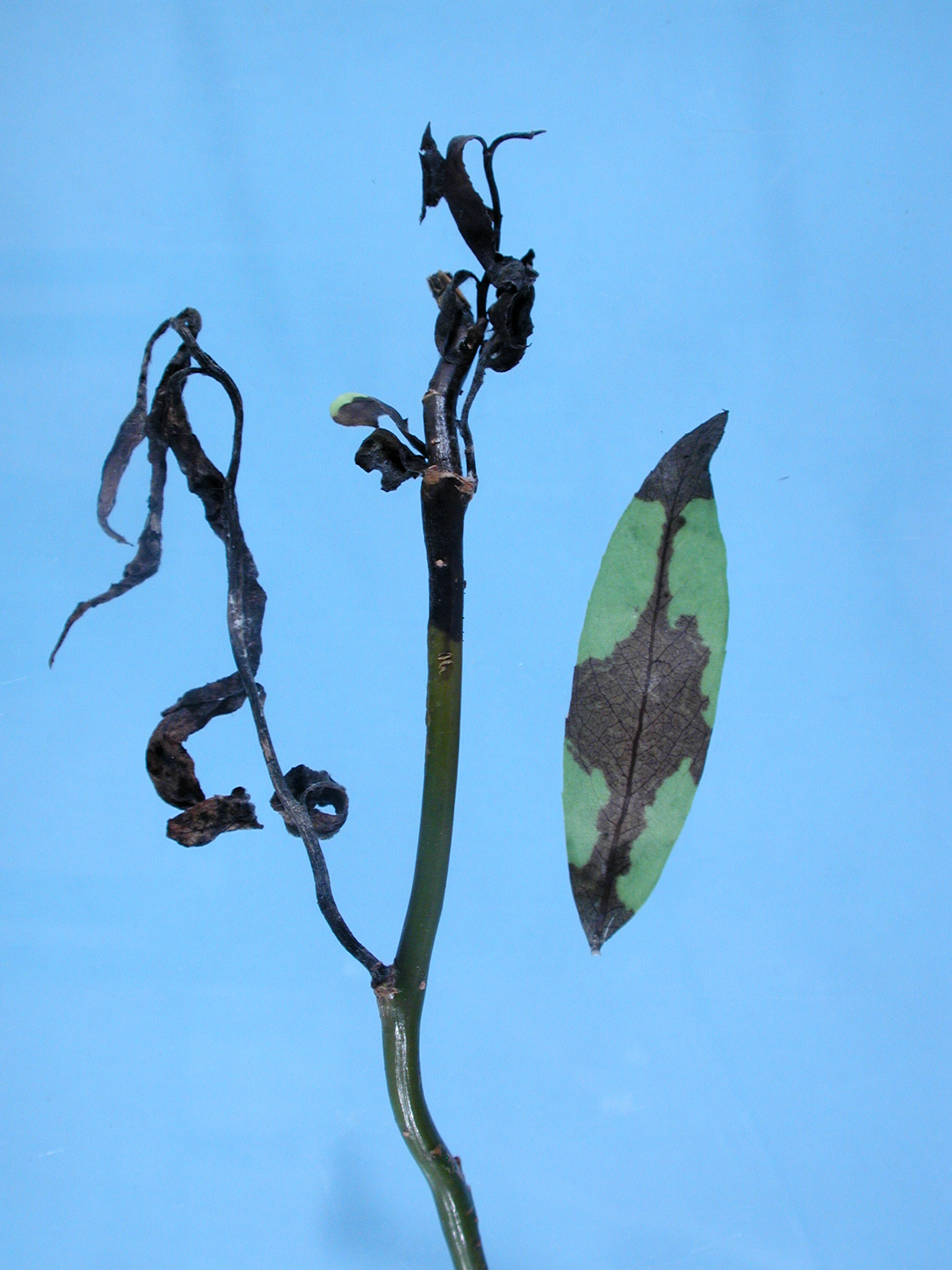
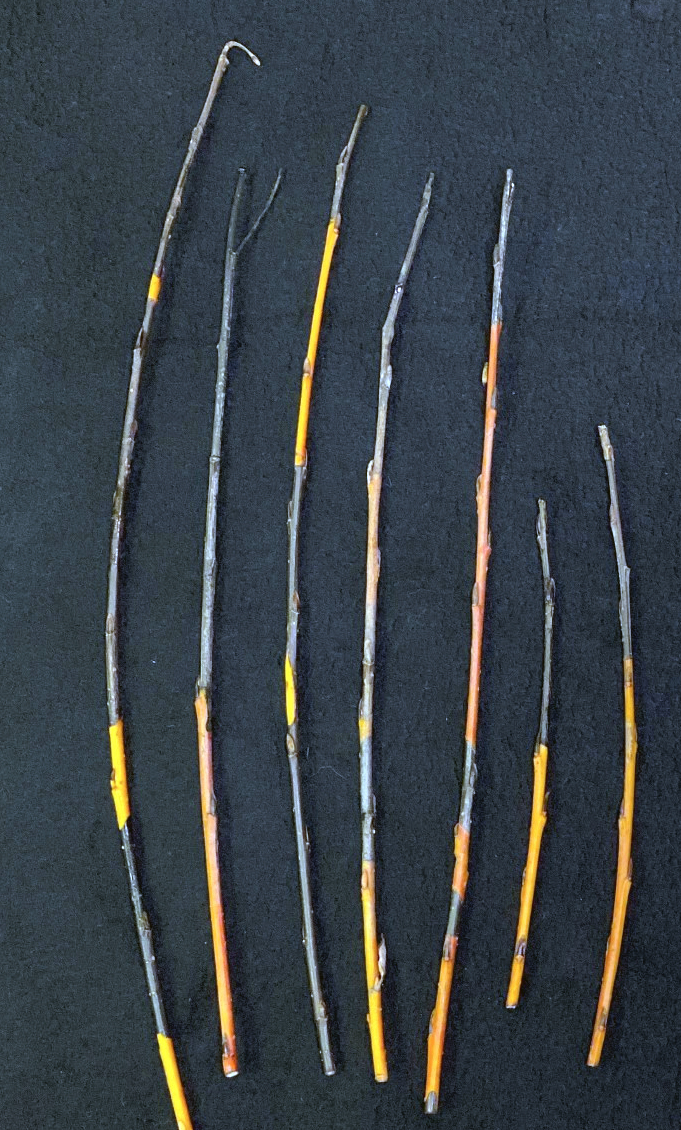
Note dark, black areas on these twigs.
Photo by Melodie Putnam, 2000.
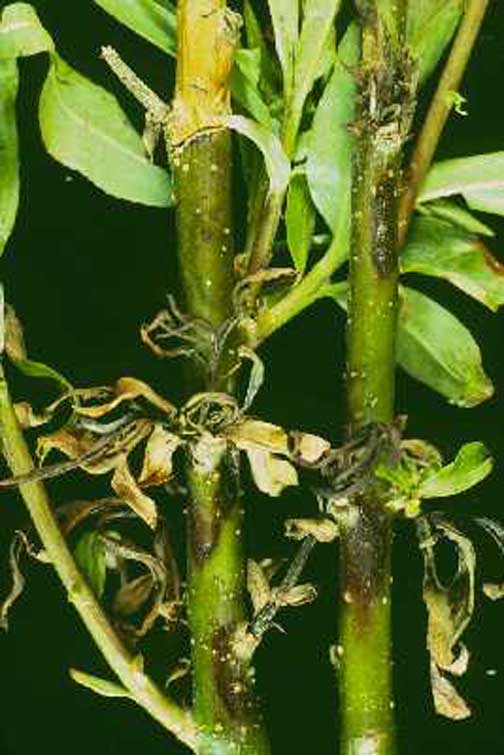
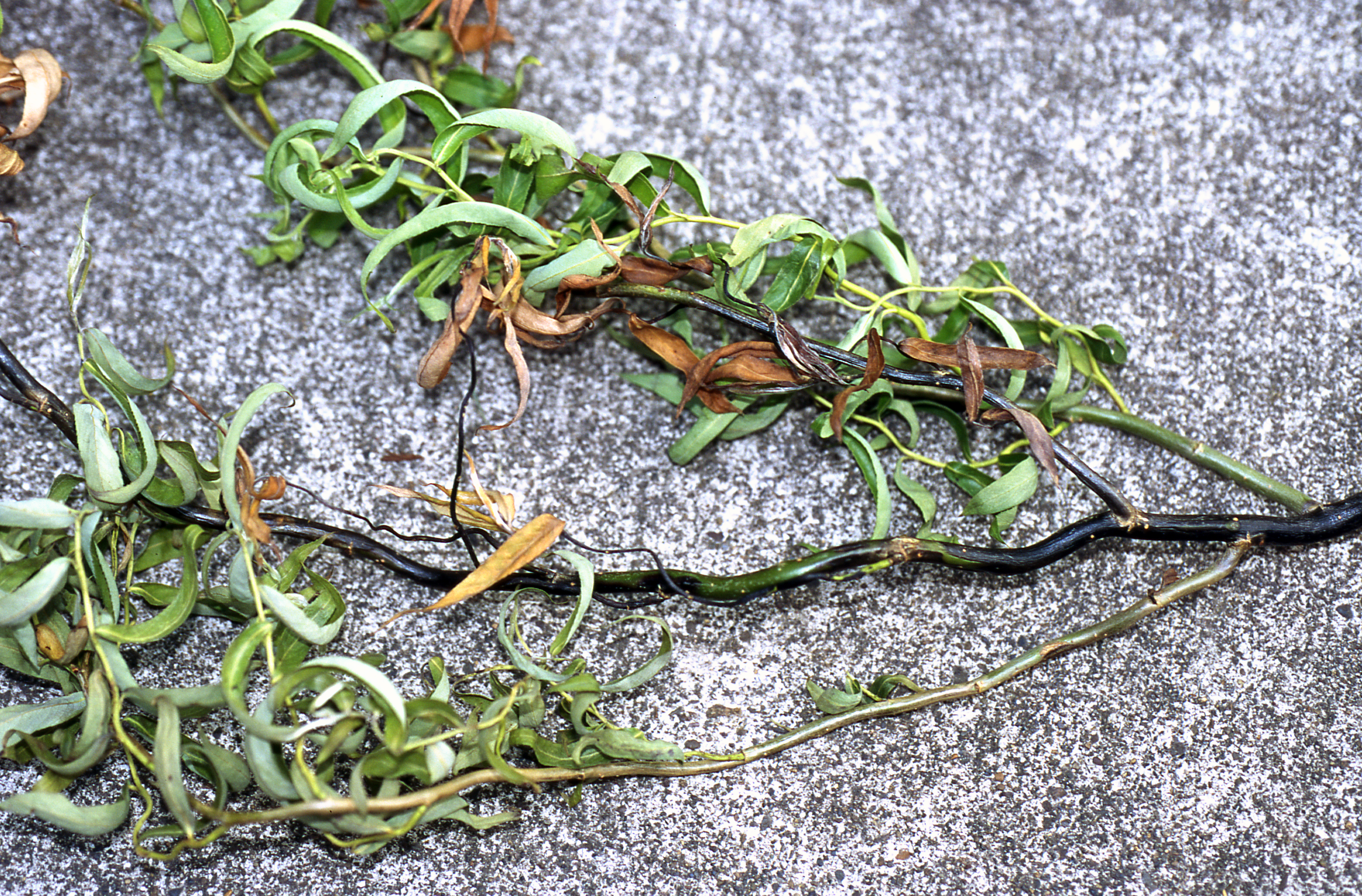
Dieback of new shoots due to Pseudomonas.
Melodie Putnam, 2008.
Willow twig lesion due to Pseudomonas syringae.
OSU Plant Clinic, 2021.
Cause Wheat streak mosaic virus, a potyvirus vectored by an eriophyid mite, Aceria tulipae. The virus attacks and overwinters in wheat, oat, barley, and rye, and a large number of wild grass genera including Bromus (cheatgrass), Hordeum, Lolium, Agropyron, and Poa.
Photo by Phil Hamm
This photo shows a Fall infection.
Photo by Phil Hamm
Cause A virus, wheat soilborne mosaic virus, transmitted by a soilborne fungus-like organism, Polymyxa graminis. In 1993, the disease was first found west of the Rocky Mountains, in Washington and in Columbia County, Oregon. The disease tends to be in wetter areas of the field, following the distribution of its fungal vector.