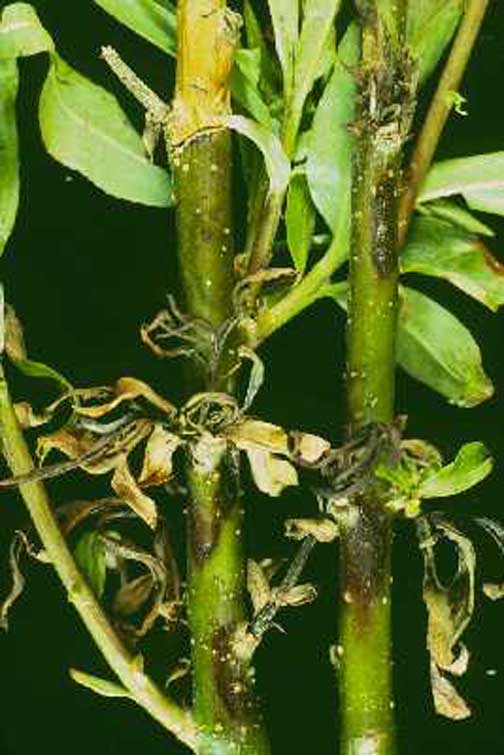
Note Although it has never been reported, the OSU Plant Clinic has found Phytophthora on samples of zelkova with root rot and stem cankers. Collar rots also seem to occur when trees are planted too deep.
Cause Coniothyrium bartholomaei, a fungus, has been found on yucca in Oregon. Cladosporium herbarum (formerly Mycosphaerella tassiana) and Kellermania yuccifolia have been reported from Washington.
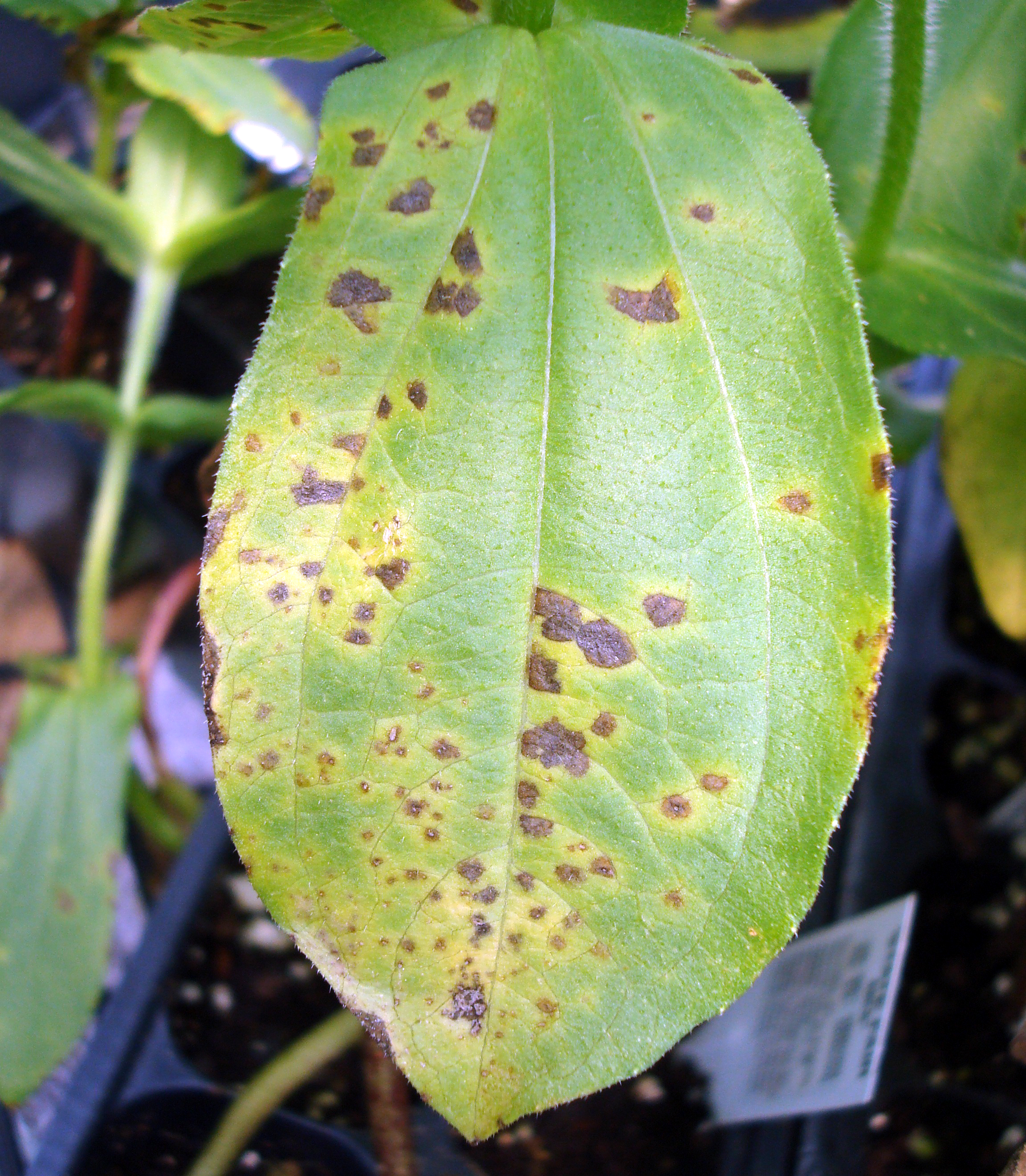
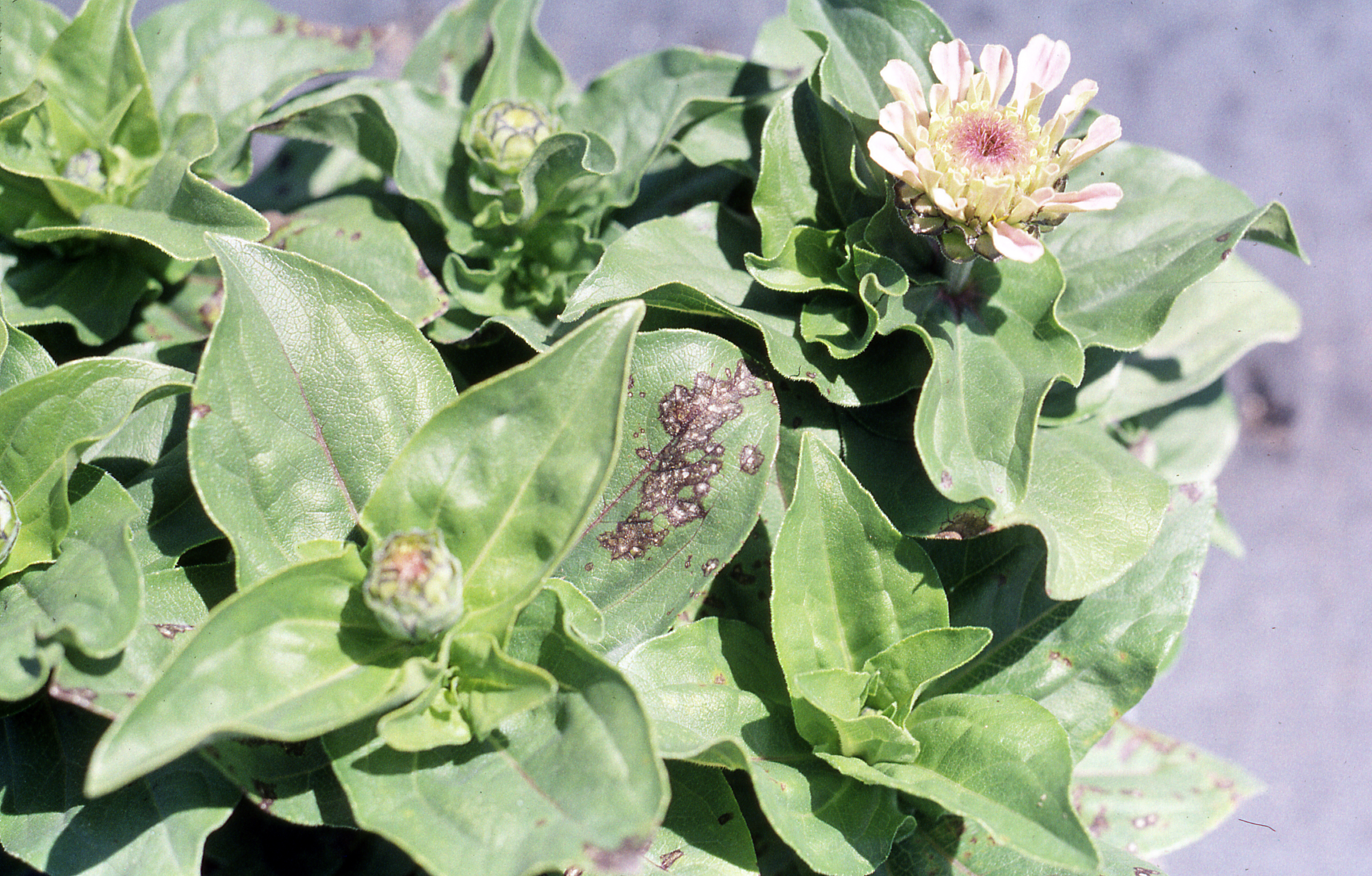
Notice the dark spots on these leaves.
Photo by Jay W. Pscheidt, 2000.
Note the dark fruiting bodies (pycnidia) in the center of the tan zone of this leaf spot.