Any chemical or physical agent that kills or protects plants from bacteria.
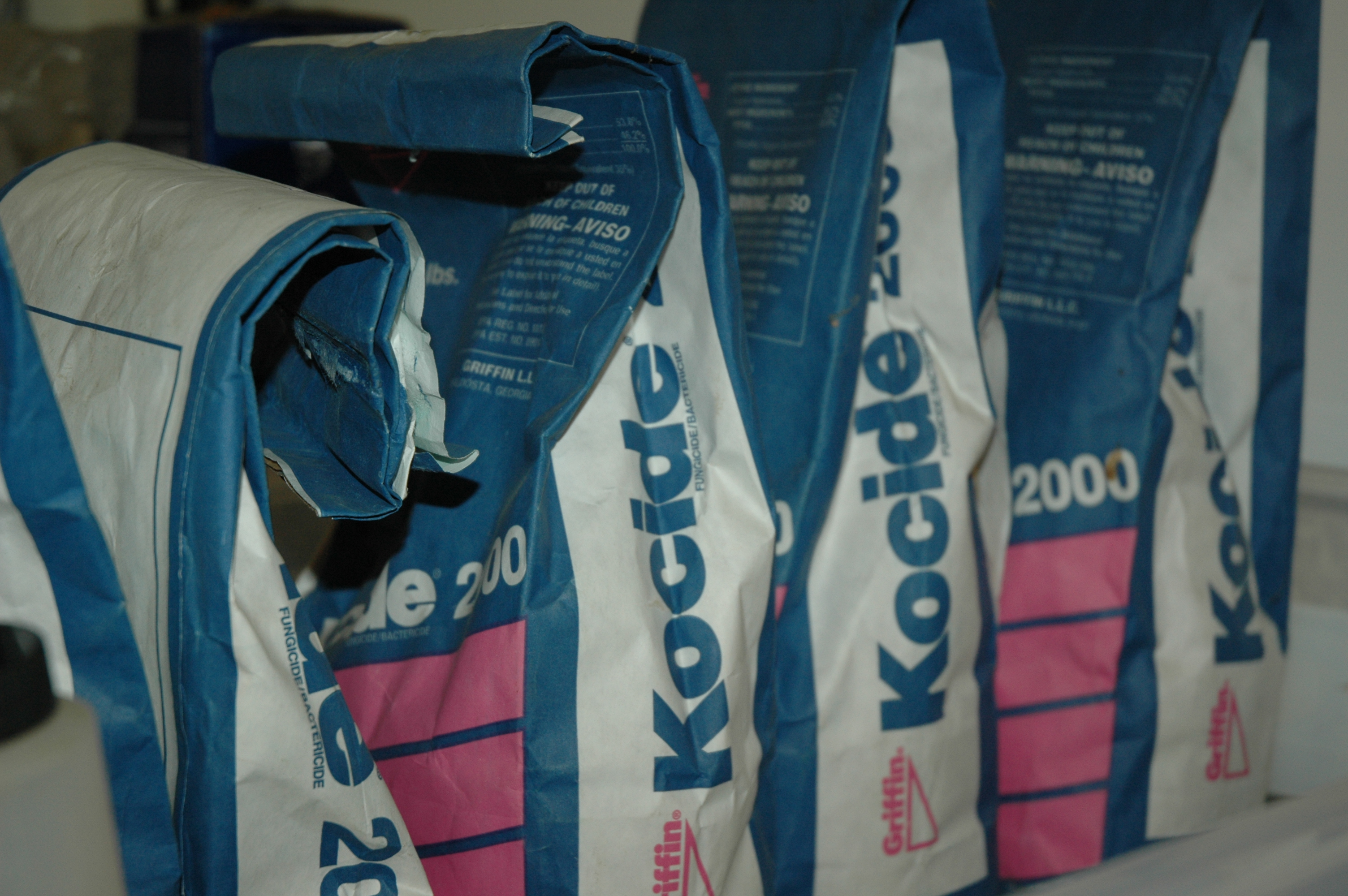
Copper-based products, such as Kocide, have bacteriacidal activity. Several other products including anitbiotics are also bactericides.
Jay W. Pscheidt
Large, usually multinucleate cells formed by abnormal cell fusions or failure of proper cell wall formation following growth and nuclear division. Associated with nematode feeding.
The existence of several asexual spore stages in the life cycle of an organism.
An organism that is ordinarily parasitic but under proper conditions may be saprophytic.
To survive over the winter period.
The vegetative body of the lower plant that has not differentiated into stems and leaves.
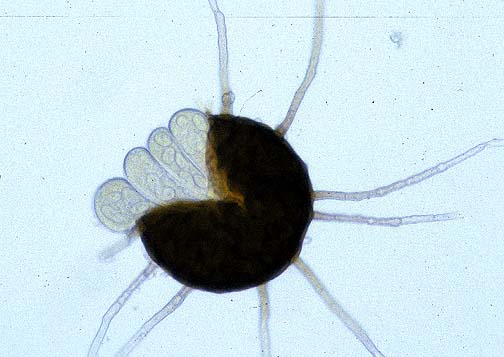
Closed, usually spherical, ascus-containing structure of powdery mildew fungi, also known as a chasmothecium. A sexual fruiting structure.
Cleistothecia squashed open to show several asci with ascospores of Erysiphe necator.
Photo by Melodie Putnam, 1998.
Process in which a pathogen enters, invades, or penetrates and establishes a parasitic relationship with a host plant.
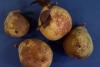
Yellowish-brown or reddish-brown scar tissue (cork) on thesurface of fruit.
Russeting as shown here is not desired in many pear cultivars.