The abnormal increase in the size of cells, causing abnormal development of an organ or tissue.
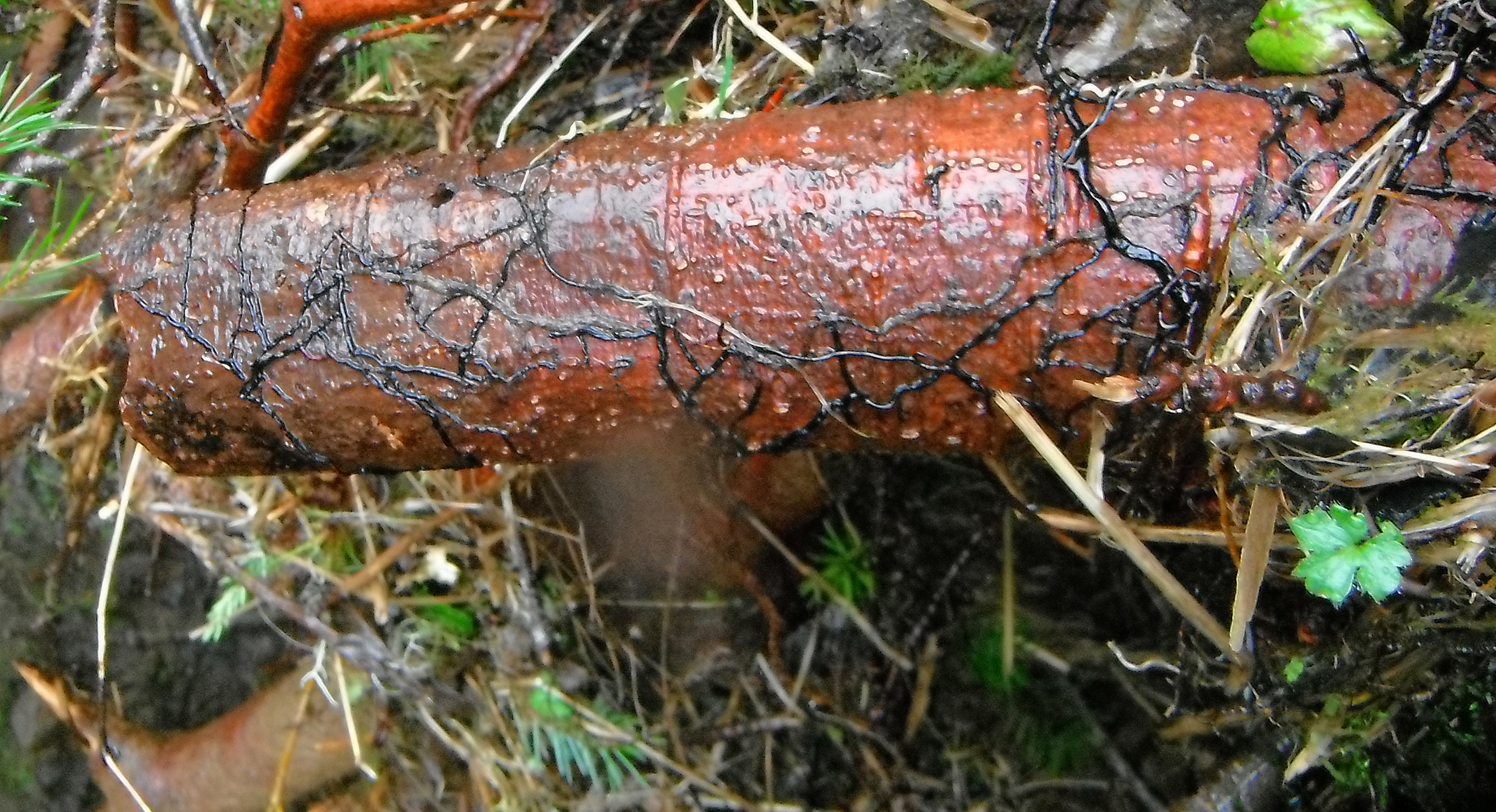
An aggregation of hyphae into a cordlike or rootlike strand.
What look like little black roots on this root piece are rhizomorphs of Armillaria.
Laura Sims, 2012.
The concentration of a virus.
Any agent for destroying the causal agent of disease after infection.
A millionth of a meter (or, a thousandth of a millimeter).
The manifestation of disease by the presence of structures of the causal agent.
Vegetative; without sex organs, sex cells, or sexual spores, as the anamorph of a fungus.
A single- or many-celled, naked or covered, irregular or filamentous organism, usually with a chitinous cell wall. Lacking chlorophyll and incapable of manufacturing its own food, it gets nutrition from dead or living plant or animal matter.
Control of disease by preventing its introduction (e.g., by quarantines) into disease-free areas.
Quarantine inspection station at the USA/Canadian boarder used to exclude unwanted diseases and pests.
Jay W. Pscheidt
Necessary; obliged. An obligate parasite is an organism that can live only on living tissue.