Having a double set of chromosomes (2n chromosomes) per cell.
Visible to the naked eye, without the aid of a microscope.
To decline with maturity or age, often hastened by stress from environment or disease.
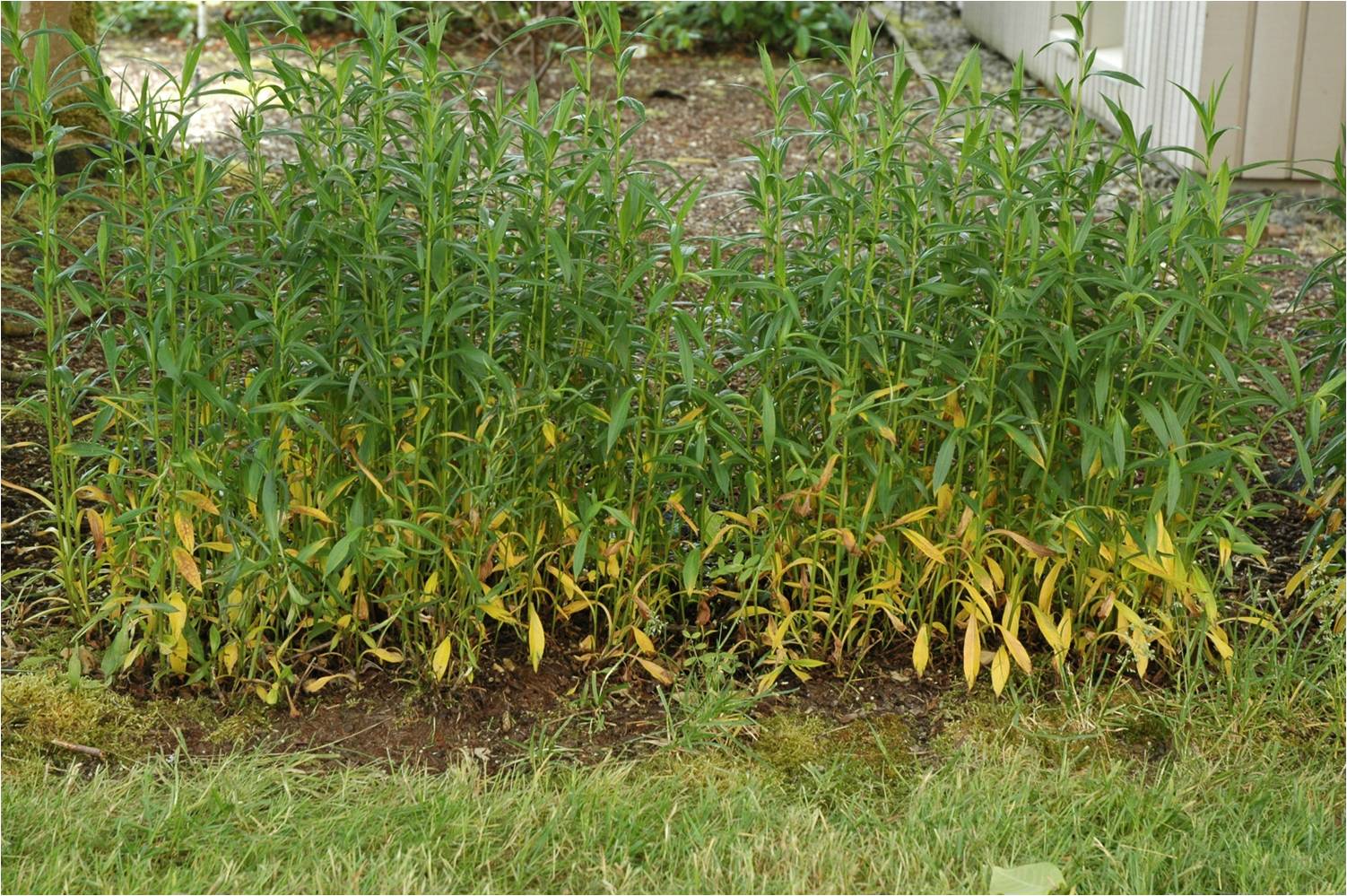
Nitrogen deficiency has caused the lower leaves to senesce early.
Jay W. Pscheidt.
An open, cuplike, or saucer-shaped sexual fungal fruiting body containing asci.
Here mummified blueberries and brown apothecia are ready to discharge ascospores.
Photo by Jay W. Pscheidt, 1995.
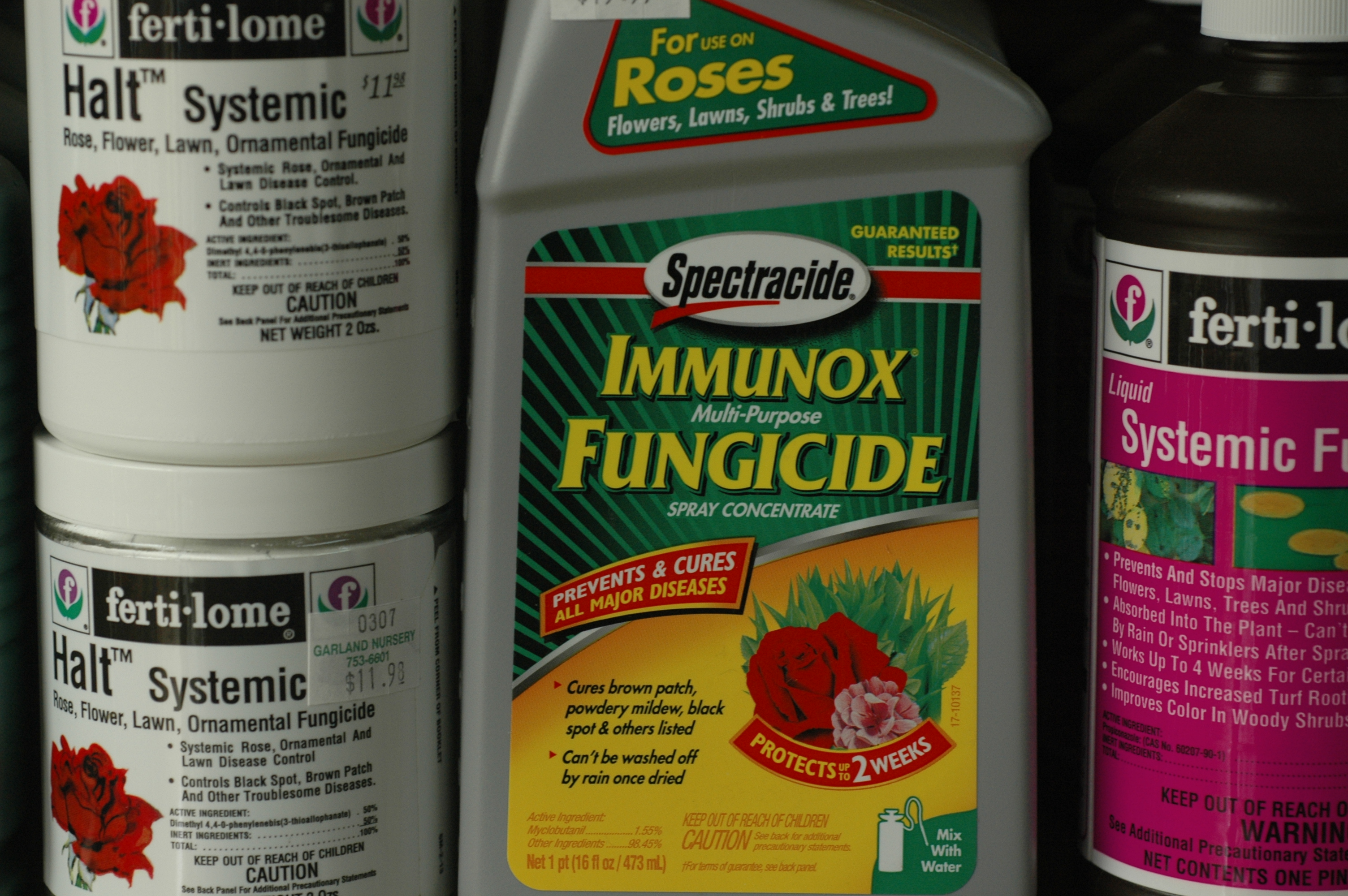
An agent that inhibits or kills fungi.
There are many different fungicides that can be used to manage diseases.
Jay W. Pscheidt, 2007.
A group of fungi that may consist of one cell or have filaments (hyphae) with few or no cross walls and that reproduce sexually by union of two sex cells.
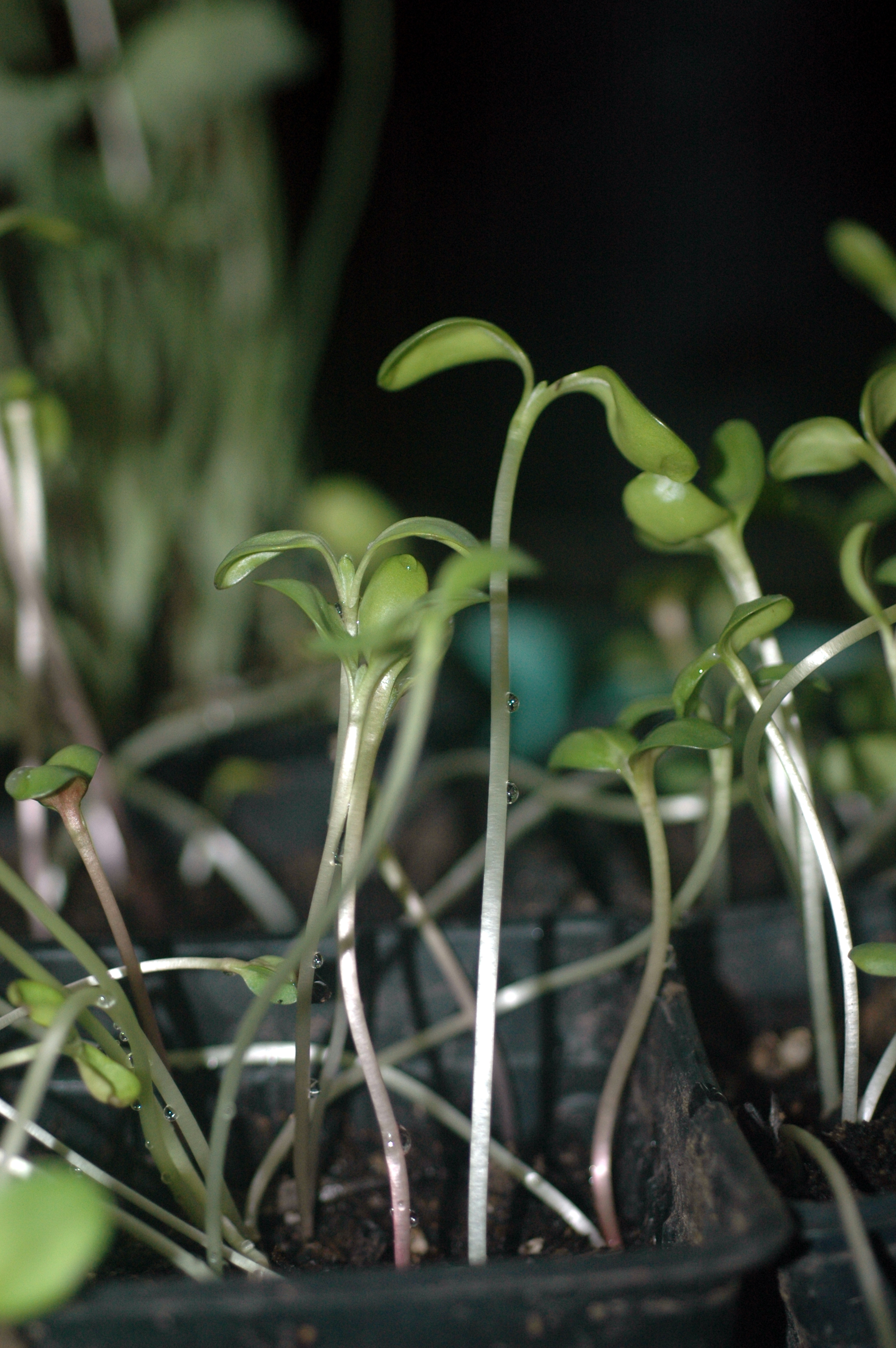
Yellowing and long, spindly growth as a result of insufficient light.
Sunflower seedlings stretched out (etiolated) seeking the sunlight.
Jay W. Pscheidt, 2019.
These perennial Vinca shoots were under or covered by a large upside down pot. The stems grew long and chlorotic reaching for the light coming through the drain holes until the pot was removed.
Jay W. Pscheidt, 2019.
A chemical or physical agent that kills, inhibits, or protects against nematodes.
The substance or object on which an organism lives and from which it gets nourishment.
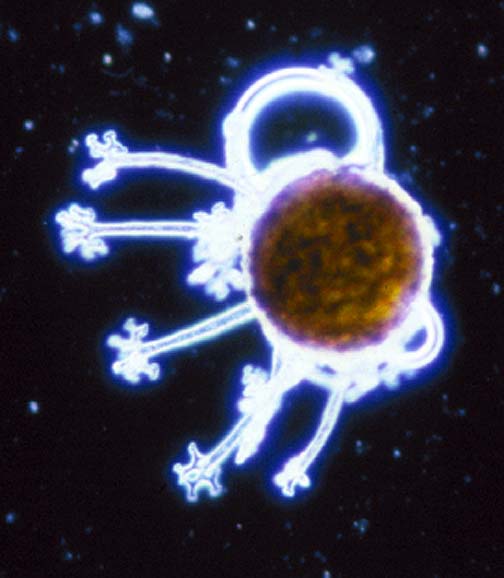
Closed, usually spherical, ascus-containing structure of powdery mildew fungi, also known as a Cleistothecium. A sexual fruiting structure.
Chasmothecium of Microsphaera azaleae showing the typical multiple but short appendages.