Insect Management Handbook

Pyrchalta viburni

Pest description and crop damage Adults are brown and about 0.25 inch long. They chew oblong shotholes on the leaves. Mature larvae are greenish yellow and are about 0.37 inch long. They skeletonize leaves. This beetle, an introduced species from Canada, currently is only in northwest Washington.

Management-chemical control

See:
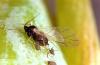
Aphis fabae

See:

Pest description and crop damage Black aphids on underside of leaves on Viburnum species referred to as "Snowball." They do not attack Viburnum davidii.

For more information

Image related to Viburnum (Viburnum)-Bean aphid

Stomacoccus platani

See:

Pest description and crop damage Infested leaves become disfigured with yellow spots. Scale also feed on bark, causing twig dieback. Eggs are laid in masses of cottony wax in late winter.

Management-chemical control

See:

Pissodes strobi

See:

Cephalcia abietis

Pest description and crop damage Larvae hibernate in dense clusters on twigs and become active on warm winter days. Larvae mature in June. Pine, arborvitae, and true firs also are subject to attack. Damage may occur in late fall or early spring.

See "Spruce" in:

Oligonychus ununguis

See:

Management-chemical control

See:

For more information

See "Spruce" in:

Image related to Spruce (Picea)-Spruce spider mite

Endothenia albolineana

Pest description and crop damage Small, light greenish brown larvae mine and web needles. Adult moth is dark brown with a wing expanse of 0.5 inch.

See "Spruce" in:

Management-chemical control

See:

Choristoneura occidentalis

Pest description and crop damage Green to brown larvae, up to 1 inch long, attack foliage and buds of fir and spruce.

See "Spruce" in:

Management-chemical control

See:

Physokermes piceae

See:

Pest description and crop damage Females are semiglobular and brown and resemble buds. They produce abundant honeydew.

See "Spruce" in: