Insect Management Handbook

Haematobia irritans

Image related to Beef cattle-Horn fly

Musca autumnalis

Biology Face flies feed on the secretions of the eyes and nose for short periods of time; only a small percentage of the local face fly population may be found on animals at any one time. These aspects of its life history make management of face fly a very difficult task. Hence, many of the products labeled for efficacious horn fly control indicate that they merely aid in face fly control.

Management-chemical control

Image related to Beef cattle-Face fly

Common cattle grub (heel fly) (Hypoderma lineatum)
Northern cattle grub (Hypoderma bovis)

Image related to Beef cattle-Cattle grub

Japanese beetle (Popillia japonica)

European chafer (Amphimallon majale)

Southern masked chafer (Cyclocephala lurida)

Black turfgrass ataenius (Ataenius spretulus)

Sod webworm (Pediasia trisecta)

Pest description and crop damage Sod webworm are larval caterpillars that are 0.5 to 0.75 inch in length and feed on turfgrass foliage. Sod webworm are light green or yellow with dark patches across the back and sides, and a dark brown head.

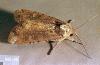
Winter cutworm (Noctua pronuba)

Black cutworm (Agrotis ipsilon)

Glassy cutworm (Apamea devastator)

Variegated cutworm (Peridroma saucia)

European crane fly (Tipula paludosa)

Image related to Turfgrass-Crane fly

Blissus spp.

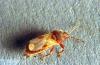
Image related to Turfgrass-Chinch bug

Bluegrass billbug (Sphenophorus parvulus)

Denver billbug (S. cicatristriatus)

Hunting billbug (S. venatus)

Phoenician billbug (S. phoeniciensis)

Image related to Turfgrass-Billbug

Various species