Insect Management Handbook

Includes

Black vine weevil (Otiorhynchus sulcatus)
Rough strawberry root weevil (O. rugosostriatus)
Strawberry root weevil (O. ovatus)

Image related to Blueberry-Root weevil

Sciopithes obscurus

Pest description and crop damage Adults are predominantly gray with a wavy brown line across the wing covers. They are about 6 to 8 mm in length. Larvae resemble strawberry root weevil larvae in appearance and life cycle and also feed on roots. Adults feed on foliage; they cause little damage to leaves but may contaminate fruit in mechanically harvested fields.

Image related to Blueberry-Obscure root weevil

Includes

Oblique-banded leafroller (Choristoneura rosaceana)
Orange tortrix (Argyrotaenia franciscana = A. citrana)

Grapholita packardi

Pest description and crop damage In the PNW, cherry fruitworm has been found infesting blueberries only in parts of western Washington. Adults are small, dark gray/brownish moths with a wingspan of about 9 to 10 mm. They are active mostly at night and so are rarely seen. Larvae have pink-red bodies with brown or black heads. Newly hatched larvae tunnel into fruit. One larva can easily destroy an entire cluster of berries.

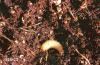
Halyomorpha halys

This pest is not currently of commercial concern, as SWD management programs tend to keep brown marmorated stink bug (BMSB) populations in check. It is present in the Pacific Northwest but has not been reported for causing damage to blueberry crops. It may pose a significant risk to fruit if populations increase.

See:

Dasineura oxycoccana

Includes

Ericaphis fimbriata (no common name)

Illinoi ssp.
Green peach aphid (Myzus persicae)

Aceria erinea

Pest description and crop damage Very small eriophyid mite causes blister like swelling on upper leaf surface and yellowish or brown concave pocket on underside of leaf. These insects usually do not cause enough damage to warrant control.

Includes

Frosted scale (Parthenolecanium pruinosum)
European fruit lecanium scale (Parthenolecanium corni)