Insect Management Handbook

Cryptomyzus ribis

Pest description and crop damage This aphid is commonly found on currants and occasionally found on gooseberries. Adult aphids are greenish yellow and about 2 mm in length. Immature aphids are yellowish in color. Eggs are shiny black. Aphid feeding on leaves causes a cupping, distortion, and red color. Feed can cause some loss of plant vigor. Honeydew accumulation, and associated sooty mold, on foliage and fruit is unsightly and can reduce fruit quality.
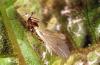
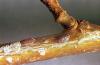
Image related to Currant and gooseberry-Currant aphid

Pulvinaria innumerabilis

Image related to Currant and gooseberry-Cottony maple scale

Brown soft scale (Coccus hesperidum)
Cottony scale (Pulvinaria spp.)
Greedy scale (Hemiberlesia rapax)
Lecanium scale (Lecanium spp.)
Oystershell (mussel) scale (Lepidosaphes ulmi)

Includes

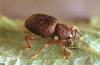
Black vine weevil (Otiorhynchus sulcatus)
Strawberry root weevil (O. ovatus)

Dasineura oxycoccana

Acrobasus vaccinii

Numerous species

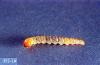
Pest description and crop damage There are a number of moth species with larvae (cutworms) that have a wide range of colors, markings, and patterns. The foliage-feeding larvae generally feed at night, and clip off tips of uprights and runners.

Management-cultural control

Light traps placed on or near beds can be used to reduce problematic populations of cutworms over time.

Chrysoteuchia topiaria

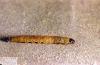
Image related to Cranberry-Cranberry girdler

Rhopobota naevana

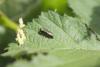
Image related to Cranberry-Blackheaded fireworm

Agrilus cuprescens