Insect Management Handbook

Archips rosana

Pest description and crop damage Also known as the rose tortrix, adult moths are 0.5 to 0.75 inch long, dark brown, with darker transverse lines on the forewings. The larvae are green with a light to dark brown head. Damage begins early in spring and includes rolling of leaves as well as feeding on foliage and buds. There is one generation each season.
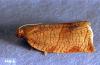
Image related to Hazelnut-Filbert leafroller

Filbert bud mite (Phytoptus avellanae)
Big bud mite (Cecidophyopsis vermiformis)

Spilonota ocellana

Pest description and crop damage Adults are grayish moths about 0.4 inch long with a wide white band on each forewing. Larvae are chocolate-brown with black heads up to 1 inch long.

Image related to Hazelnut-Eyespotted bud moth

Filbert aphid (Myzocallis coryli)
Hazelnut aphid (Corylobium avellanae)

Image related to Hazelnut-Aphid

Follicle mite (Demodex spp.)
Hog mange mite (Sarcoptic scabiei suis)

Management-chemical control

Hog louse (Haematopinus suis)

Management-chemical control

Note: Do not use rotenone on swine because it may cause a serious reaction.

Includes black blowfly (Phormia regina)

Management-chemical control

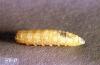
Image related to Sheep and goat-Wool maggot

Pacific Coast tick (Dermacentor occidentalis)
Rocky Mountain wood tick (Dermacentor andersoni)
Western blacklegged tick (Ixodes pacificus)

Management-chemical control

Melophagus ovinus

Management-chemical control

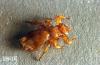
Image related to Sheep and goat-Sheep ked

Includes

Angora goat biting louse (Bovicola crassipes)
Goat biting louse (Bovicola caprae)
Goat sucking louse (Linognathus stenopsis)
Sheep biting louse (Bovicola ovis)
Sheep foot louse (Linognathus pedalis)

Management-chemical control