Insect Management Handbook

Includes

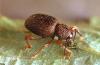
Black vine weevil (Otiorhynchus sulcatus)
Rough strawberry root weevil (Otiorhynchus rugosostriatus)
Strawberry root weevil (Otiorhynchus ovatus)

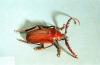
Prionus californicus

Image related to Hop-Prionus beetle

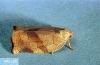
Cnephasia longana

Pest description and crop damage Caterpillars are up to 0.6 inch long and light cream to gray, with a light stripe on each side of the back. The head is brown. They feed on terminal hop buds causing lateral growth, which may necessitate extra training.

Management-chemical control

Choristoneura rosaceana

Pest description and crop damage Small caterpillars are tan. Mature caterpillars are green with black heads. In some seasons, caterpillars web in hop cones and cause some damage. They are not usually a serious pest.

Management-chemical control

Hypena humuli

Pest description and crop damage Caterpillars have two white lines along the back and a distinct whitish line on each side. The head is green and spotted with black dots. They seldom are a problem in Washington.

Management-chemical control

Phorodon humuli

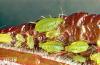
Pest description and crop damage Aphids overwinter as eggs on prune trees. Greenish to black, winged forms migrate to hops in May or June. Wingless forms on hops are pale yellowish green. They suck plant juices and excrete honeydew which can contaminate cones, especially when sooty mold colonizes the honeydew.

Management-chemical control

Image related to Hop-Hop aphid

Scutigerella immaculata

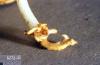
Pest description and crop damage A pest in western Oregon. Small, white-bodied, centipede-like animals. Adults have 12 pairs of legs, rapidly vibrating antenna, and spinnerets on the posterior of the body. They feed on roots and above-ground plant parts in contact with soil.

Management-chemical control

Image related to Hop-Garden symphylan

Forficula auricularia

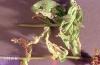
Pest description and crop damage Mature forms are about 0.6 inch long and light to dark brown. They are identified easily by the strong, movable, forceps-like cerci at the posterior tip of the abdomen. They don't damage plants, but their presence can contaminate harvested crops.

Management-chemical control

Image related to Hop-European earwig

Several species

Pest description and crop damage Soil-dwelling caterpillars. Their color varies, but mostly it is dark with distinct dorsal markings. Skin is smooth and glassy.

Management-chemical control

Helicoverpa zea

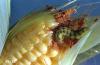
Pest description and crop damage Caterpillars vary from green to brown or reddish, with a few fine hairs or spines on the body.

Management-chemical control