Insect Management Handbook

Cephus cinctus

Meromyza pratorum and Meromyza saltatrix

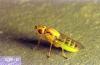
Pest description and crop damage The adult fly is light to dark green or green-yellow with a dark stripe on the dorsum of thorax. This insect's presence is recognized most easily by larval damage: white heads on headed culms. Larvae sometimes attack young tillers, cutting off the central shoot. Occasionally, larvae attack heads and destroy floral parts or developing seed.

Image related to Small grain-Wheat stem maggot

Harmolita tritici

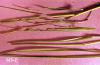
Pest description and crop damage Jointworm is the larva of a wasp resembling a small, winged black ant. Larvae live in stems and feed on sap, causing hard, woody galls usually above the second or third joints. They attack only wheat. They have not been observed as a pest for many years.

Management-cultural control

Eriophyes tulipae

Pest description and crop damage Tiny eriophyid mite, cigar-shaped but not visible to the naked eye, which causes, leaf rolling along the edges, and proliferation of florets and distortion of wheat heads. The pest is a vector of wheat streak mosaic virus (WSMV), which can cause damage to small grains in some years. Late-planted spring and early-planted fall grains are susceptible to damage.

Pest description and crop damage Green or brown shield-shaped true bugs, which use their piercing-sucking mouthparts to feed on foliar tissues including developing grain heads. They produce an unpleasant odor when disturbed, hence the name "stink bug".

Management-chemical control

Foliar sprays

Management-chemical control

Pachynematus spp.

Pest description and crop damage Green, caterpillar-like larvae feed on foliage and developing heads. They have been found mostly on wheat, but they may attack other cereals. They rarely are sufficiently abundant to require control.

Management-chemical control

Foliar sprays

Image related to Small grain-Sawfly

Cnephasia longana

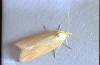
Pest description and crop damage The larvae of leaftier moths are about 0.625 inch long when fully grown, with a tan head The body is yellowish or gray with a lighter stripe on each side of the back.

This is a pest of vetch; occasionally it attacks wheat heads in fields where vetch grows. It is most common west of the Cascades.

Management-chemical control

Phytomyza nigra

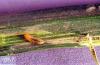
Pest description and crop damage Larvae mine the lower leaves of fall-seeded wheat, barley, and rye during the spring following seeding. New spring growth appears to mask injury these larvae may cause. The larvae are heavily parasitized by other insects, and this may aid in keeping this insect at relatively low numbers.

Management-chemical control

Insecticide control is rarely needed.

Image related to Small grain-Leafminer

Mayetiola destructor

Image related to Small grain-Hessian fly