Insect Management Handbook

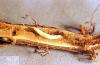
Fumibotys fumalis

Pest description and crop damage Early instar larvae are light green/yellow with dark stripes down the back; older larvae can be up to 0.75 inch long and are yellow/tan with a brown head. They feed inside mint rhizomes and on mint roots, from late July through September and early October in some years. This pest can severely reduce stands in most mint-producing areas.
Longitarsus waterhousei

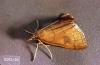
Pest description and crop damage Adults are small, 2mm long, pale brown to brownish-yellow flea beetles feed on mint foliage producing "shot-holed leaves." These usually are noticed first in late June, July. The main damage is by the larvae, also only 3mm long, which feed on and severely damage roots in late April, May, and June.

Includes

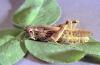
Clearwinged grasshopper (Camnula pellucida)

Pest description and crop damage Both young and adults feed on leaves. Leaf loss can be significant in years with warm, dry spring-time conditions.

Image related to Mint-Grasshopper

Scutigerella immaculata

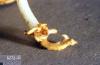
Pest description and crop damage Small (less than 0.25 inch), white, centipede-like animals that feed on hairs and meristematic tissue of roots and underground stems. Heavy feeding causes plant stunting, poor stem elongation, and small, chlorotic leaves. This arthropod is a severe pest of many crops in western Oregon.

Image related to Mint-Garden symphylan

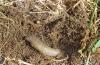
Tipula paludosa

Image related to Mint-Cranefly

Bertha armyworm (Mamestra configurata)
Mint cutworm (Heliothis phloxiphaga)
Spotted cutworm (Xestia c-nigrum)
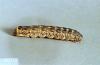
Variegated cutworm (Peridroma saucia)

See also:

Includes mint aphid (Ovatus crataegarius)

Pest description and crop damage Wingless forms are apple green to yellow-green sometimes with mottled, darker markings and are 1.5 to 2mm in length. Winged forms have a dark brown head and thorax. Large populations stunt and distort stems and leaves, make plants more susceptible to water stress, and secrete honeydew, which can help to sunburn leaves or cover them with black, sooty mold.

Includes

Alfalfa looper (Autographa californica)
Cabbage looper (Trichoplusia ni)

Diabrotica undecimpunctata undecimpunctata

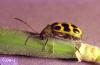
Pest description and crop damage Yellowish green, black-spotted beetles. They feed on foliage and growing tips and occasionally feed on hop cones. A pest in western Oregon and western Washington.

Management-chemical control

Image related to Hop-Western spotted cucumber beetle

Twospotted spider mite (Tetranychus urticae)

Pest description and crop damage Adults are small, eight-legged, spider-like arthropods. They are pale green to yellowish to reddish, often with a dark spot on each side of the body. They suck plant juices from leaves and hop cones.

Management-chemical control

Image related to Hop-Spider mite