Insect Management Handbook

Frankliniella spp. and other species

Pest description and crop damage Thrips can be highly damaging on timothy hay or timothy-alfalfa mixed-stand hay crops. They cause scarring and silvering of timothy, reducing both yield and forage quality.

Management-chemical control
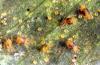
Banks grass mite (Oligonychus pratensis) Tetranychus spp.

Pest description and crop damage These spider mites typically infest timothy hay or timothy- alfalfa mixed-stand hay crops. Infestation leads to silvering and stunting of hay crop ultimately reducing yield especially in timothy hay.

Management-chemical control

Image related to Pasture and grass hay-Spider mite

Aedes spp.

Culex spp.

Management-chemical control

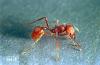
Pogonomyrmex spp.

Pest description and crop damage Large reddish ants found east of the Cascades. They build soil and pebble mounds and destroy vegetation around the mounds. May sting viciously when disturbed.

Management-chemical control

No effective insecticides are currently registered for ant control in pastures in the Pacific Northwest.

Image related to Pasture and grass hay-Harvester ant

Eriococcus insignis

Pest description and crop damage On timothy hay or timothy-alfalfa mixed-stand hay crops only. This scale weakens stands. It can be a serious pest in western regions where it has become established. A serious pest throughout western Washington.

Management-chemical control

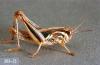
Many species, including:

Clearwinged grasshopper (Camnula pellucida)

Lesser migratory grasshopper (Melanopus sanguinipes)

Redlegged grasshopper (Melanoplus femurrubrum)

Twostriped grasshopper (Melanoplus bivittatus)

Image related to Pasture and grass hay-Grasshopper

Face fly (Musca autumnalis)

Horn fly (Haematobia irritans)

Pest description and damage Face flies and horn flies can significantly reduce livestock productivity by causing stress and weight loss in cattle.

Management-chemical control

Tipula paludosa

Pest description and crop damage Crane fly larvae which resemble gray grubs that on pasture roots and crowns from October through May. Older larvae may feed above ground on stems and leaves during the night. Large numbers can thin stands in old pastures and kill seedlings in new stands.

Management-chemical control

Image related to Pasture and grass hay-European crane fly

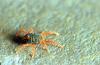
Clover mite (Bryobia praetiosa)

Winter grain mite (Penthaleus major)

Image related to Pasture and grass hay-Clover and winter grain mite