Insect Management Handbook

Epitrimeris spp. and others

Pest description and crop damage Very tiny, white, worm-shape mites found along stem and needle bases. Infested foliage takes on an olive-green color; older needles drop prematurely.

Management-chemical control

Biology and distribution of this mite is not well understood. Apply when new growth is 1 inch or less.
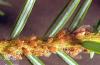
Cinara occidentalis and Cinara abietis

Pest description and crop damage C. abietis are large, dark aphids typically feeding on upper stems and tended by ants. May distort stems. C. occidentalis feed at the base of needles on 1 year and older foliage, often in the lower portion of the tree and may be quite damaging.

See table:

Image related to Christmas tree (Common pests)-Conifer aphid

Pest description and crop damage Primarily a pest in western Oregon and Washington. Damage is most critical when establishing a seedling stand.

Management-chemical control

Sitona lineata

Pest description and crop damage This is the common, large light-green aphid found on most legumes. Large populations weaken plants, secrete honeydew, and can reduce hay yield.

Management-chemical control

Image related to Vetch hay-Pea leaf weevil

Cnephasia longana

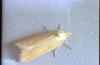
Pest description and crop damage Yellow spindle-shaped larvae with brown heads and light stripes on each side of the back. They web and feed within terminal leaves.

Management-chemical control

Many species

Pest description and crop damage Caterpillars vary in color when full grown: 1 to 2 inches in length. They feed on foliage of older plants or cut off young plants at ground level. Larvae of both commonly feed on plants at night, hiding in or on the soil surface under leaf litter by day.

Management-chemical control

Anabrus simplex

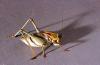
Pest description and crop damage Flightless, heavy katydids that feed on many range plants as well as on small grains and alfalfa. They migrate from pastures into crop fields during outbreak years.

Management-biological control

Image related to Rangeland-Mormon cricket

Many species, including:
Clearwinged grasshopper (Camnula pellucida)
Lesser migratory grasshopper (Melanopus sanguinipes)
Redlegged grasshopper (Melanoplus femurrubrum)
Twostriped grasshopper (Melanoplus bivittatus)

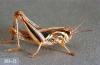
Image related to Rangeland-Grasshopper

Labops hesperius and other Labops spp.

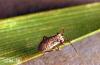
Image related to Rangeland-Black grass bug

Many species, including
Army cutworm (Chorizagrotis auxillaris)
Armyworm (Pseudaletia unipuncta)
Black cutworm (Agrotis ipsilon)
Glassy cutworm (Apamea devastator)