Insect Management Handbook

Elatobium abietinum

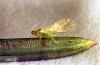
Pest description and crop damage Small, dull-green aphid causes extreme needle drop. Aphids appear early in the season (fall to winter months) and may increase rapidly during March and April.

See table:

Image related to Christmas tree (Spruce)-Spruce aphid

Adelges cooleyi

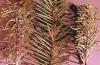
Pest description and crop damage Causes "pineapple" galls on spruce, the primary host.

See table:

Management-chemical control

Image related to Christmas tree (Spruce)-Cooley spruce gall adelgid

Pissodes strobi

Pest description and crop damage A small brown weevil, roughly 0.25 inch in lengthy, with the snout typical of other weevils. Wing covers have irregular patches of brown and white scales. An important pest of spruce and pine, occasionally a pest of Douglas-fir.

Management-chemical control

Chionaspis pinifoliae

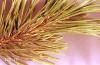
Pest description and crop damage White scale flock needles. Hosts: Douglas-fir and pines. Eggs hatch May or June, perhaps July.

Management-chemical control

Apply to crawler stage.

Image related to Christmas tree (Pine)-Pine needle scale

Pinus strobi

Pest description and crop damage. Appear as white, woolly mass on trunk or stem. May severely distort new growth.

See table:

Management-chemical control

Rhyacionia buoliana

Pest description and crop damage Larvae stunt and deform stems, especially terminals. The moth is established in western Washington but is still relatively rare in Oregon.

Sampling and thresholds Pheromone traps and degree-day models are available to monitor for adults.

Management-chemical control

Nuculaspis californica

Management-chemical control

Pissodes strobi

Pest description and crop damage A small brown weevil, roughly 0.25 inch in length, with the snout typical of other weevils. Wing covers are marked with irregular patches of brown and white scales. Important pest of spruce and pine, occasionally a pest of Douglas-fir.

Management-chemical control

Includes

Douglas-fir tussock moth (Orgyia pseudotsugata)
Rusty tussock moth (Orgyia antiqua nova)

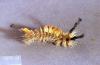
Pest description and crop damage Caterpillars with tufts (tussocks) of hair. Larvae may be found in large numbers under webbing on branches.

Management-chemical control

Apply to control young larvae when present and feeding.

Image related to Christmas tree (Douglas-fir)-Tussock moth