The specialized fungal hyphal branch that bears the conidium.
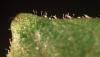
Using low power magnification you can see the upright conidiophores with chains of conidia of grape powdery mildew that look like a row of tiny water droplets or a short string of tiny pearls.
David Gadoury.
Presence in numbers (e.g., of insects, mites, or nematodes). Do not confuse with "infection," a term that applies only to living, diseased plants or animals.
Destroying all infested and infected plant parts; decontamination of tools, equipment, containers, work space, and hands.
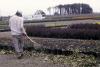
Raking leaves is one of many good sanitation practices.
Jay W. Pscheidt.
Filamentous bacteria that produce several antibiotics and give soil its earthy smell.
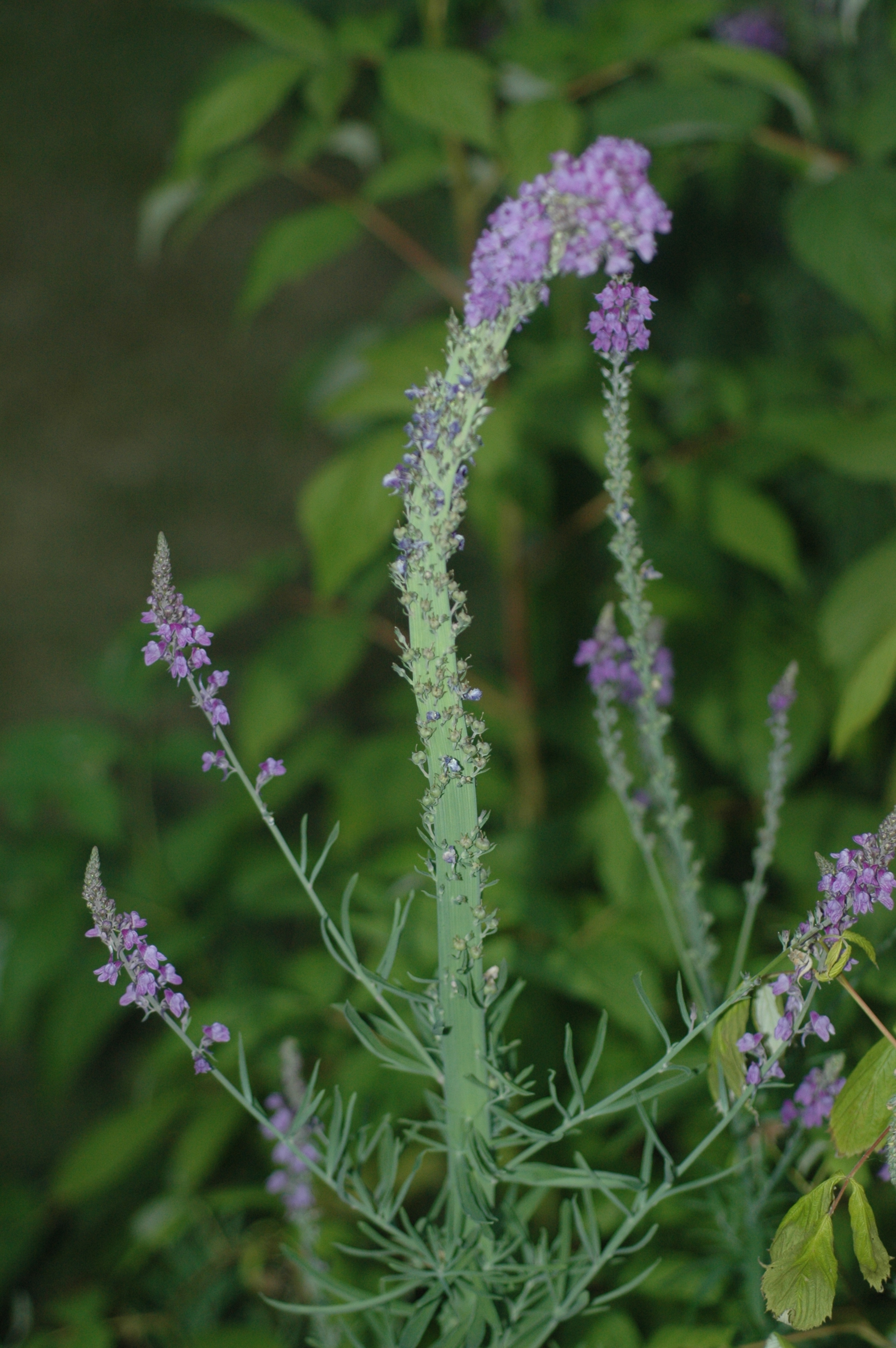
A distortion of a plant caused by an injury or infection that results in thin, flattened, and sometimes curved shoots.
Flatened stem of this Linaria plant is called fasciation.
Jay W. Pscheidt, 2008.
An organism that lives within or upon another living organism from which it derives nourishment and in which it may cause various degrees of injury.
Ability of the plant to endure the development of the parasite without showing marked symptoms of disease.
A fungal resting spore produced by the fusion of equal gametes.
Abnormal, brush-like development of many weak shoots.
Douglas-fir with large mistletoe witches' brooms.
Photo by Everett Hansen, 1999.
An unthrifty plant reduced in size and vigor due to unfavorable environmental conditions.