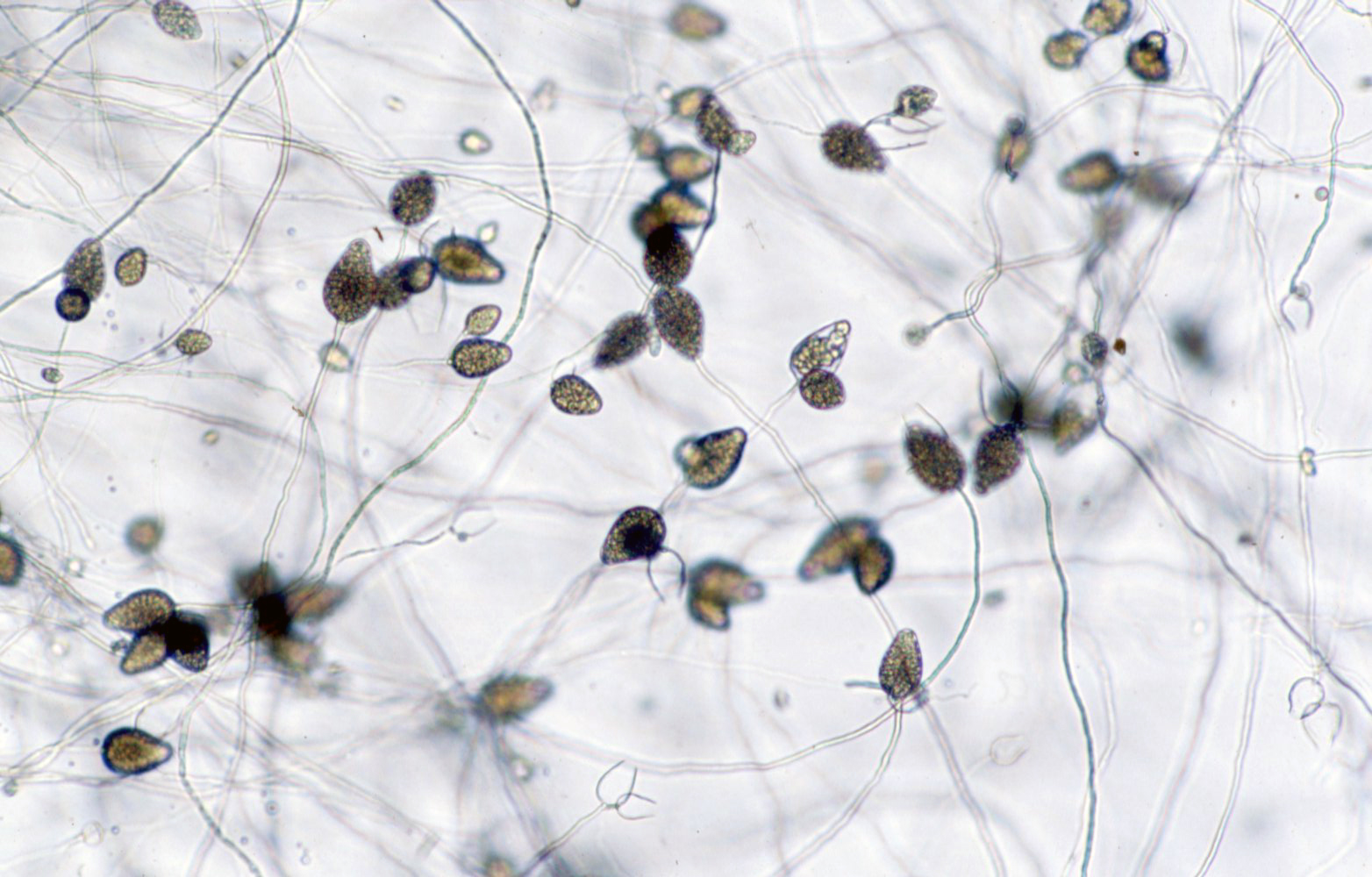
A fruiting body that produces asexual spores within a more or less spherical wall.
Sporangia of Phytophthora sp.
Melodie Putnam collection.
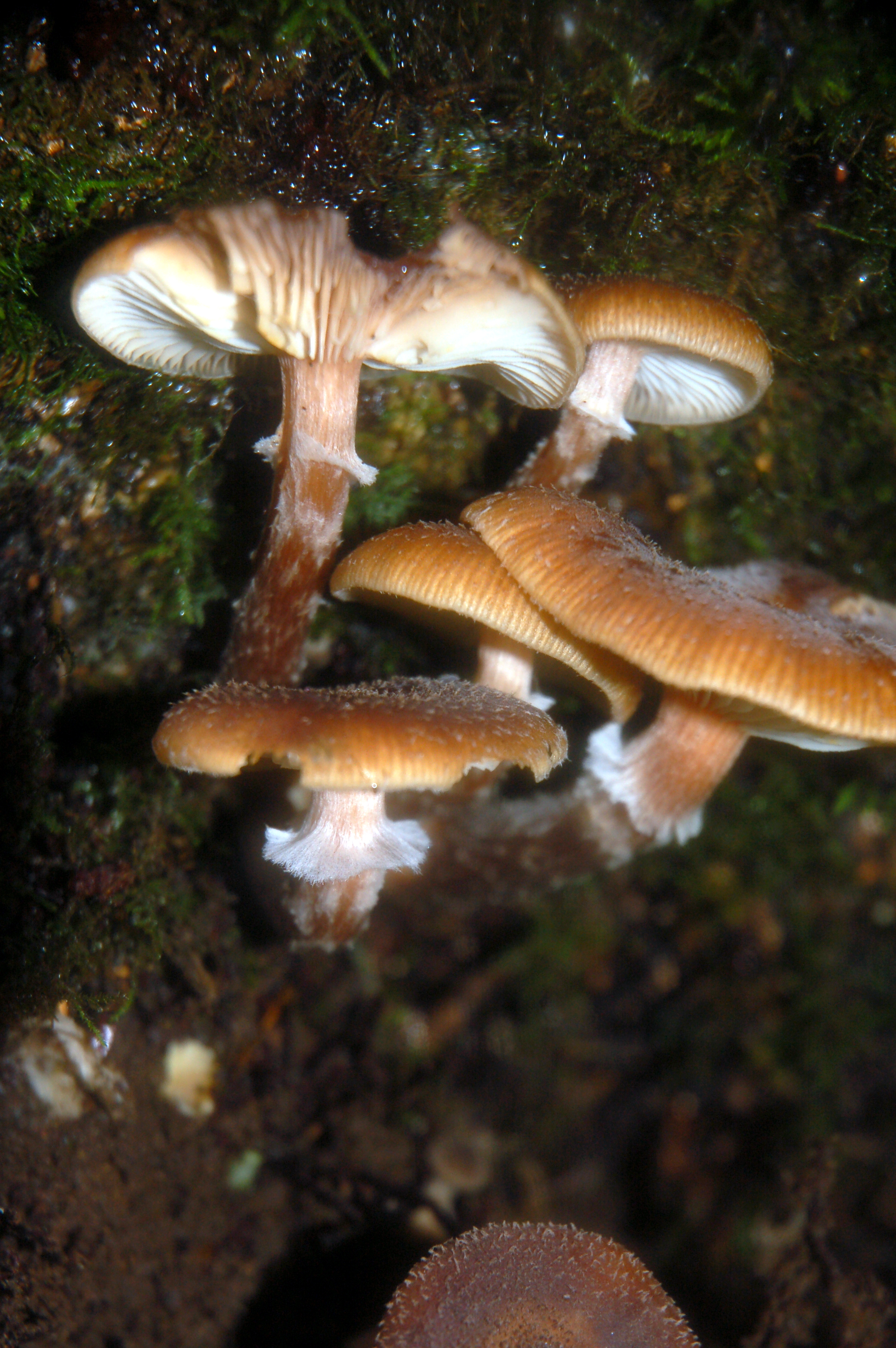
A group of fungi characterized by the pro duction of sexual spores on a clubshaped filament called the basidium.
Many mushroom producing fungi are basidiomycetes such as Armillaria.
Laura Sims, 2012.
A negative (or positive) reaction to the standard Gram's stain for bacteria.
The first infection of a plant, usually in the spring by an overwintering sexual pathogen propagule.
A disease characterized by yellowing and stunting of affected parts (caused by fungi, virus, bacteria, or deficiency of essential elements).
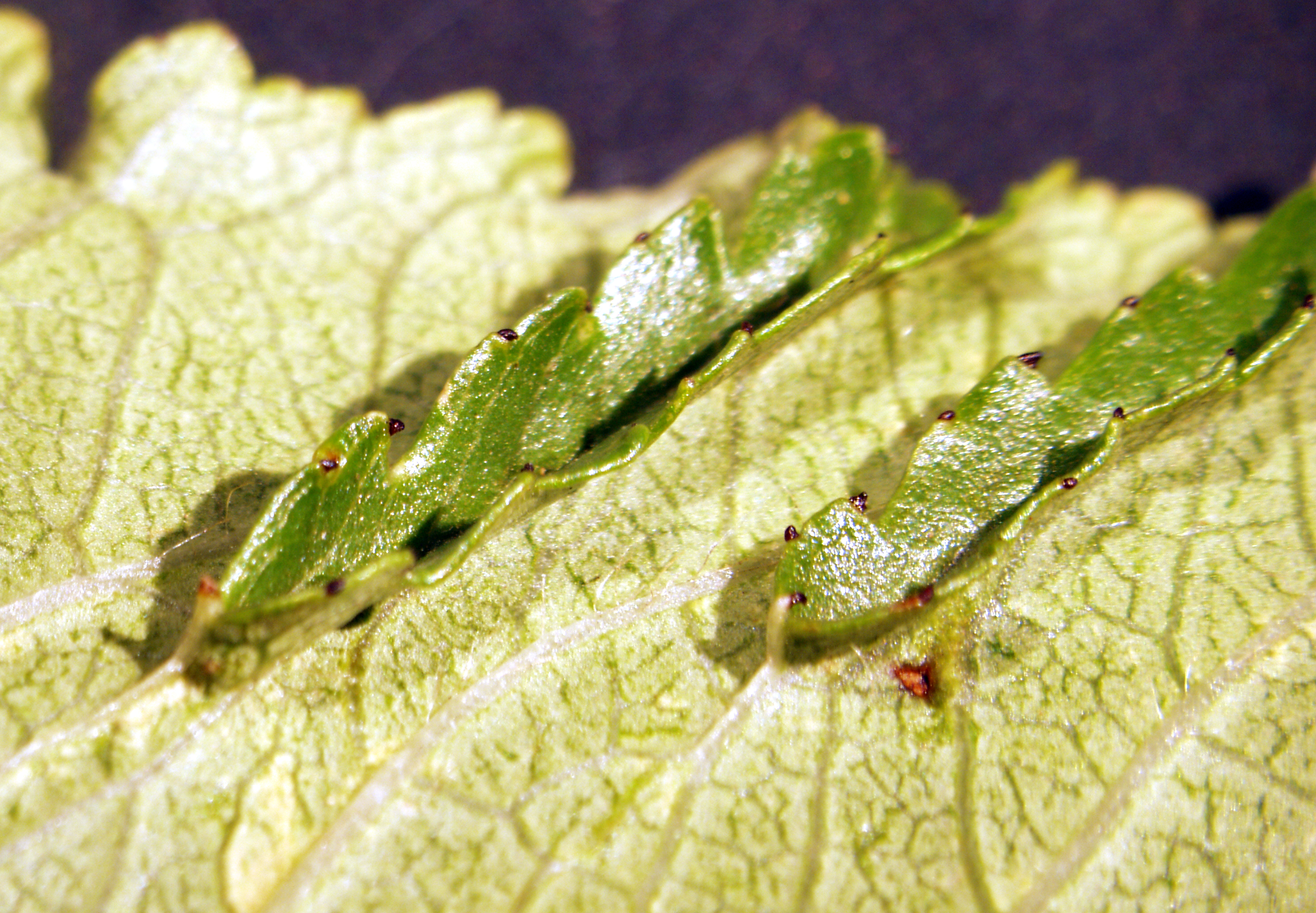
An abnormal outgrowth from the surface of a stem or leaf.
Cherry leaves infected with certain viruses can develop enations on the underside of the leaf.
Jay W. Pscheidt, 2016.
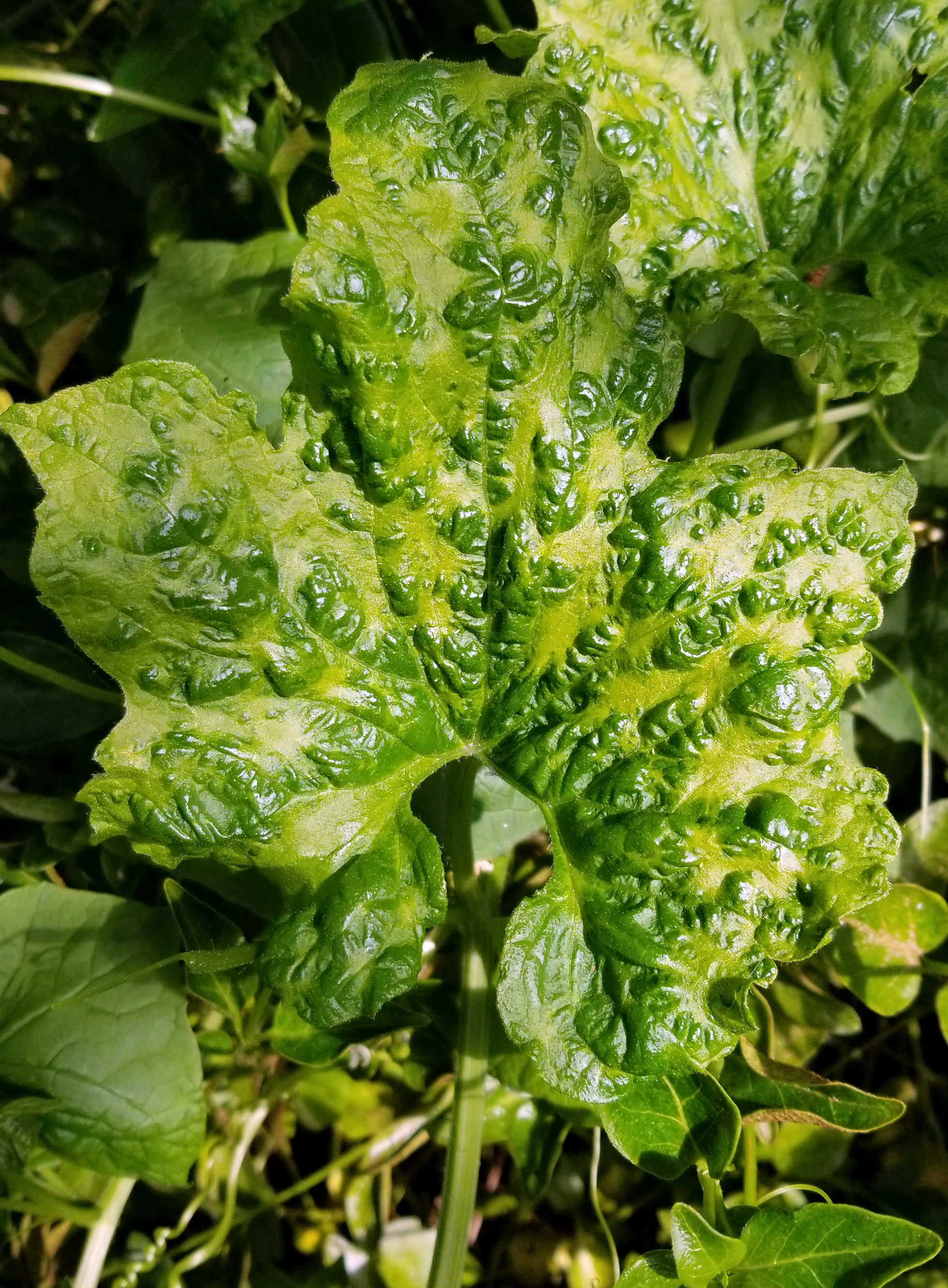
Disease symptom characterized by nonuniform foliage coloration, with a more or less distinct intermingling of normal and light green or yellowish patches. Usually caused by a virus.
Very distinct patches of dark and light green.
Jay W. Pscheidt, 2020.
The specialized fungal hyphal branch that bears the conidium.
Using low power magnification you can see the upright conidiophores with chains of conidia of grape powdery mildew that look like a row of tiny water droplets or a short string of tiny pearls.
David Gadoury.
Presence in numbers (e.g., of insects, mites, or nematodes). Do not confuse with "infection," a term that applies only to living, diseased plants or animals.
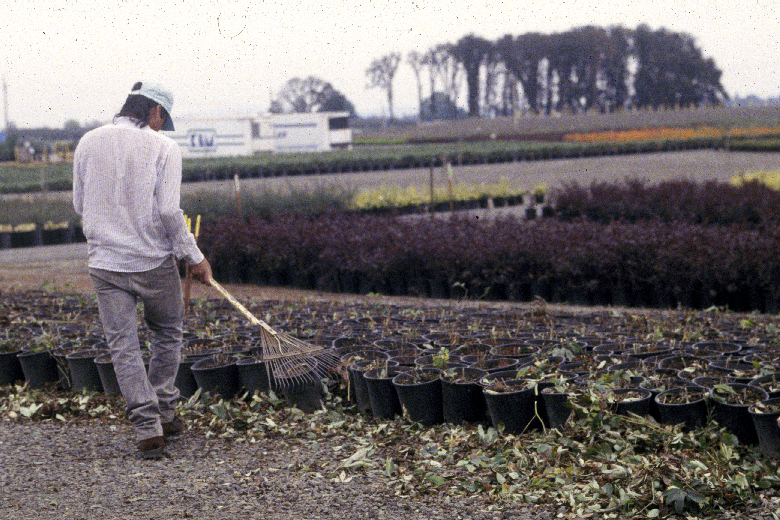
Destroying all infested and infected plant parts; decontamination of tools, equipment, containers, work space, and hands.
Raking leaves is one of many good sanitation practices.