Plant Disease Management Handbook

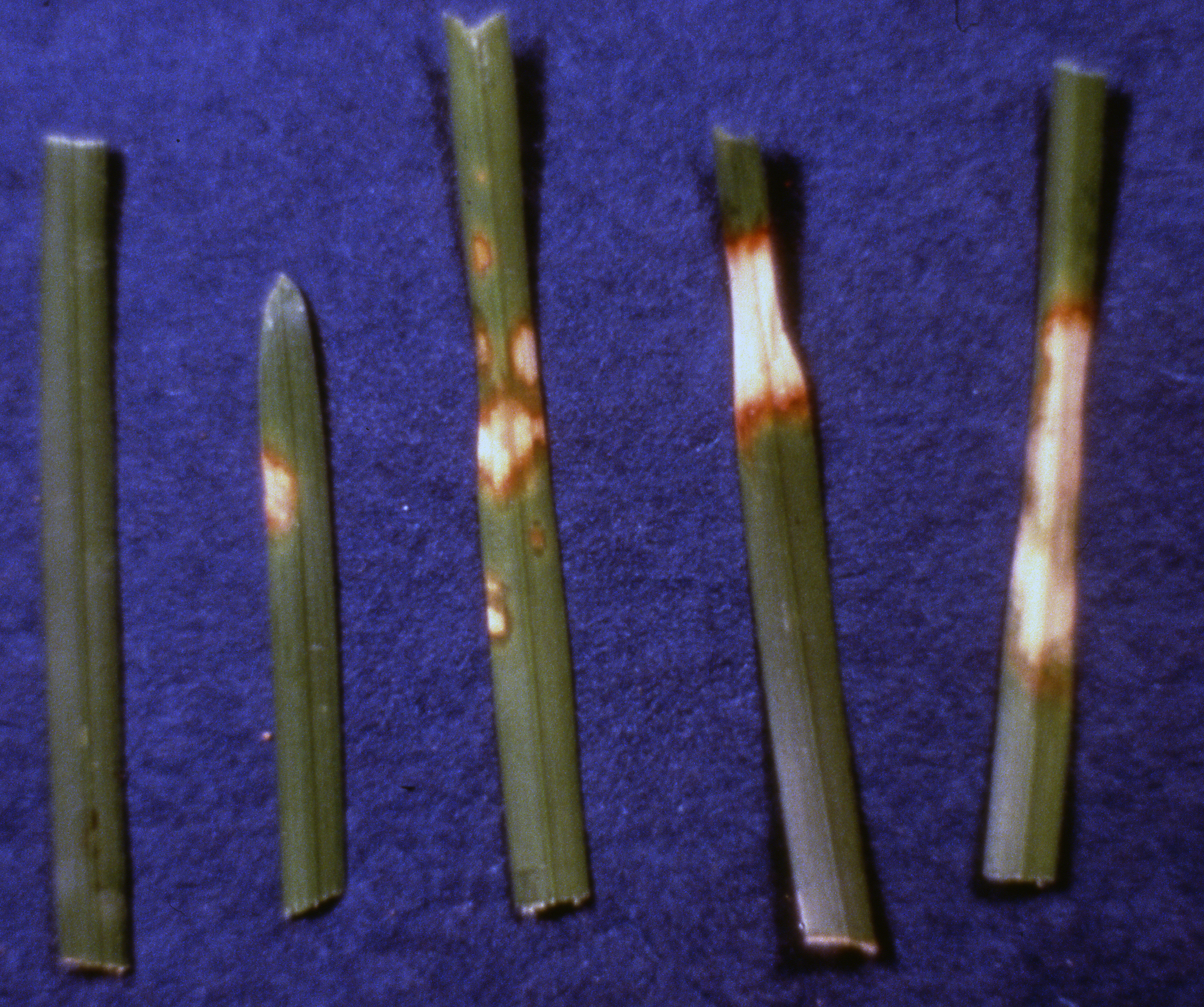
Cause The fungus Rhabdocline laricis (formerly Meria laricis) overwinters in fallen needles and dead terminal tufts of needles that adhere to seedlings. Spores are produced in the spring as new foliage is produced. Young juvenile tissues are most susceptible to infection. Wet spring weather favors the disease.

Cause The fungus Hypodermella laricis infects newly emerging needles in the spring from dead infected needles that remain on the tree. More of a problem when spring and summer weather is cool and moist for years, or when larch grows on foggy, cloudy mountain sides.

Image related to Larch (Larix spp.)-Dwarf Mistletoe

Cause The fungus Peronospora lamii. The disease has been found on Lamium in Oregon. The cultivars Beacon Silver and White Nancy are susceptible. The disease is favored by cool, wet conditions. Spores are produced under high humidity and are released in large numbers when relative humidity drops (particularly in the morning hours). Spores are carried through the air, spreading the disease under favorable environmental conditions.

Cause Phytophthora spp., fungus-like microorganisms that survive in soil and can be carried in irrigation water from surface sources. Prolonged soil saturation is optimal for the pathogen to infect roots. The OSU Plant Clinic has found the disease. Studies in China have found that lower soil pH (from a range of 4.2 to 8.8) was associated with more pathogen. Warmer soil temperatures (from a range of 12.7 to 24.3°C) were also associated with more pathogen.

Image related to Kiwifruit (Actinidia spp.)-Root and Crown Rot

Cause Botrytis cinerea, a fungus. This is an important postharvest problem in cold storage. Overwintering sclerotia and mycelium produce abundant conidia in winter and spring. Conidia infect petals and anthers under warm, moist conditions during bloom. Infection periods occur when the temperature is between 57°F and 77°F during a wetness event of at least 6 hours. Sepals and receptacles can become infected from 30 days after flowering through harvest.