Insect Management Handbook

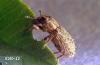
Hypera nigrirostris

Pest description and crop damage Green or brown weevils about 1 inch long. Larvae feed under basal leaf sheath, tunnel in stem, and feed on florets in developing flowers. Mainly a pest of red and alsike clover.

Management-chemical control
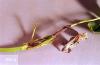
Image related to Clover seed-Lesser clover leaf weevil

Includes

Common cranefly (Tipula oleracea)
European cranefly (Tipula paludosa)

Image related to Clover seed-Cranefly

Tychius picirostris

Image related to Clover seed-Clover seed weevil

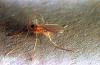
Dasineura leguminicola

Pest description and crop damage This is a small, mosquito-like insect. Salmon-pink maggots prevent seed formation and make blossoms look lopsided. This insect is primarily a pest of red clover in western Oregon and Washington. It is not a problem in Idaho.

Management-cultural control

Image related to Clover seed-Clover seed midge

Bruchophagus platypteru

Pest description and crop damage Adult is small, shiny black, and wasp-like. Larvae feed within the seed and destroy it.

Management-cultural control

Sitona hispidula

Pest description and crop damage Adults are small grayish weevils about 0.17 inch in length. Larvae feed on fibrous roots and chew cavities in main roots.

Management-cultural control

Plowing out and rotation with a cereal crop helps control this pest.

Management-chemical control

No labeled insecticides are effective.

Image related to Clover seed-Clover root curculio

Hylastinus obscurus

Pest description and crop damage Adult beetles are about 0.1 inch in length and dark brown. Larvae are creamy white and burrow within the roots of red clover. This insect is primarily a pest of red clover and is the major limiting factor in red clover production west of the Cascades. Because of reduced crop vigor, usually no more than two seed crops are economically feasible.

Management-cultural control

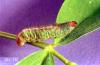
Donus zoilus

Pest description and crop damage This is the largest weevil found in legume fields. The full-grown larva is about 0.5 inch long and has a brown head. The body of the larva is green or yellowish-green shading to pink at the tip of the abdomen, with a white or pinkish line down the center of the back. Larvae feed on leaves.

Management-chemical control

Image related to Clover seed-Clover leaf weevil

Includes

Clover aphid (Nearctaphis bakeri)
Pea aphid (Acyrthosiphon pisum)

Image related to Clover seed-Aphid