Insect Management Handbook

Various species

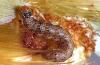
Pest description and crop damage Snails and slugs are nocturnal and generally feed during the night damaging many varieties of plants and plant seedlings. They inhabit damp, moist areas around decaying refuse, organic matter, and hide at the base of growing plants. Their presence can be detected by the shiny trails left on the soil surface. Damage is to new seedlings and primarily to hay grown west of the Cascades.

Management - chemical control

Delia platura

Pest description and crop damage A small white maggot that attacks seed, germinating seeds, and seedlings. Seedlings that germinate usually die before maturation or are severely stunted. Seedcorn maggot-induced damage is facilitated by early planting dates, heavy cover crops, and cool-wet weather.

Management-chemical control

Image related to Corn seed-Seedcorn maggot

Includes

Banks grass mite (Oligonychus pratensis)
Twospotted spider mite (Tetranychus urticae)

Image related to Corn seed-Two spotted spider mite and Banks grass mite

Includes

Black cutworm (Agrotis ipsilon)
Glassy cutworm (Apamea devastator)
Redbacked cutworm (Euxoa ochrogaster)

Pest description and crop damage Reddish, green, black, or dirty white worms that tunnel into the base of the plant, cut off seedlings, or feed on foliage.

Image related to Corn seed-Cutworm

Diabrotica spp.

Pest description and crop damage Adults feed on corn silks, causing loss of seed yield by interfering with pollination.

Management-chemical control

Image related to Corn seed-Corn rootworm (adult)

Diabrotica spp.

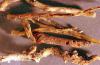
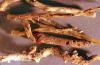
Pest description and crop damage Larvae feed on corn roots. They cause stunting and lodging and occasionally kill plants. Larvae are 0.5 inch long and pale yellow with yellow-brown heads. For additional information on identification and biology, please see: https://extension.oregonstate.edu/catalog/pub/pnw662

Management-chemical control

Image related to Corn seed-Corn rootworm (larvae)

Includes

Bean aphid (Aphis fabae)
Bird-cherry oat aphid (Rhopalosiphum padi)
Corn leaf aphid (Rhopalosiphum maidis)
Green peach aphid (Myzus persicae)
Potato aphid (Macrosiphum euphorbiae)

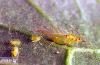
Image related to Corn seed-Aphid

Tetranychus urticae

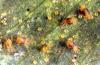
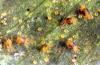
Pest description and crop damage Tiny, spiderlike animals found on the underside of foliage and on plant terminals. Spider mites become a problem when air temperatures begin increasing in the summer. Dry, dusty conditions favor these pests. Mites feed on leaf surfaces. Yellowing and bronzing on the top side of the leaves indicates the presence of mite colonies on the underside. Lots of webbing and leaf desiccation indicate severe mite infestation.

Image related to Carrot seed-Twospotted spider mite

Lygus spp.

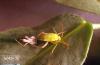
Pest description and crop damage Adults are about 0.2 inch in length, with a light yellow V on their back at the base of the wings. They vary from light brown to green. Lygus bugs use piercing-sucking mouthparts to feed on the umbels, which causes aborted buds, blossom drop, and shriveled seeds. Adults and late-stage nymphs are the most injurious stages, but the smaller nymphs are easiest to control.

Image related to Carrot seed-Lygus bug