Insect Management Handbook

Includes green peach aphid (Myzus persicae)

Pest description and crop damage The green peach aphid is yellowish green and teardrop-shaped. Its most important damage is as a vector of virus diseases rather than by feeding injury through sucking sap.

Management-chemical control

See Table 1.
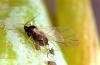
Image related to Table beet seed-Aphid

Delia brassicae

Pest description and crop damage Larvae are legless white maggots that feed on roots.

Management-chemical control

See also:

Image related to Rutabaga and turnip seed-Cabbage maggot

Cabbage aphid (Brevicoryne brassicae)
Turnip aphid (Lipaphis pseudobrassicae)

Pest description and crop damage Both species are gray mealy plant lice that form colonies on foliage.

Management-chemical control

Image related to Rutabaga and turnip seed-Aphid

Limonius spp. and Ctenicera spp.

Pest description and crop damage Brown, shiny, jointed larvae of click beetles. Larvae are from 0.33 to 0.5 inch in length. They inhabit soil for 2 to 5 years during maturation, feeding on plant roots and lower stems.

Management-chemical control

See:

Image related to Radish seed-Wireworm

Several species

Pest description and crop damage Mollusks that feed on foliage and leave slime trails.

Management-chemical control

See:

Lygus spp.

Pest description and crop damage Adults are 0.18 inch in length and have a light yellow V on the back. Lygus bugs pierce buds and suck sap, injuring both vegetative and reproductive buds. Damage includes blasted buds, blossom drop, and shriveled seed.

Management-chemical control

Beet leafhopper (Circulifer tenellus)

Pest description and crop damage Beet leafhoppers transmit a phytoplasma, the beet leafhopper transmitted virescence agent (BLTVA), to radish crops in the arid regions of the Pacific Northwest. BLTVA-infected radish seed plants tend to bolt prematurely, and the flower parts can be malformed.

Management-chemical control

Pieris rapae

Pest description and crop damage Larvae are green and very hairy, with an almost velvet-like appearance. Older larvae may be up to 1 inch in length. They often have one faint yellow-orange stripe down their backs and broken stripes along the sides.

Management-chemical control

Image related to Radish seed-Imported cabbageworm

Plutella xylostella

Image related to Radish seed-Diamondback moth

Various species

Pest description and crop damage Dull gray, brown, or black caterpillars. They are active at night and can be found in the soil by day. They cut off young plants at ground level, or feed on foliage, buds, and bloom of older plants.

Management-chemical control

See: