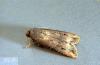
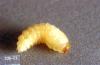
Pest description and crop damage Moths in the family Noctuiidae have gray or brown forewings with slate or buff-color markings. Hind wings are silvery-gray or beige. Average wingspan is 1.4 to 1.6 inches.
Bird cherry-oat aphid (Rhopalosiphum padi) Corn leaf aphid (Rhopalosiphum maidis) English grain aphid (Macrosiphum avenae) Rose grass aphid (Metopolophium dirhodum)
Seed corn maggot (Delia platura) and several species of wireworm
Management-chemical control
Bruchus pisorum
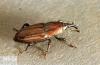
Pest description and crop damage A small, grayish-brown weevil 0.2 inch long, marked with dark and light spots. Larvae feed within the seed and destroy its viability.
Sampling and thresholds Usually, one weevil per 25 sweeps of an insect net will result in weevil infested peas at harvest.
Management-chemical control
Sitona lineata
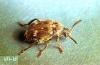
Pest description and crop damage Adults are small, grayish brown, faintly striped weevils about 0.17 inch long. They appear in large numbers in spring and sometimes late summer. Adult feeding on young plants in spring may considerably notch and rag leaves, but this damage has not been found to reduce stand or yield appreciably.
Management-chemical control
Acyrthosiphon pisum
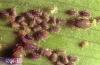
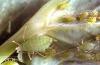
Pest description and crop damage The common light-green aphid found on legume plants. They feed by sucking plant juices. They can transmit virus diseases and can reduce yields when abundant.
Pest description and crop damage Nymph and adult grasshoppers can be a problem at seedling emergence. During years of high populations, grasshoppers migrate into emerging stands and devour the cotyledons. Damage is usually limited to the field margins, but total stand loss there can occur. An economic threshold of 7 to 12 grasshoppers per square meter is recommended.