Glossary
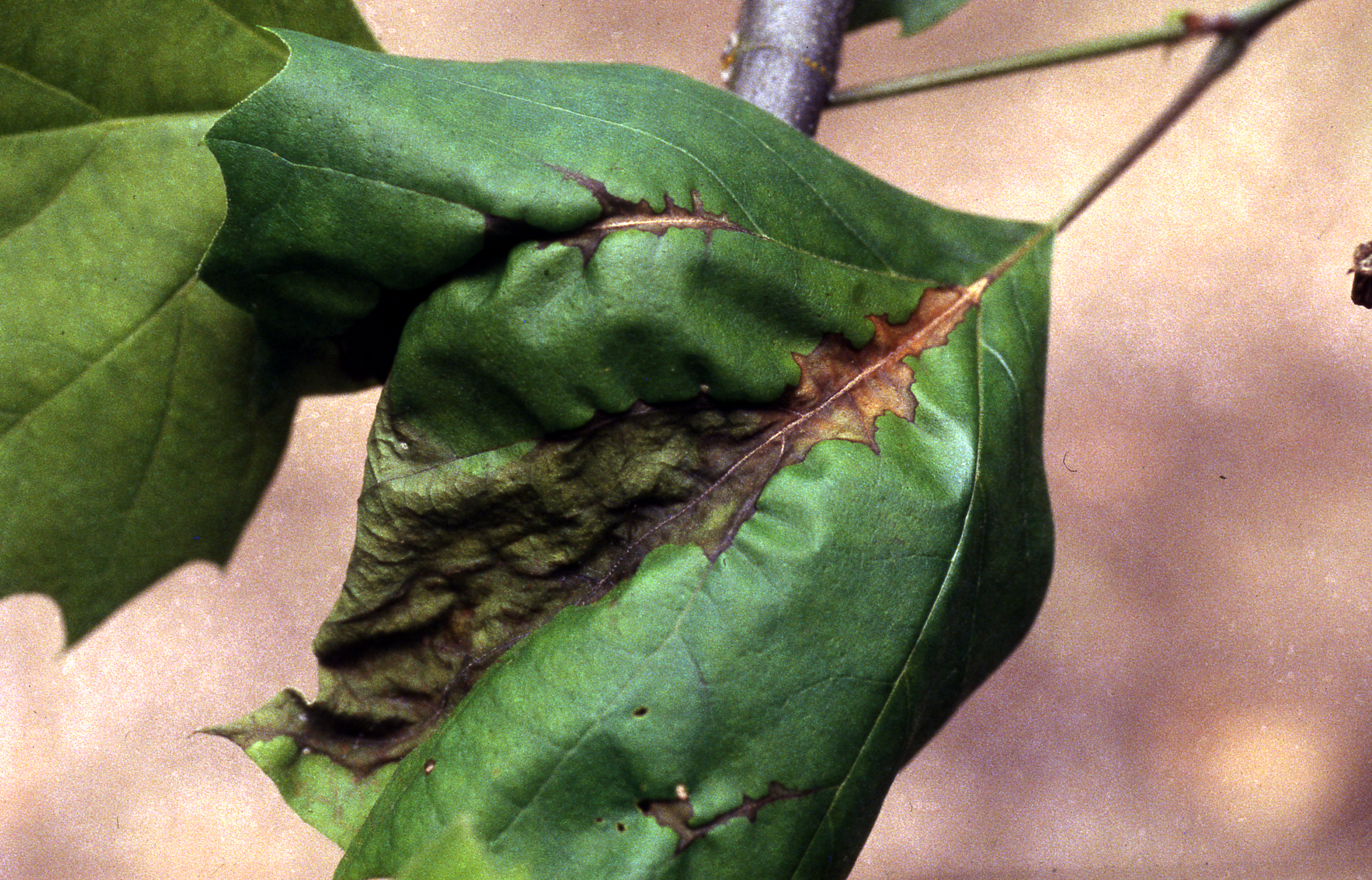
Anthracnose symptoms on Sycamore. Note the necrotic areas that follow the leaf veins.
Jay W. Pscheidt, 1994.

Anthracnose symptoms on Sycamore. Note the necrotic areas that follow the leaf veins.

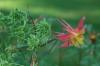
Columbine sp. with "phyllody" or "virescence" - what is that? Check the glossary!
In this section
Click on the image below to download the PDF file.


Expert help is available to you at your local Plant Clinic.
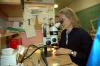

Step 1: Is it normal? Walnuts (right) typically break bud late in western Oregon while other plants such as cherry (left) have been growing for several weeks.
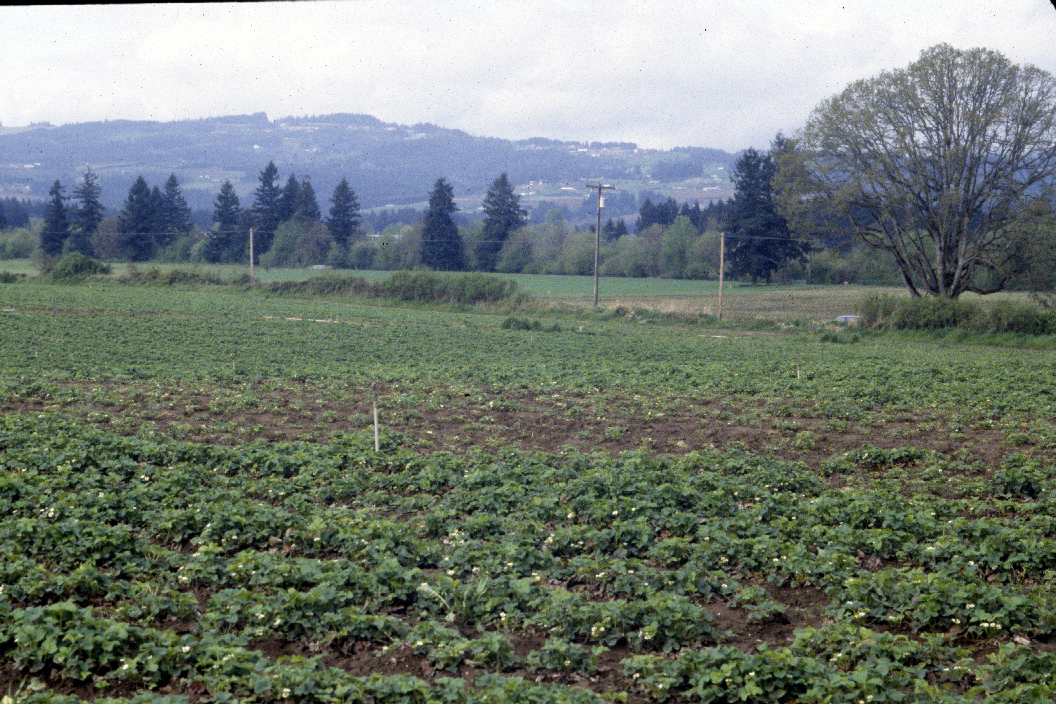
Step 2a: Look for patterns in the community. All the strawberries do not look the same in this picture. The circular areas have both Verticillium wilt and nematode problems.

Different plants in this community have the same problem along the edges of this nursery bed. Roots froze during a winter cold period.
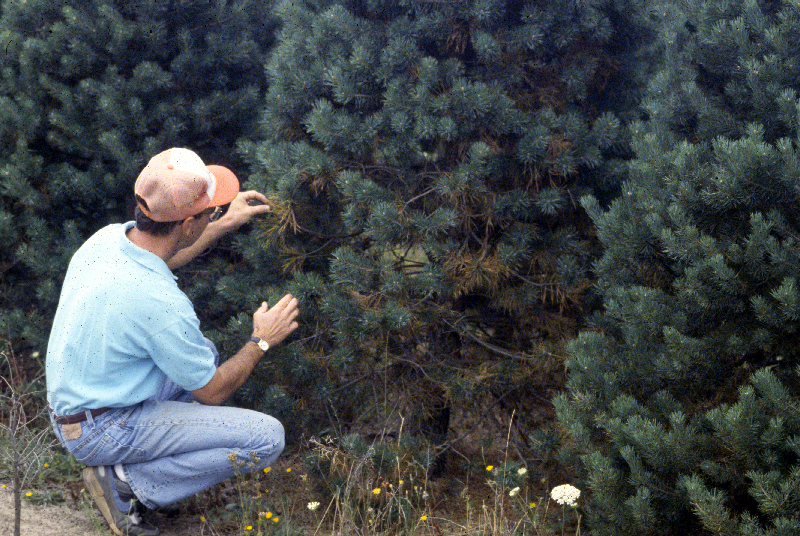
Step 2b: Look for patterns on individual plants. This Christmas tree has lost many lower needles due to Lophodermium needle cast.
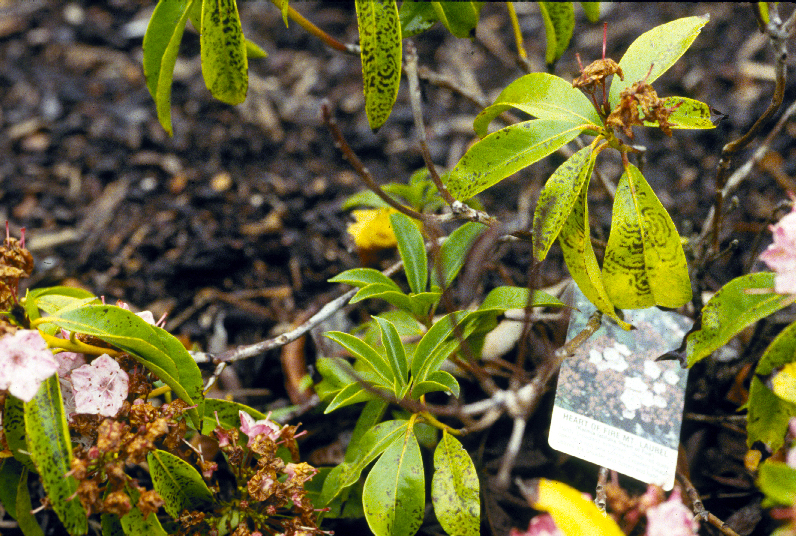
Step 2c: Look for patterns on plant parts. Ringspots and line patterns on these Kalmia leaves indicate necrotic ringspot virus infection.
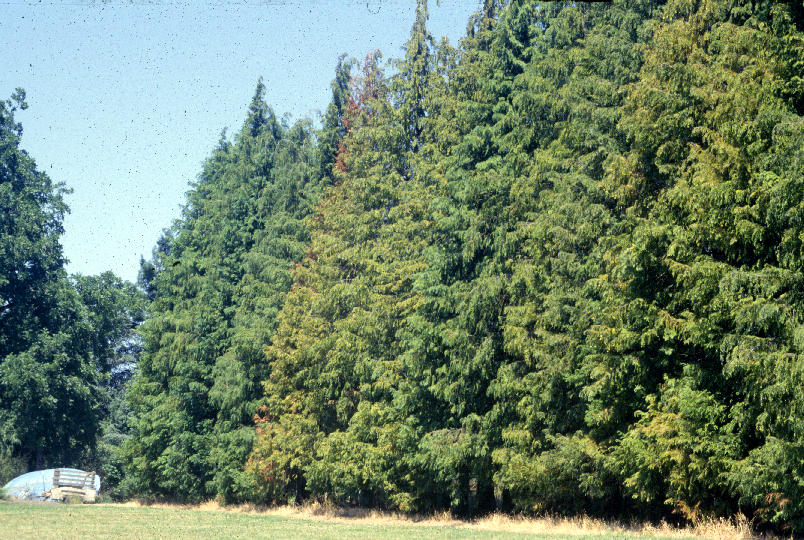
Step 3: Investigate time development. These Port-Orford Cedar trees have root rot and over time have been progressively getting worse.
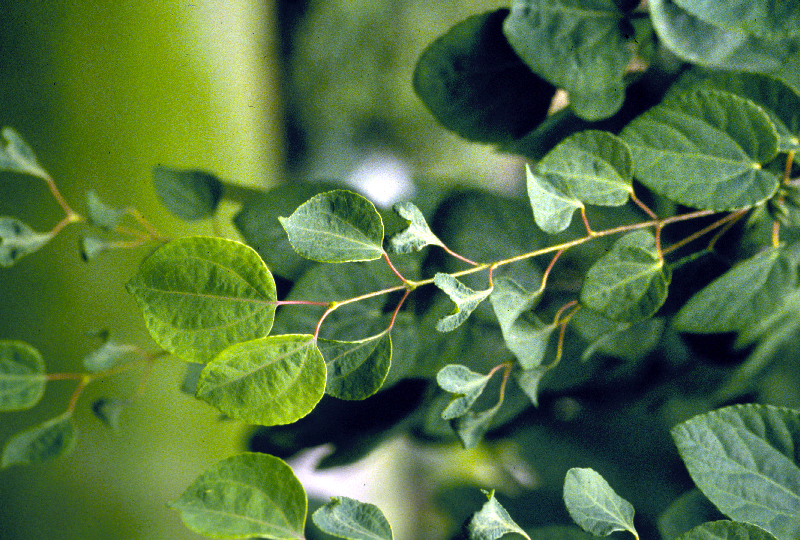
Time development can be seen on this Katsura tree shoot when you understand how plants grow. After bud break normal leaves were formed but then deformed leaves were made. The growing point did not die, the non-living problem stopped and new leaves formed were normal again.

Dr. Jay W. Pscheidt, Oregon State University
Dr. Cynthia M. Ocamb, Oregon State University


Many changes from issue to issue from 1954 to 2021.
Jay W. Pscheidt, 2012.

H. J. O'Reilly (right) talking with a strawberry grower.

Jack Horner

Iain MacSwan (left) with secratary Shirly Sams.
OSU Extension Plant Pathology Collection, 1976.

Bob Powelson
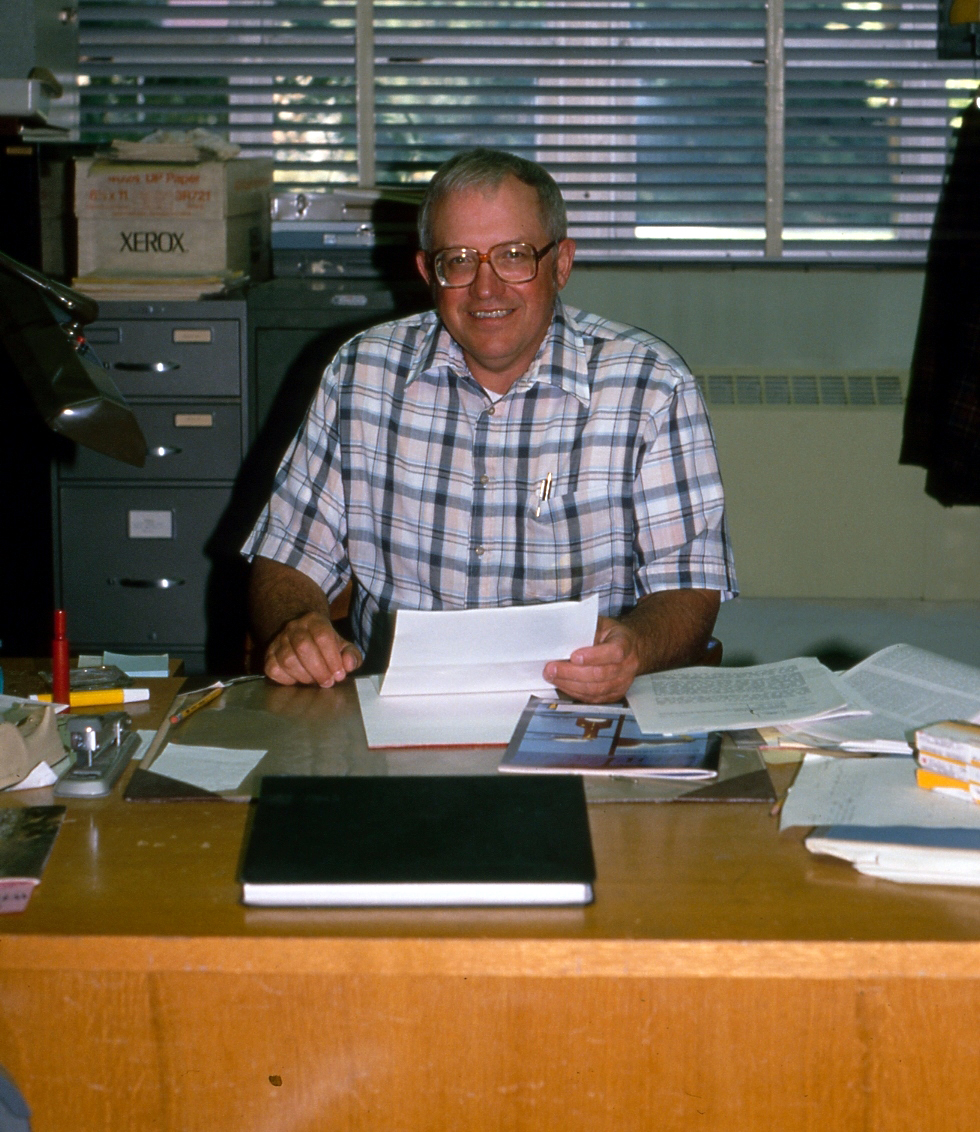
Paul Koepsell in his Cordley Hall office.
OSU Extension Plant Pathology Slide Collection, 1988.

From left to right, Christina Richards, Gene Newcomb, Stacey Fischer Butterfield, Paul Koepsell, Karen Nelson, Jay Pscheidt.
OSU Extension Plant Pathology Collection, 1988.


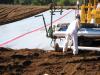
Flat fumigation using totally impermeable film (TIF) to hold in fumigant. This person is shoveling soil onto the edge of the tarp to hold it in place before the fumigation rig makes the next pass.
In this section

Surface water sources such as rivers, ponds, and reservoirs for storing runoff water are almost always contaminated and should be disinfested before use in irrigation.

Runoff water is returned to a reservoir prior to disinfestation treatment.
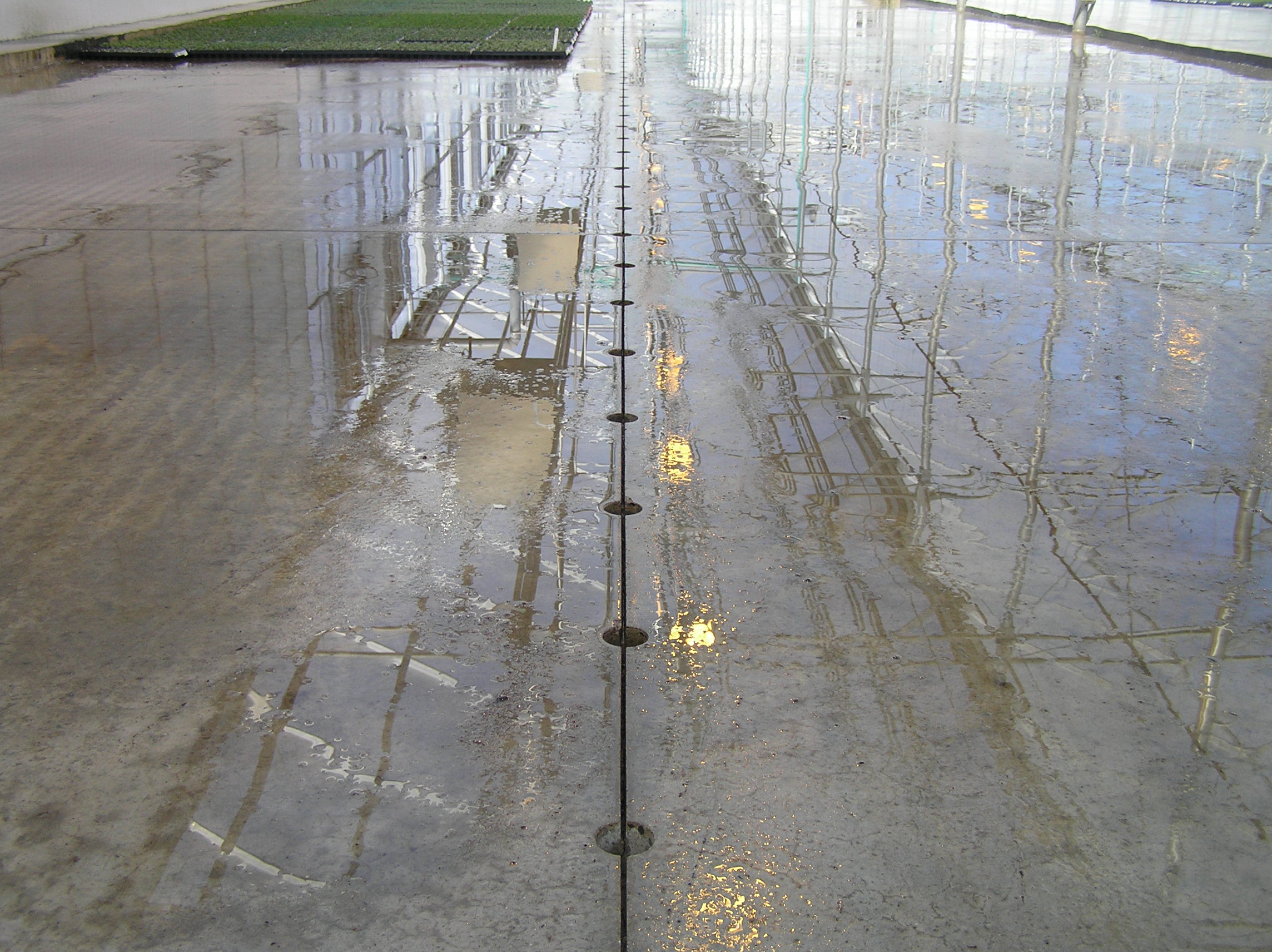
Flood floor irrigation needs to be treated also.
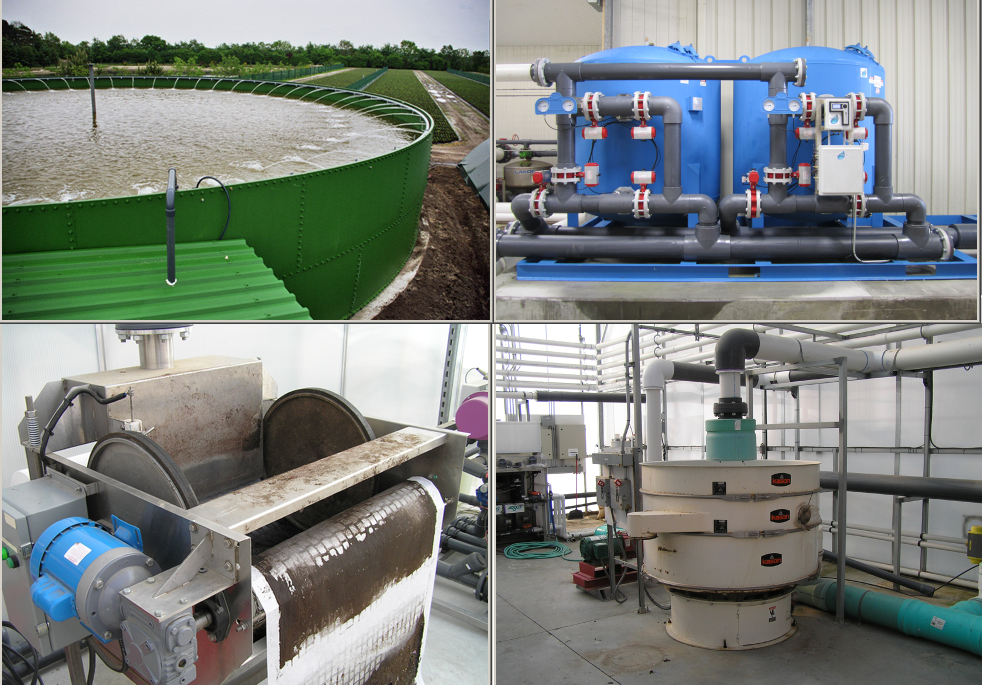
Filtration systems: Top Left - Slow Sand tank. Top Right - Fine sand filter. Bottom Left - Rolling paper filter. Bottom Right - Vibrating screen filter.

Chlorine gas is bubbled through the water, where it combines with the water to form hypochlorous acid (HOCl) and hydrochloric acid (HCl).
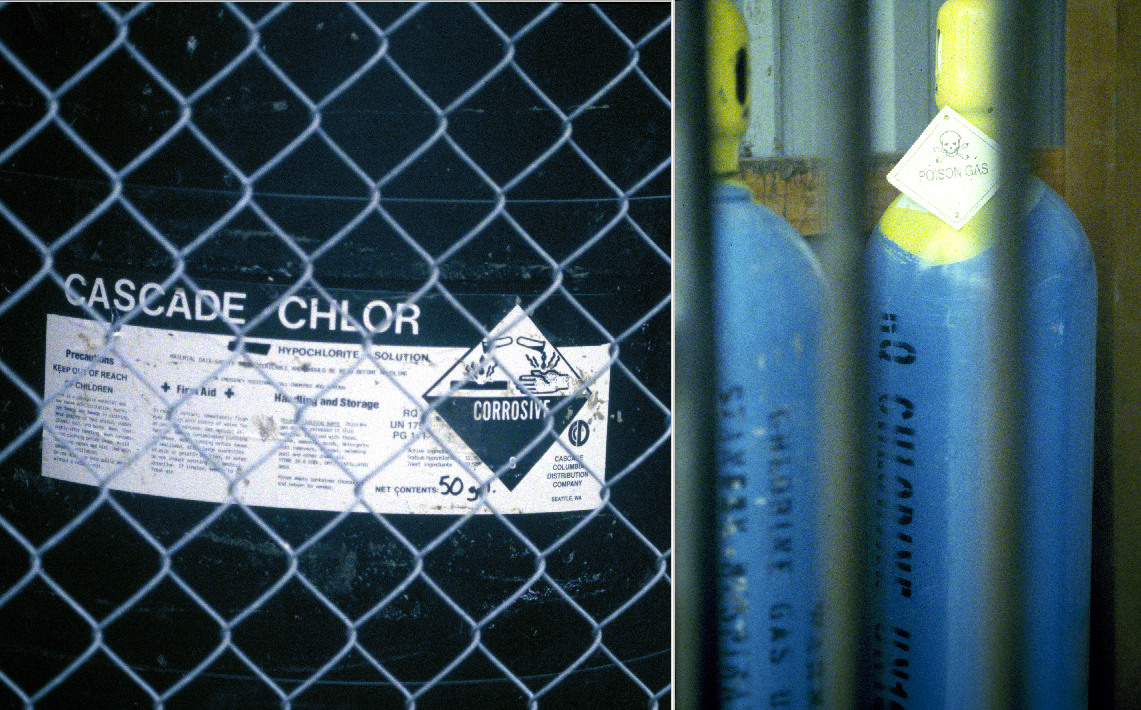
Oxidizing agents include bromine, chlorine gas, sodium hypochlorite, calcium hypochlorite, chlorine dioxide, ozone, and activated peroxygen.
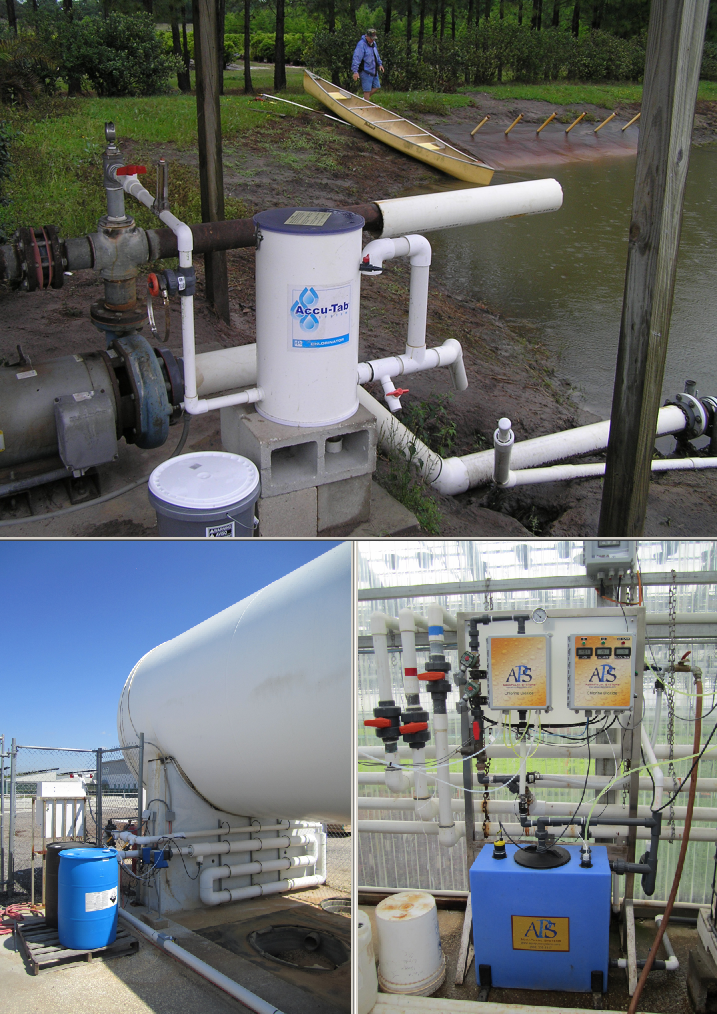
Chloronation systems: Top - Calcium hypochlorite (AccuTab) injector. Bottom Left - storage tank with sodium hypochlorite chlorinator. Bottom Right - chlorine dioxide dosing unit.

Ozone injection system.

Reverse osmosis system.