

See:
Maple (Acer spp.) - Sooty Bark Disease
Maple (Acer macrophyllum) - Wood Decay
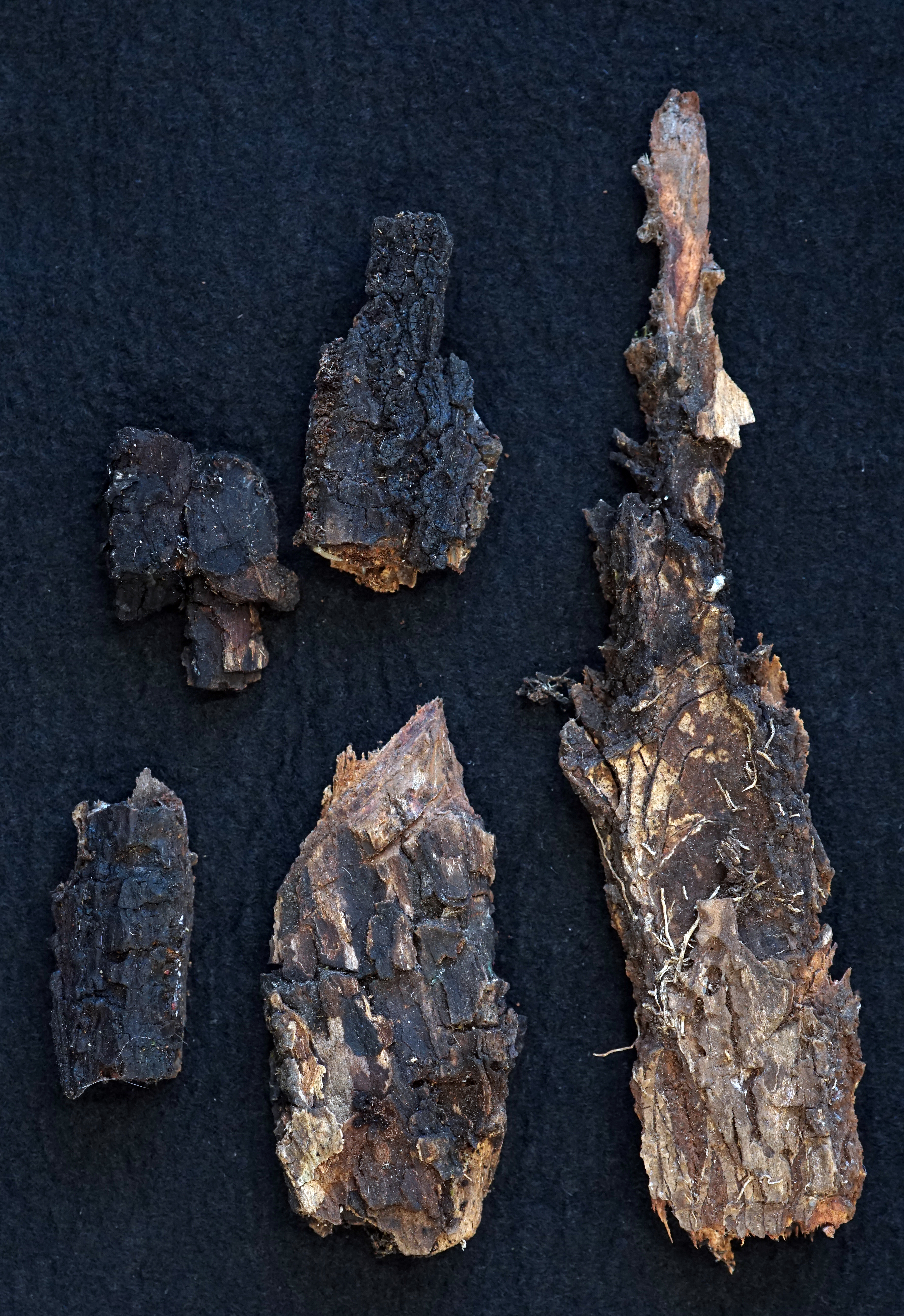
Cause Kretzschmaria deusta, the brittle cinder fungus, can cause root rot, butt rot, trunk rot and canker rot of several trees including Acer species such as bigleaf maple (Acer macrophyllum) and also birch, elm, horse chestnut, linden, and oak. Often found on bigleaf maple in Washington and British Columbia. This fungus is capable of decaying both lignin and cellulose, however, unlike many white rot fungi, cellulose is preferentially targeted during the decay process. This can lead to sudden failure of infected limbs and trees without obvious cause or during wind or ice storms. The fungus produces inconspicuous conidial and perithecial stromata in the spring. Trees are thought to be infected by airborne spores through wounds or from root-to-root contact by mycelia. The disease gets established as a heart rot in beech, maple and plane trees.
Symptoms Kretzschmaria deusta produces thick, rough, and lumpy fruiting bodies on the surface of the bark or wood, usually near ground level. Fruiting bodies are gray with white edges at first but by late summer become brittle and turn black that looks like charred wood. Sudden limb failures are often associated with this disease. Many trees have decreased vigor and dieback.
Cultural control
- Help prevent wood decay by using cultural practices that promote tree growth and vigor while minimizing injuries that expose wood.
- Irrigation water, especially from sprinklers, should not wet the trunks.
- Mowing equipment should not injure the roots, crown, or lower trunk.
- Make pruning cuts adjacent to, but not into, the supporting branch, and prune when branches are small to enhance callus formation and wound healing.
- Infected branches or trees should be destroyed, preferable on site so it is not spread to additional areas.
Reference Guglielmo, F., Michelotti, S., Nicolotti, G. and Gonthier, P. 2012. Population structure analysis provides insights into the infection biology and invasion strategies of Kretzschmaria deusta in trees. Fungal Ecology, 5:714-725.
Barthel, H., Cox, S., Gardner, T. and Wilhelm, S. 2023. Mapping the distribution of Kretzschmaria deusta fruiting bodies along trails in mature Acer macrophyllum-dominant stands in Pacific Spirit Regional Park from 2022 to 2023. UBC ENVR 400: Community Project in Environmental Science.