Insect Management Handbook

Pest description and crop damage There several different types of leafminers, including mines made by the larval stages of flies, moths, sawflies, and beetles. Damage from leafminer feeding occurs as the larvae feeds between the upper and lower epidermis of leaves or stems. Mines start as small round puncture wounds. Some mines with a long winding trail (serpentine mines) through the leaf which gradually expands. Other mines are formed as a larger feeding area called a blotch mine.

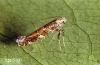
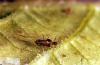
Image related to Nursery crop pests-Leafminers

Pest description and crop damage Aphids are small, soft-bodied insects with piercing-sucking mouthparts formed into a long needle-like stylet they hold under their body when not feeding. They are usually identified by host plant, and characters such as color, wing venation, antennae, and cornicles (two tubular structures on the hind section of the aphid). The same species can vary in color, shape, and size depending on the time of the year. Immature nymphs look like smaller versions of adult nymphs.

Image related to Nursery crop pests-Aphids

Physokermes piceae

Includes

Black vine weevil (Otiorhynchus sulcatus)
Clay-colored weevil (Otiorhynchus singularis)
Strawberry root weevil (Otiorhynchus ovatus)

Includes Parthenolecanium corni

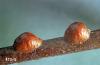
Image related to Yew (Taxus)-Lecanium scale

Pentamerismus taxi

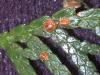
Pest description and damage These mites are small (0.01 inch in length), deep red, small, short-legged mite generally flattened in shape. These mites are at the base of needles, often in considerable numbers. They are on yew but also may occur on other evergreens.

Pulvinaria floccifera

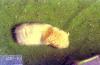
Image related to Yew (Taxus)-Cottony camellia scale

Forest tent caterpillar (Malacosoma disstria)
Western tent caterpillar (Malacosoma californica)

Lepidosaphes ulmi

Alder flea beetle (Altica [Macrohaltica] ambiens)