Insect Management Handbook

Tetrahychus spp.

See:

Image related to Apricot, flowering (Prunus)-Spider mite

Synanthedon exitiosa

Image related to Apricot, flowering (Prunus)-Peachtree borer

Malacosoma californicum

Image related to Alder (Alnus)-Western tent caterpillar

Macrohaltica ambiens and others

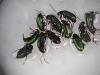
Pest description and crop damage Adults are dark shiny blue and about 0.25 inch long. Larvae are dull brown to black and about 0.25 inch long at maturity. They feed on and skeletonize foliage of alder, poplar, and willow. Both adults and larvae feed on the foliage.

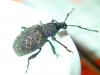
Pest Description and Damage Black vine weevil is not always the most common weevil to infest landscape plants. In several landscapes in Oregon, the strawberry root weevil and obscure root weevil were dominant, and in Washington often the clay-colored weevil and species of the native woods weevils are the dominant species in many landscapes. Other species are also present in PNW states (see below). In Washington there are 16 species that have been found on a variety of plants in landscapes.

Pest description and crop damage Several species of spider mites can cause damage in deciduous ornamentals. Appearance of these mites varies with the species, although all are 0.02 inch or smaller. Adults and nymphs can be yellowish, greenish, or reddish brown, depending on species. Mites damage plants by feeding on leaves, which causes stippling, bronzing, and possibly leaf drop. The reduction in photosynthesis causes loss of vigor. The most common pest species of spider mite on conifers is spruce spider mite.

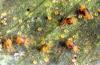
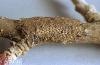
Pest description and crop damage There are two types of scale commonly encountered: hard scale and soft scale. Hard scale tend to be fairly small in size and lie flatter against the stems than do soft scale. Soft scale is often very rounded and will also produce honeydew with its associated black sooty mold. Scale may have only one or multiple generations per year. Scale often comes into nurseries on propagation material.