


See:
Tomato (Solanum lycopersicum)- Fusarium Crown and Root Rot
Tomato (Solanum lycopersicum)- Fusarium Wilt
Tomato (Solanum lycopersicum) - Varietal Resistance
Tomato (Solanum lycopersicum) - Verticillium Wilt
Cause Fusarium solani f. sp. eumartii, a fungus that can survive several years as durable chlamydospores in soil and is favored by warmer weather (77 to 86°F) in California and at lower temperatures elsewhere. This fungus can be spread by infested equipment and movement of infested soil. Although this fungus causes disease specifically on tomato, it may colonize the roots of other plant species in the absence of any symptoms, including pepper, bean, onion, melon, cotton, sunflower, and safflower.
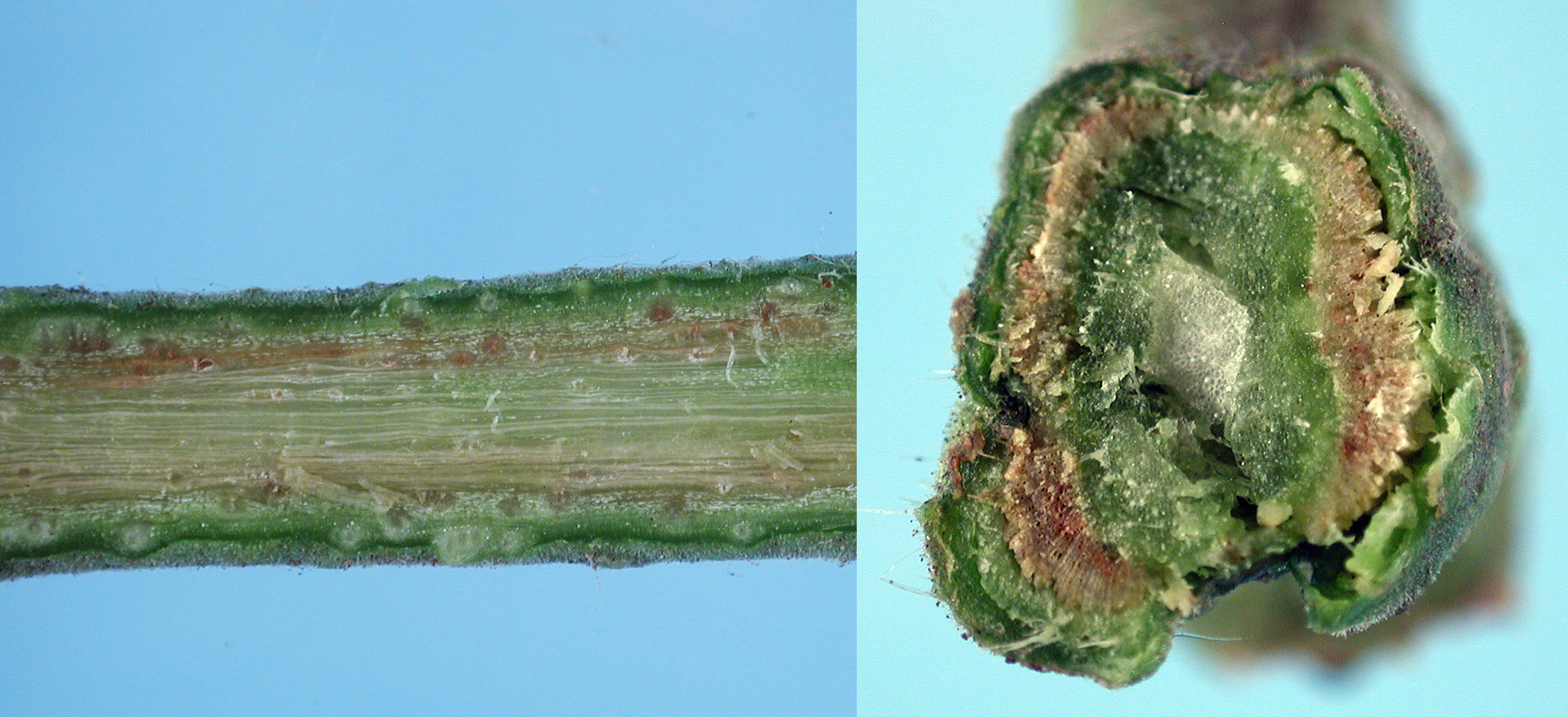
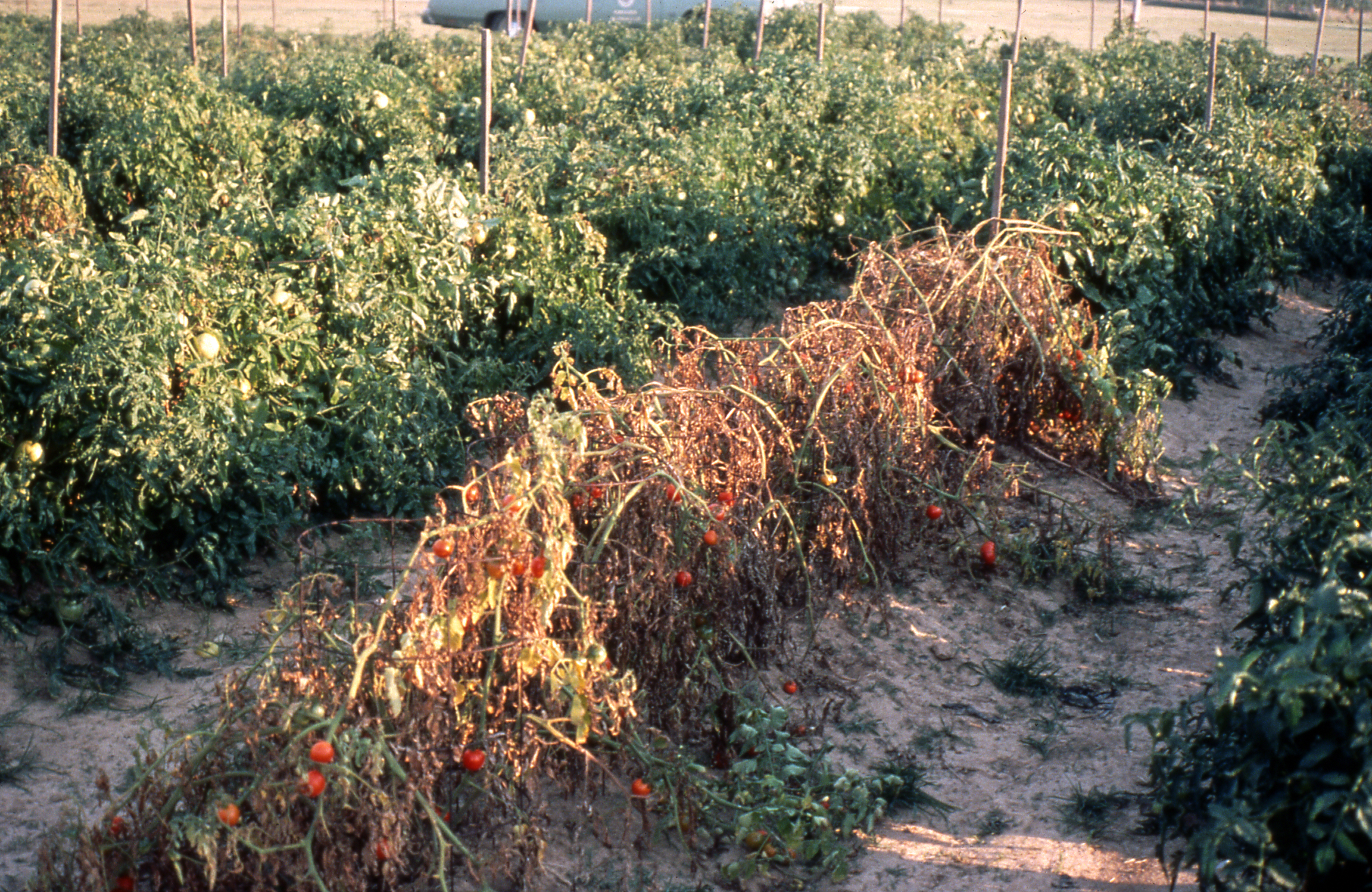
Symptoms Lower leaves develop interveinal chlorosis and bleaching of the foliage that may turn brown as disease advances belowground and leaf material turns necrotic. Flowers may turn brown too and single branches of plants may be symptomatic. Reddish-brown lesions develop on the taproot and larger roots. Plants may die when disease is severe.
Cultural control
- Clean soil from equipment including machinery, tools, footwear, gloves, etc., after working in an affected planting.
Chemical control
- Regalia Biofungicide (Group P5) at 1 to 3 quarts/100 gal water for soil drenches on 10- to 14-day intervals or at 1 to 4 quarts/A for in-furrow spray applications. Does not benefit from the addition of an adjuvant. 4-hr reentry. O
Biological control
- Bexfond at 7 to 28 fl oz/A. 4-hr reentry. O
- Stargus at 6 to 8 fl oz per 1,000 ft row as an in-furrow treatment, or 3 to 4 quarts/A as a soil drench (drip or chemigation) on 10- to 21-day intervals. Preharvest interval is 0 days. 4-hr reentry. O
Reference Jones, J.B., Zitter, T.A., Momol, T.M., and Miller, S.A. 2014. Compendium of Tomato Diseases, 2nd Ed. St. Paul, MN: APS Press.