Structual and Health Pests

Hymenoptera

Pest description and damage Yellowjackets and hornets can be serious pests during late summer months. They become more aggressive and dangerous later in the summer and as summer turns into autumn. A few people (1 to 2 percent) are severely allergic (hypersensitive) to yellowjacket venom, and a sting can be life-threatening.
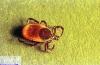
1. Ixodid (hard-bodied) tick

Includes Dermacentor spp., and Ixodes spp.

Image related to Public health pests-Tick

Pest description and damage There is much confusion regarding poisonous spiders in the Pacific Northwest, even among the medical community. While all spiders use venom to subdue their prey (hence, all spiders are "venomous"), the bites of most spiders are often only mildly irritating. Only three spiders of medical importance live in the PNW. The black widow spider commonly occurs in association with humans and presents a real danger of poisonous bites.

Image related to Public health pests-Poisonous spider

Burrowing scorpion (Anuroctonus phaiodactylus)
Forest scorpion (Uroctonus mordax)
Northern scorpion (Paruroctonus boreus)
Stripe-tailed scorpion (Paravaejovis spinigerus)

Pest description and damage Olive to brown, about 1 to 4 inches long, with four pair of legs, a tail with bulbous stinger, and a pair of pincers. They can inflict a painful, hornet-like sting.

Culicidae

Pest description and damage Mosquitoes can be an irritating nuisance and can transmit certain diseases to humans and animals through blood feeding. Female mosquitoes must obtain a blood meal in order to lay eggs. Eggs are laid in still waters (ponds or containers), and therefore control efforts should be directed at these places. Good water management practices (breeding source reduction) can reduce mosquitoes significantly.

Culex mosquito- female

Various species of Acari

Pest description and damage Mites that may affect humans directly can be divided into four general groups: those that 1) parasitize humans; 2) normally parasitize birds, or mammals other than humans, but occasionally may bite humans; 3) infest human food; and 4) feed on plants and occasionally become pests when they enter homes in large numbers.

Pest description and damage Three species of lice affect humans. They can be distinguished by where on the body they appear.

Scientific name

Common name

Image related to Public health pests-Human lice

Cat flea (Ctenocephalides felis)
Dog flea (Ctenocephalides canis)
Human flea (Pulex irritans)

Pest description and damage Fleas are the bane of every dog and cat - and their owners. Adult fleas are external parasites of warm-blooded animals. They bite people and pets. The bite often results in swelling and prolonged itching.

Image related to Public health pests-Flea

Cimex lectularius

Image related to Public health pests-Bed bug