Insect Management Handbook

Many species, including variegated cutworm (Peridroma saucia)

Pest description and crop damage Larvae can be brown, gray, or greenish and range from 0.25 to 1.25 inches in length. They are most damaging to trees that have high weeds around their bases. Feeding is nocturnal and this feeding may damage leaves and buds. Generally controlled with dormant or delayed-dormant sprays.
Caliroa cerasi

Pest description and crop damage The adult is a glossy black wasp, about 0.2 inch in length. The larva initially resembles a small slug, due to the olive-green slime that covers the body and the fact that the head is wider than the rest of the body. Mature larvae are 0.37-inch long and orange-yellow. Larvae feed on the upper surface of leaves, skeletonizing them. Heavy feeding causes leaf drop with reduction in vigor and yield, particularly on young trees.

Image related to Cherry-Cherry slug (pear slug, cherry sawfly, pear sawfly)

Myzus cerasi

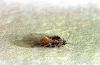
Pest description and crop damage The adult aphid is black, globular in shape and about 0.125 inch in length. The black cherry aphid is the only black aphid on cherry. These aphids curl foliage, reduce terminal growth, and deposit honeydew on cherries, which can be difficult to remove prior to commercial packing. Damage to young trees can be significant.

Image related to Cherry-Black cherry aphid

Choreutis pariana

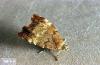
Pest description and crop damage The adult moth is reddish brown, with a wingspread less than 0.5 inch, and irregular light and dark bands on the wings. Larvae are 0.5 inch in length, yellowish to greenish, with black spots and a yellow-brown head. Pupae are yellow to brown with a white silken cocoon. The larvae skeletonize and roll leaves. They feed on apple, crabapple, cherry, and hawthorn.

Image related to Cherry-Apple-and-thorn skeletonizer

Apple leafhopper (Empoasca maligna)
Rose leafhopper (Edwardsiana rosae)
White apple leafhopper (Typhlocyba pomaria)

Eriosoma lanigerum

Pest description and crop damage Adult woolly apple aphids are reddish to purple and are completely covered with thick, woolly white wax. The insects feed on roots, trunks, limbs, and shoots, producing galls at the site of the infestation. Heavy infestations on roots or above-ground portions of the tree can stunt growth and even kill young trees.

Image related to Apple-Woolly apple aphid

Includes

Pear thrips (Taeniothrips inconsequens)
Western flower thrips (Frankliniella occidentalis)

Forest tent caterpillar (Malacosoma disstria)
Western tent caterpillar (Malacosoma californicum)

Image related to Apple-Tent caterpillar

Brown marmorated stink bug (Halyomorpha halys)
Consperse stink bug (Euschistus conspersus)
Green stink bug (Chinavia hilaris)

Pest description and crop damage Adult stink bugs are all shield-shaped, with a triangle-shaped section in the middle of their backs. They are generally up to about 0.5 to 0.6 inch in length. The name stink bug refers to the strong odor the insects can emit if alarmed.

Brown mite (Bryobia rubrioculus)
European red mite (Panonychus ulmi)
McDaniel mite (Tetranychus mcdanieli)
Twospotted spider mite (Tetranychus urticae)
Yellow spider mite (Eotetranychus carpini borealis)

For mite identification, see:

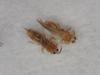
Image related to Apple-Spider mite