Insect Management Handbook

Ctenicera spp. and Limonius spp.

Pest description and crop damage

See:

Management-biological, cultural, tactical

See:

Scutigerella immaculata

Pest description, crop damage and life history

See:

Management-biological control

Image related to Asparagus-Garden symphylan

Crioceris duodecimpunctata

Image related to Asparagus-Spotted asparagus beetle

Crioceris asparagi

Image related to Asparagus-Asparagus beetle

Includes

Beet armyworm (Spodoptera exigua)
Bertha armyworm (Mamestra configurata)
Yellowstriped armyworm (Spodoptera praefica)
Black cutworm (Agotis ipsilon)
Variegated cutworm (Peridroma saucia)

Pest description and crop damage

See:

Includes asparagus aphid (Brachycorynella asparagi)

Includes

Arion spp.
Black greenhouse slug (Milax gagates)
Gray field slug (Derocerus reticulatum)
Large spotted garden slug (Limax maximus)
Marsh slug (Derocerus laeve)
Reticulated slug (Prophysaon andersoni)

Pest description, crop damage and life history

Image related to Artichoke (globe artichoke)-Slug

Vanessa cardui

Pest description and crop damage Painted ladies are orange-brown butterflies with a wingspan of up to 2.87 inches. Wings have a black apex patch and white bar on the leading edge. Caterpillars are spiny, dull brown to black, with a pale yellow stripe on each side. They feed mostly on thistle. It is only an occasional pest of artichokes.

Image related to Artichoke (globe artichoke)-Painted lady or thistle butterfly

Includes

Black cutworm (Agotis ipsilon)
Variegated cutworm (Peridroma saucia)

Platyptilia carduidactylus

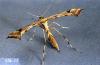
Pest description and crop damage Adults of the artichoke plume moth vary in color from buff to brownish buff, with a wingspan of 0.75 to 1.25 inches. The wings are divided into lobes, giving the appearance of several pairs of wings; the hind wings are fringed. Eggs are light greenish-yellow at first, turning darker (orange-yellow) with age, shiny, and very small.

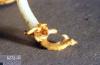
Image related to Artichoke (globe artichoke)-Artichoke plume moth