Insect Management Handbook

Psila rosae

Image related to Vegetable crop pests-Carrot rust fly

Delia brassicae

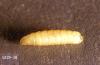
Pest description and crop damage Larvae are small, legless white maggots usually less than about 0.31 inch when fully grown. Their head end is pointed, and the rear is blunt with a dozen short, pointed, fleshy processes arranged in a circle around two brown, buttonlike spiracles (or openings for breathing). They are found feeding on feeder roots or boring into the taproot.

Image related to Vegetable crop pests-Cabbage maggot

Includes

Beet armyworm (Spodoptera exigua)
Bertha armyworm (Mamestra configurata)
Western yellowstriped armyworm (Spodoptera praefica)

Includes

Green peach aphid (Myzus persicae)
Melon aphid (Aphis gossypii)
Potato aphid (Macrosiphum euphorbiae)

Vespula spp.

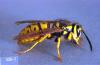
Pest description and damage Bee-like insects with yellow and black, or white and black, bands on abdomen.

Management

Image related to Nuisance and household pests-Wasp (yellow jacket)

Dermacentor spp.
Ixodes spp.
Ornithodoros spp.

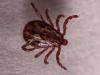
Pest description and damage Ticks are blood-feeding ectoparasites. Some transmit disease to humans.

Management

American dog tick

Otiorhynchus ovatus

Pest description and damage They cause no damage in homes but are annoying when they migrate into dwellings.

Management

Remove from indoors using broom or vacuum cleaner. Make sure to empty vacuum cleaner and dispose of bag contents outdoors.

Collembola

Pest description and damage A small insect approximately 0.125 inch or less in length; can be gray, pink, blue, or black. They often are found in large numbers in moist situations.

Management

Springtail

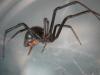
Pest description and damage Eight-legged animals of varying sizes and colors. Spiders are predators of insects: some spin webs but some-the hunters-chase and catch their prey. All spiders use venom to subdue their prey, but the effect of their venom on humans varies widely, from inconsequential to irritating to serious. Three spiders in the Pacific Northwest-the black widow and two species of sac spider-can inflict serious injury if trapped or disturbed. If bitten, seek professional medical attention promptly.

Lepisma saccharina

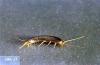
Pest description and damage Slender insects about 0.375 inch in length, wingless, grayish silver or mottled gray, with two long antennae and three long filaments at the tail. They prefer starchy food including paper, paste, and starched clothing. These insects are commonly seen in homes that have wood shake roofs, and they prefer a warmer climate, such as found in attics. Very tolerant of high temperatures.

Management

Image related to Nuisance and household pests-Silverfish