Insect Management Handbook

Douglas-fir pitch moth (Synanthedon novaroensis)
Sequoia pitch moth (Synanthedon sequoiae)

Image related to Douglas-fir (Pseudotsuga)-Pitch moth

Includes

Pine needle scale (Chionaspis pinifoliae)
Black pine scale (Dynaspidiotus californicus) (formerly Nuculaspis californica)

Image related to Douglas-fir (Pseudotsuga)-Pine needle scale

Cylindrocopturus furnissi

Image related to Douglas-fir (Pseudotsuga)-Douglas-fir twig weevil

Orgyia pseudotsugata

Image related to Douglas-fir (Pseudotsuga)-Douglas-fir tussock moth

Contarinia spp.

Image related to Douglas-fir (Pseudotsuga)-Douglas-fir needle midge

Adelges cooleyi

Image related to Douglas-fir (Pseudotsuga)-Cooley spruce gall adelgid

Dioryctria spp.

Image related to Douglas-fir (Pseudotsuga)-Coneworm

Coccus hesperidum

Giant conifer aphids (Cinara spp.)

Pest description, and damage These aphids infesting Douglas-fir are up to 0.2 inch in length. They range in color from gray to brownish to black. Aphids establish large colonies on the twigs, but rarely are found feeding on needles. Feeding produces a honeydew that promotes sooty mold on foliage and underlying surfaces. Yellowjackets and ants are found in tree canopy foraging for honeydew.

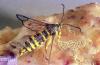
Image related to Douglas-fir (Pseudotsuga)-Aphid

Edwardsiana rosae and other leafhoppers

Image related to Dogwood (Cornus)-Rose leafhopper