

See:
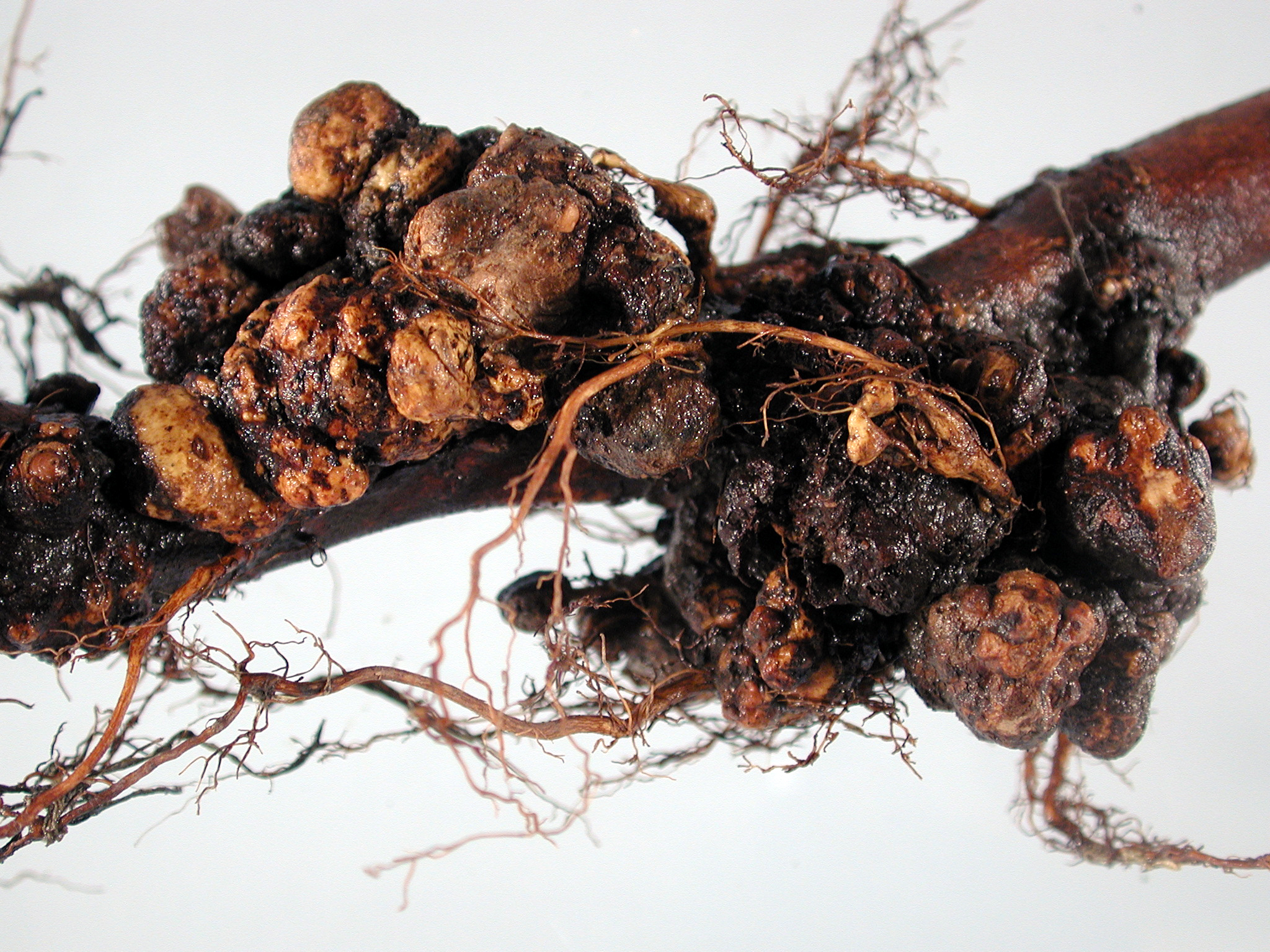
Apple (Malus spp.) - Crown Gall
Crown Gall Disease of Nursery Crops
Note Crown gall is a tumor-forming disease of plants caused by tumorigenic agrobacteria, many of which are thought to be present in most agricultural soils. Although the crown gall bacterium has a wide host range, plants more likely to have crown gall include all stone and pome fruit, caneberries (such as blackberry and raspberry), euonymus, Photinia, poplar, rose, walnut, and willow. Wounds are required for the pathogen to infect a plant where it transfers part of its DNA into the DNA of the plant. Discard diseased plants as soon as noticed to avoid cross-contamination. Use good sanitation in handling planting stock. Minimize wounding and disinfect pruning tools between plants. Plant in well-drained soil when soil is below 50°F. Avoid fields with a recent history of high crown gall infestation or root-attacking insects and nematodes. Rotate susceptible crops with small grains. No registered chemicals are effective.