

See:
Hazelnut (Corylus avellana) - Leaf Spots
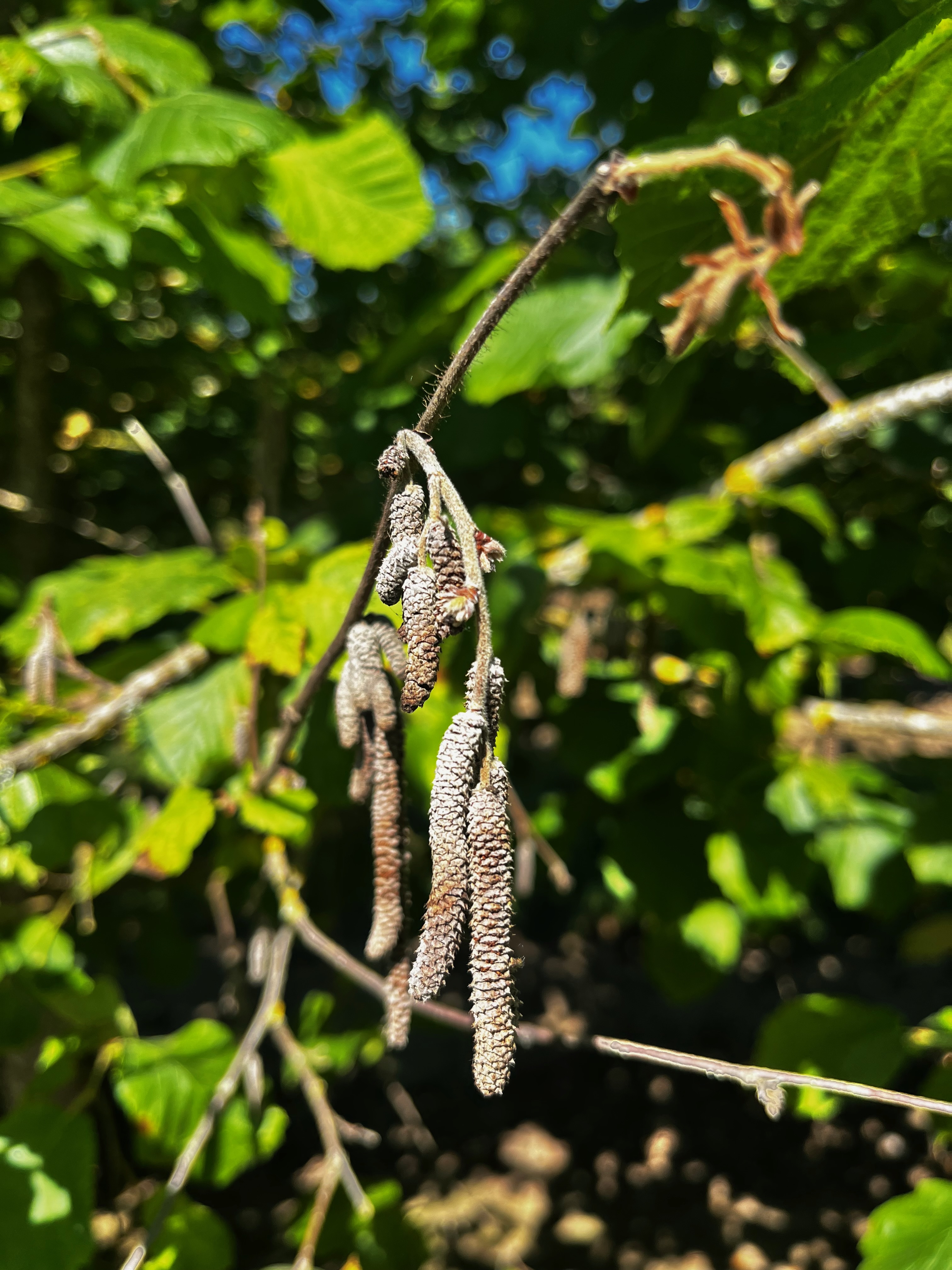
Hazelnut (Corylus avellana) - Catkin Blast
Cause The fungal pathogen Cryptosporiopsis tarraconensis has been isolated from symptomatic buds and catkins of multiple hazelnut varieties by the OSU Plant Clinic. First isolated and described in Spain on the hazelnut cultivar 'Negret', this pathogen has subsequently been associated with bud rot in Italy, Turkey and Poland but was only recognized in the PNW in 2025. 'McDonald' and 'Jefferson' appear to have worse symptoms when compared to 'Yamhill'. The disease cycle of this pathogen has not been fully worked out. Necrotic catkins are a major source of spores but it is not known when infection occurs.
The fungal disease called anthracnose, caused by Piggotia coryli, has been recognized for many years in the PNW and early research finds these two pathogens to be the same fungus.
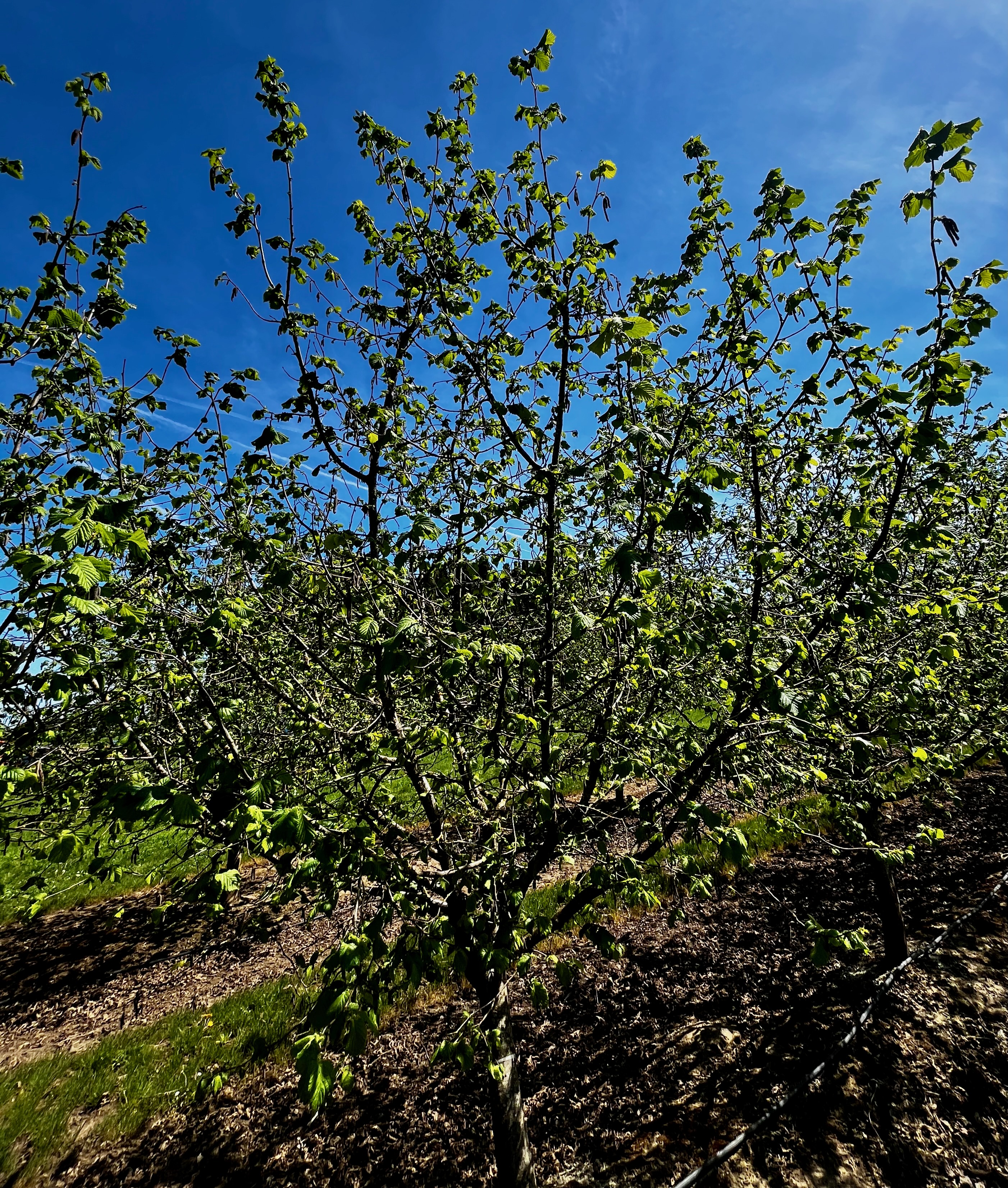
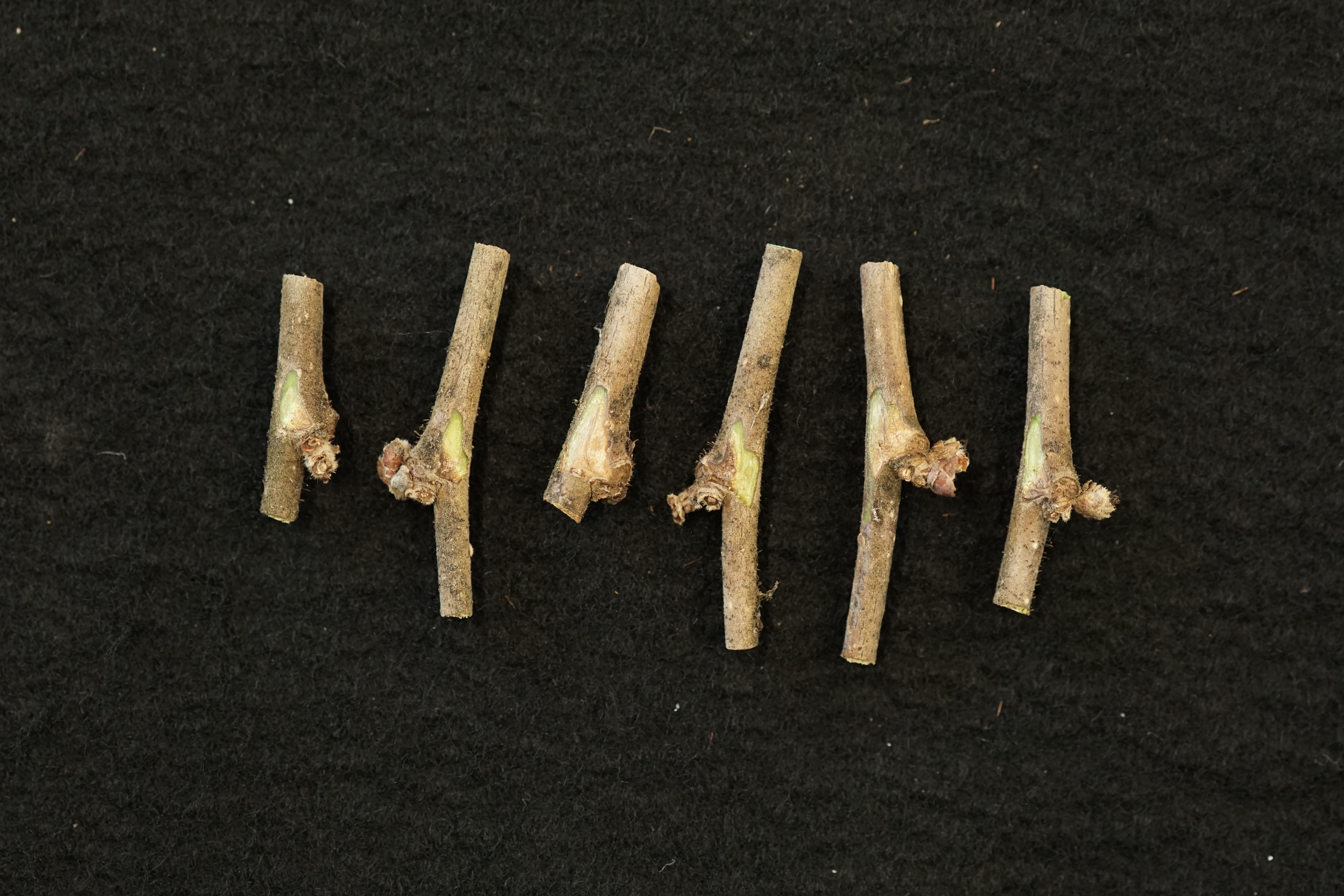
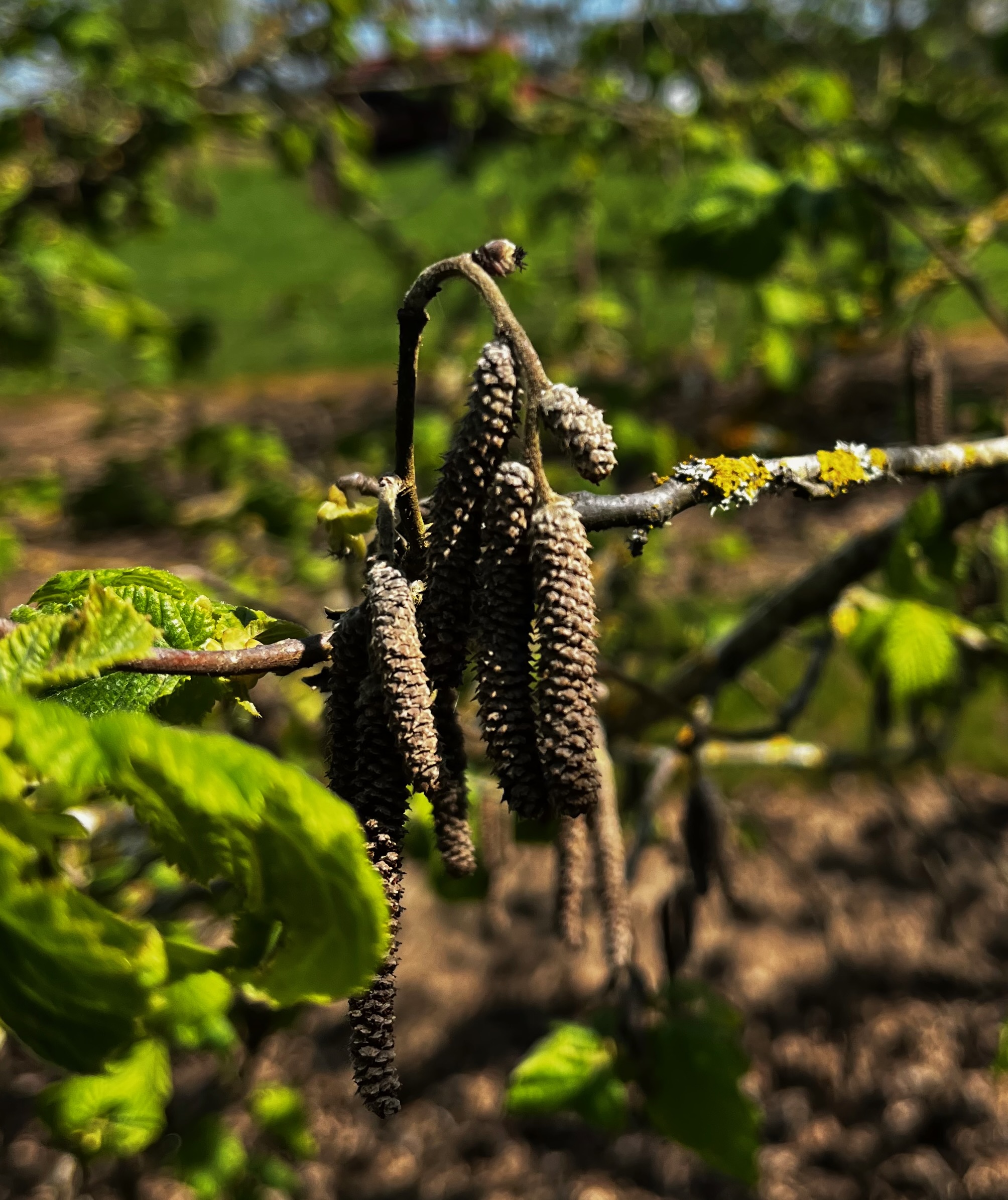
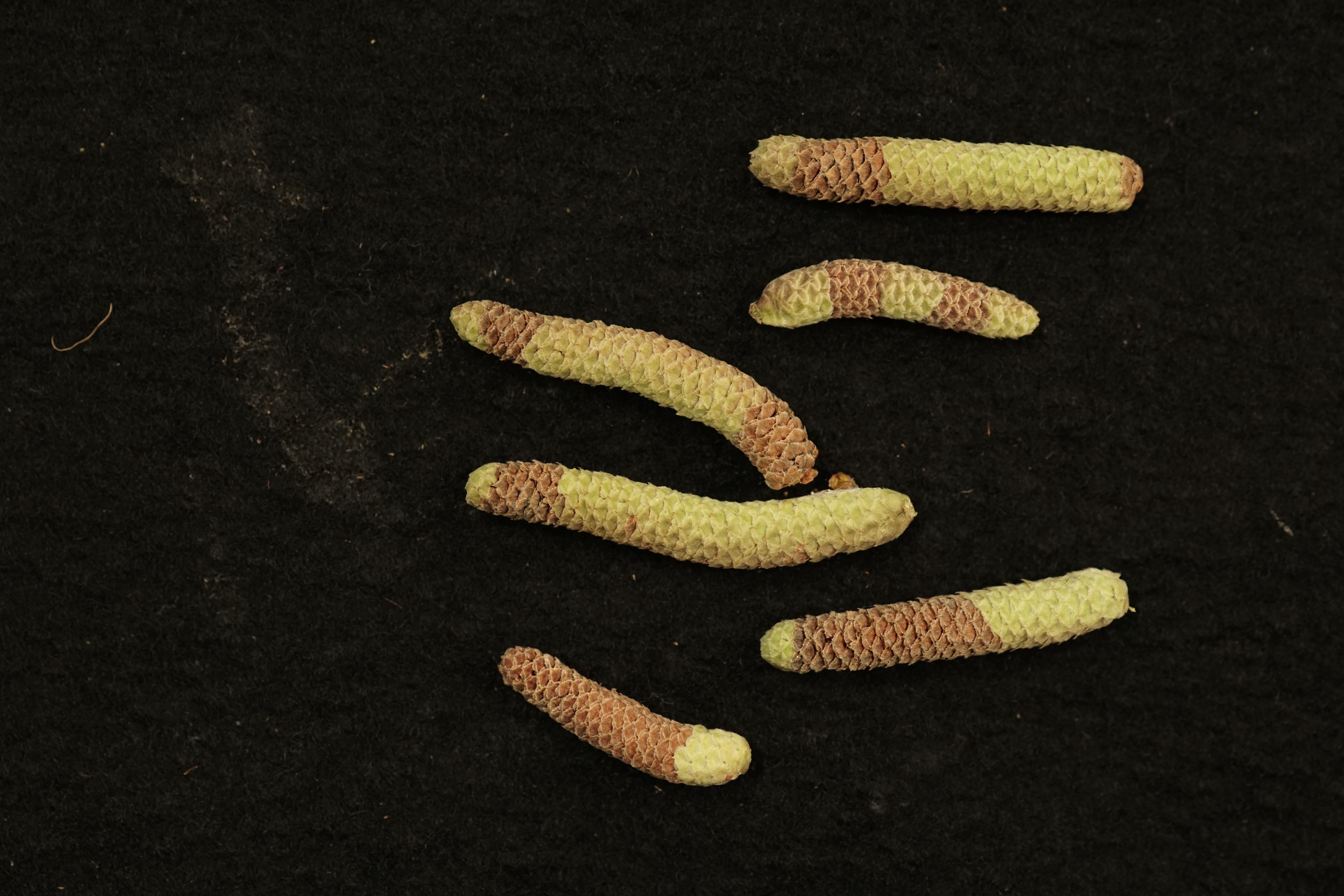
Symptoms During the dormant season catkins fail to distend and become necrotic. They remain attached to branches well into early shoot growth, and may remain on the tree throughout the growing season and are a source of spores. Healthy buds become necrotic around the time of bud swell in March. Many branches fail to leaf out normally and branch tips dry out. Branches have sections of blank wood where there are fewer actively growing leaves and developing nut clusters, leaving the canopy appearing thin. Spores can develop on leaves and husks which vary from inconspicuous brown spots to relatively large, irregularly-shaped chlorotic lesions that cause premature leaf senescence.
Similar bud death symptoms can occur due to unpollinated flowers, environmental extremes of heat, drought stress or cold and pathogens such as bacterial blight. Some natural loss of buds can occur but is of minor importance.
Cultural control Specific recommendations have not been worked out yet. Sanitation of leaf debris in the fall and pruning for better air circulation are suggested.
Chemical Control Some fungicides registered for eastern filbert blight are expected to be effective for this disease but the type and timing are yet to be worked out.
References Altin, N. and Gulcu, B. 2023. 'First detection of Cryptosporiopsis tarraconensis on hazelnut in Türkiye and control potency of some antifungal agents'. Australasian Plant Pathology, 52:145-153. https://doi.org/10.1007/s13313-023-00906-y.