


See:
Wheat (Triticum aestivum) - Nematode, Root-knot
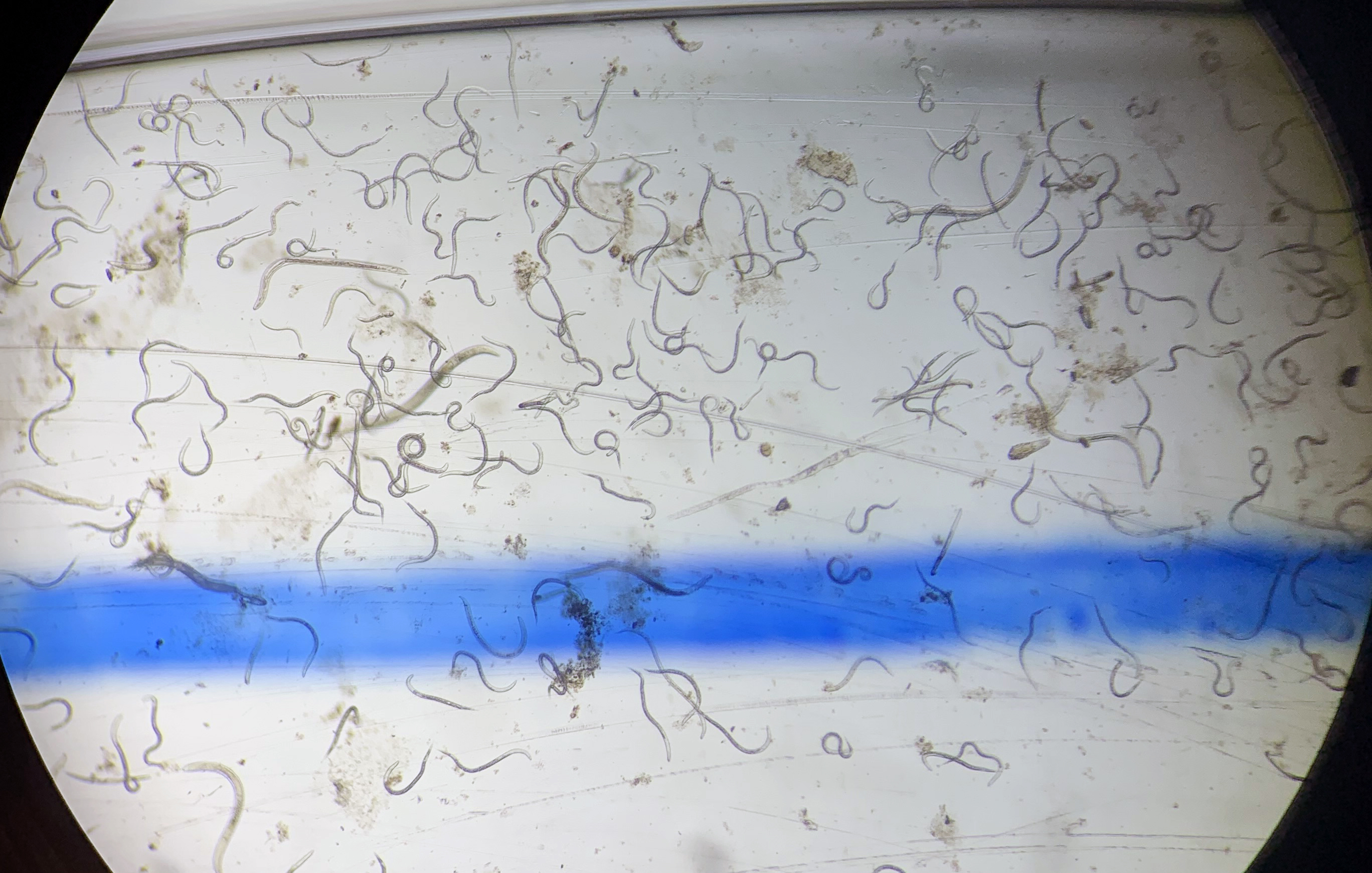
Cause One or more of at least 14 different types of nematode that cause disease by penetrating roots or sucking sap from the root surface with a mouth part like a hypodermic needle. In addition to the damage they cause by feeding, they leave wounds through which parasitic fungi can enter. Many of these nematodes tend to be migratory ectoparasites, but several endoparasites are present as well. Nematodes can inhabit all soil types, but sandy soils with larger pore spaces allow for more freedom of movement, making them an ideal environment for proliferation and damage. The high sand content of a golf course putting green root zone makes them particularly susceptible to damage from nematodes.
Surveys of golf course greens in Oregon, Washington and Northern California have found primarily the root-knot nematodes Meloidogyne naasi and Meloidogyne minor associated with damage symptoms.
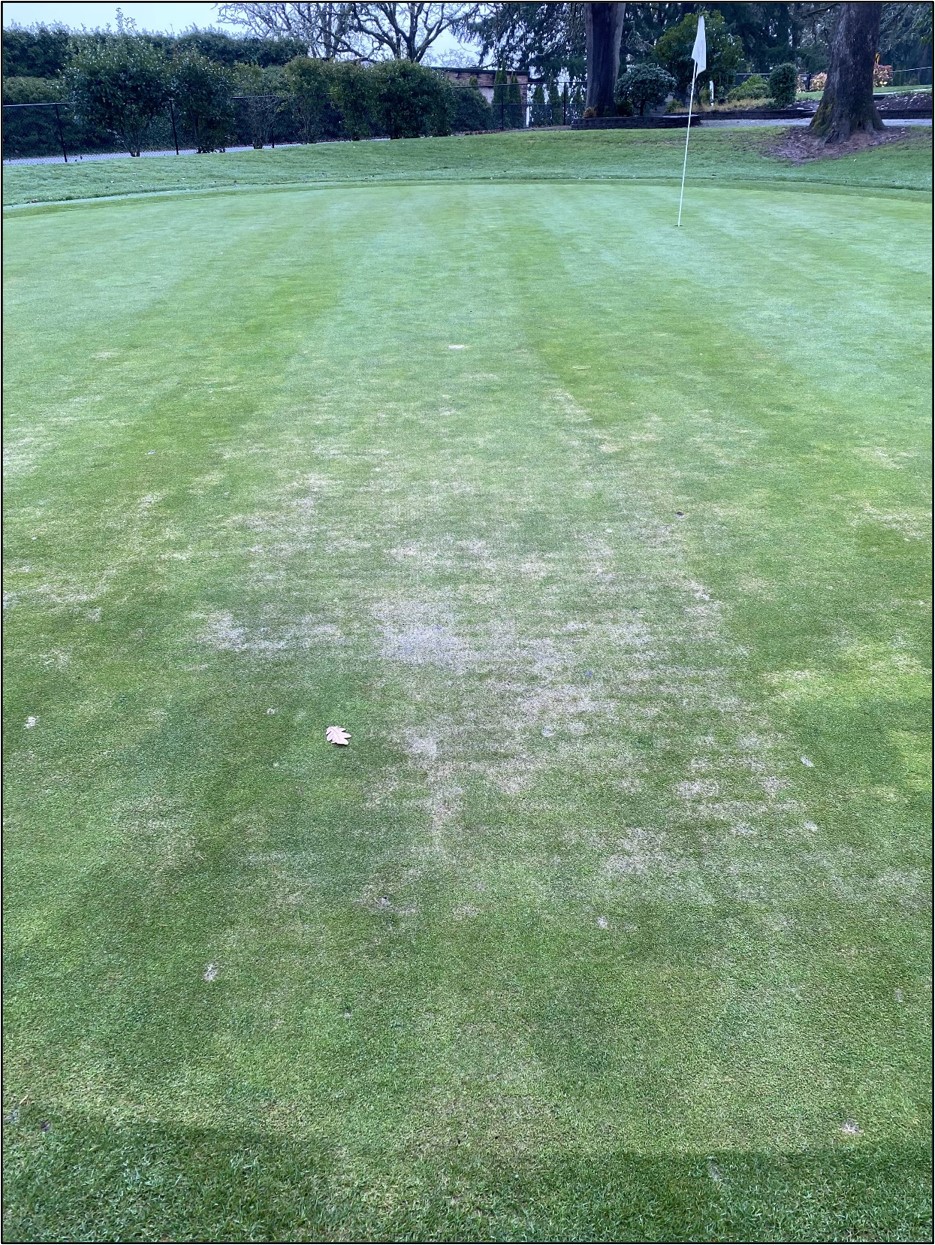
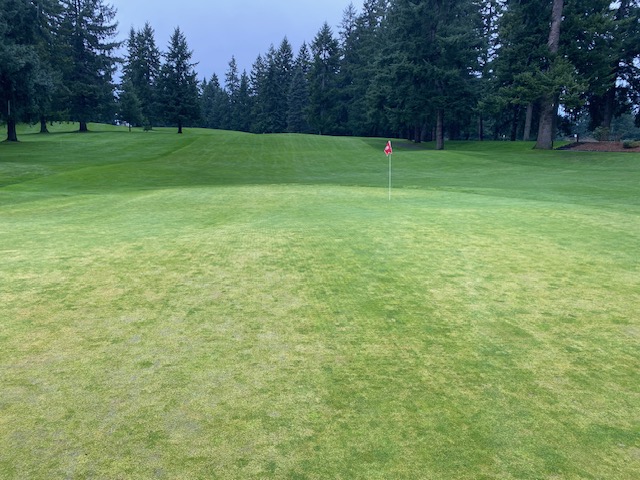
Symptoms Infested turf lacks vigor and may be discolored, stunted, or thin and may wilt and die in irregular patches. Generally, it resembles other abiotic stresses such as nutrient deficiency, drought stress, localized dry spot, or other symptoms associated with a compromised root system.
Sampling Send soil, roots, and whole plants for diagnosis. Take the sample in an area 4 to 6 inches deep with living plants.
Cultural control
- Maintain turf health through optimal management practices that reduce abiotic stress on the system such as adequate watering, fertilizing, etc.
- Turf known to contain parasitic nematodes should be aerified last to help reduce their spread via equipment to other areas.
Chemical control
- Indemnify at 0.195 to 0.39 fl oz/1,000 sq ft. Group 7 fungicide. 12-hr reentry.
- Quali-Pro Nimitz Pro G at 60 to 120 lb/A immediately watered in with a least 0.25 in water. Aerifications 1 to 10 days prior to application improves control. Reentry allowed after watering.
Chemical control for Turf farms only.
- Divanem at 3.125 to 12.2 gal/A. Spray onto moist turfgrass and irrigate with 0.1 to 0.5 inches of water within 1 hour of application. Restricted-use pesticide.
- Dominus at 10 to 40 gal/A. Apply as a shank injection to an entire field or raised beds when soil temperatures are above 60°F but not greater than 90°F. 5-day reentry.
- Telone II at 9 to 18 gal/A preplant broadcast or 5 to 10 gal/A on established turf. Do not treat extremely heavy soils. 5-day reentry. Restricted-use pesticide.
Biological control
- Crescendo (Chromobacterium subtsugae strain PRAA4-1 cells and spent fermentation media) at 0.5 to 20 lb/A. Follow with 0.15 to 0.25 inches irrigation or natural rainfall within 24 hours of application. 4-hr reentry. O
- DiTera DF (Myrothecium verrucaria strain AARC-0255 fermentation solids and solubles) is registered for many nematodes. Unknown efficacy in the PNW. 4-hr reentry. O
- MeloCon WG (Paecilomyces lilacinus strain 251) at 6.5 oz/1,000 sq ft plus a soil wetting agent can be applied to established plants. Irrigate after application. Stable for only days at room temperature, weeks in the refrigerator, or for a year if frozen. Unknown efficacy in the PNW. 4-hr reentry. O
- Zelto (Heat-killed Burkholderia spp. strain A396 cells and spent fermentation media) at 4 to 8 quarts/A. Apply to moist soil and follow with 0.15 to 0.25 inches irrigation or natural rainfall within 24 hr of application. Include an adjuvant to promote soil penetration. Repeat applications every 2 to 4 weeks to maintain control. 4-hr reentry. O
- Entomopathogenic nematodes used for insect control have also reduced populations of plant parasitic nematodes under turf grass in Georgia and South Carolina.
References Braithwaite, E. T., Starchvick, R., Kowalewski, A., Temple, T., Baker, H., Kitner, M., Peetz, A., Zasada, I., and Rivedal, H. 2025. A community analysis of plant-parasitic nematodes on coastal Oregon golf course putting greens. Plant Disease. https://doi.org/10.1094/PDIS-02-25-0431.RE
Grewal, P.S., Martin, W.R., Miller, R.W. and Lewis, E.E. 1997. Suppression of plant-parasitic nematode populations in turfgrass by applications of entomopathogenic nematodes. Biocontrol Science and Technology 7:393-399.
Groover, W., Held, D., Lawrence, K., and Carson, K. 2020. Plant growth-promoting rhizobacteria: a novel management strategy for Meloidogyne incognita on turfgrass. Pest Management Science, 76: 3127-3138. https://doi.org/10.1002/ps.5867