

See:
Cedar, Port Orford (Chamaecyparis lawsoniana) - Root Rot
Cause The fungus-like microorganism Phytophthora lateralis which kills Microbiota seedlings and mature plants. This pathogen was first found in nursery stock of Port Orford cedar (Chamaecyparis lawsoniana) in 1923. It has since spread throughout the Pacific Northwest in both horticultural and forested environments. Potted Microbiota were first found infected by P. lateralis in two Oregon nurseries in 2014. While Port Orford cedar is the most susceptible host to P. lateralis, substantial disease was also observed on Microbiota and Juniperus. Nurseries reported losses in excess of 50%.
Other Phytophthora species may also contribute to Microbiota root rot. Microbiota is also host to P. cinnamomi, which is widely distributed. Additionally, P. austrocedri was detected for the first time in the USA on juniper and arborvitae at two different Oregon nurseries in 2024. Hosts of this new organism also include cedar and cypress, including popular ornamental species such as Leyland cypress (Cupressus x leylandii) and Chinese juniper (Juniperus chinensis). It is likely that Microbiota is also a host to P. austrocedri.
These fungus-like microorganisms survive as oospores or chlamydospores in plant debris such as rotted roots or foliage. Spores may be moved long distances in contaminated soil through human activities (for example, by logging equipment), or through moving water. Spores germinate and produce sporangia and a swimming spore stage called zoospores, which attack fine roots and begin to rot the root system. Tree-to-tree spread can occur through root grafts. Spores splashed on leaves or stems can initiate a foliage blight. Infection also can occur through wounds, but wounds are not required for pathogen establishment.
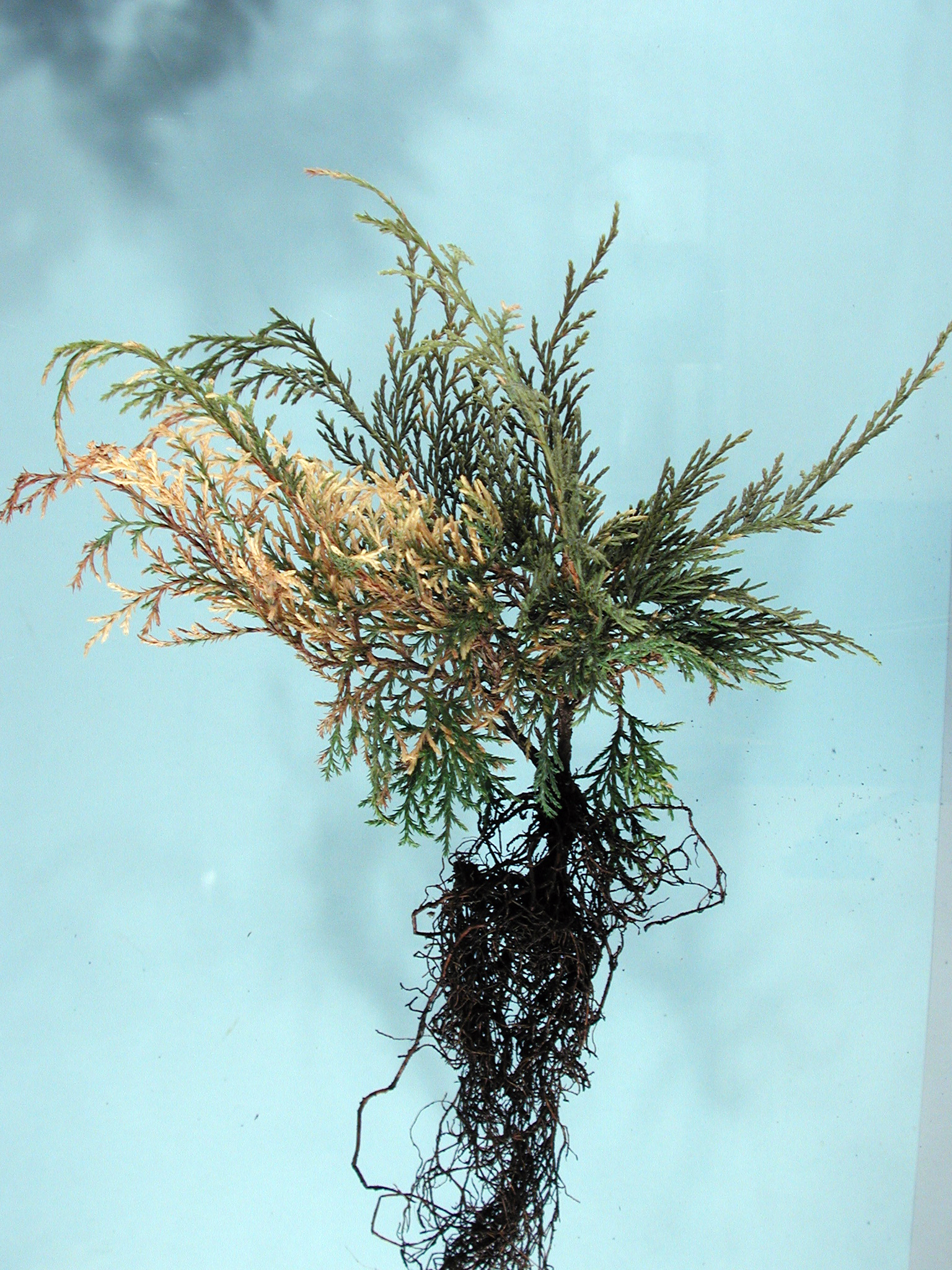
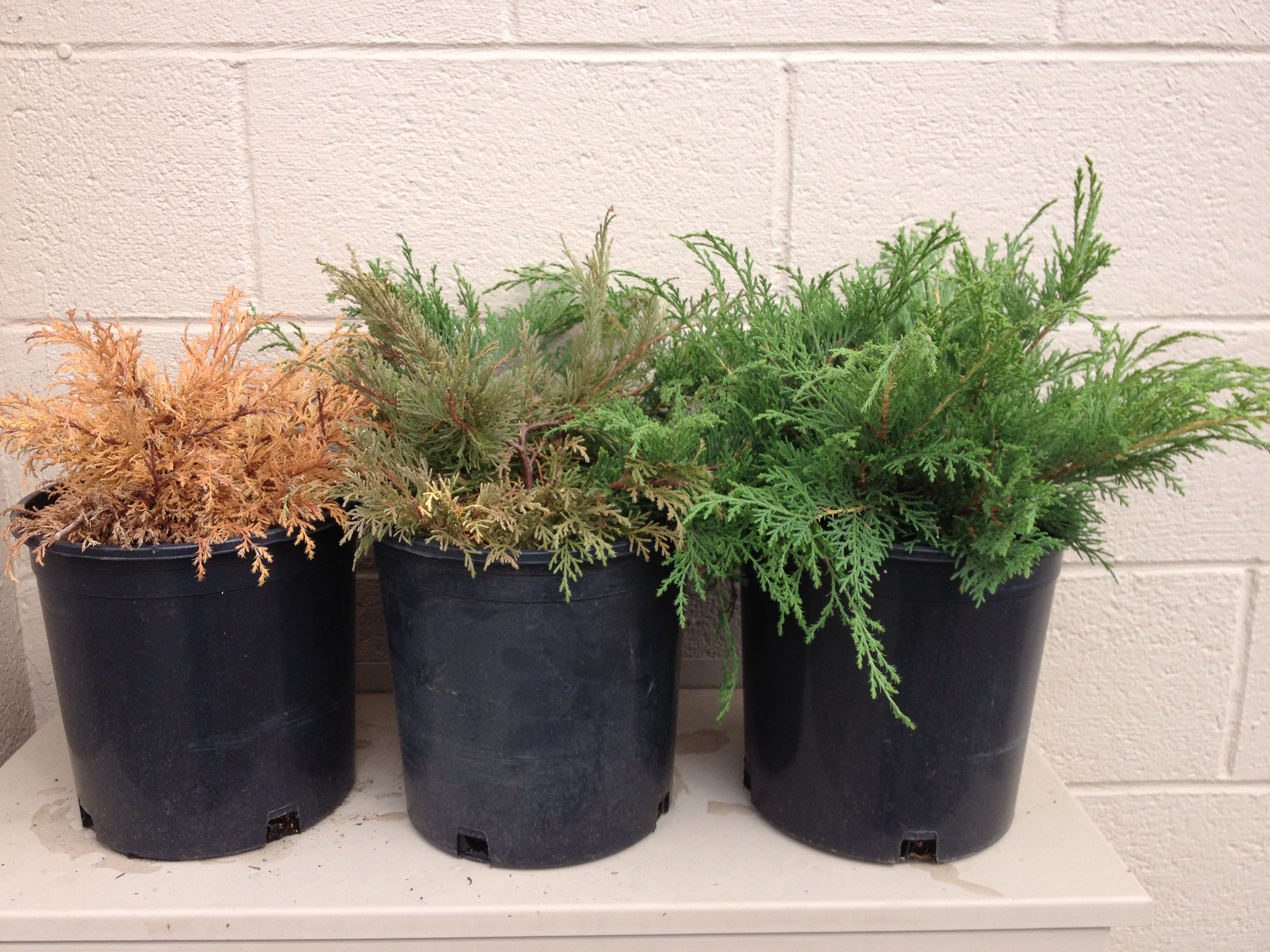
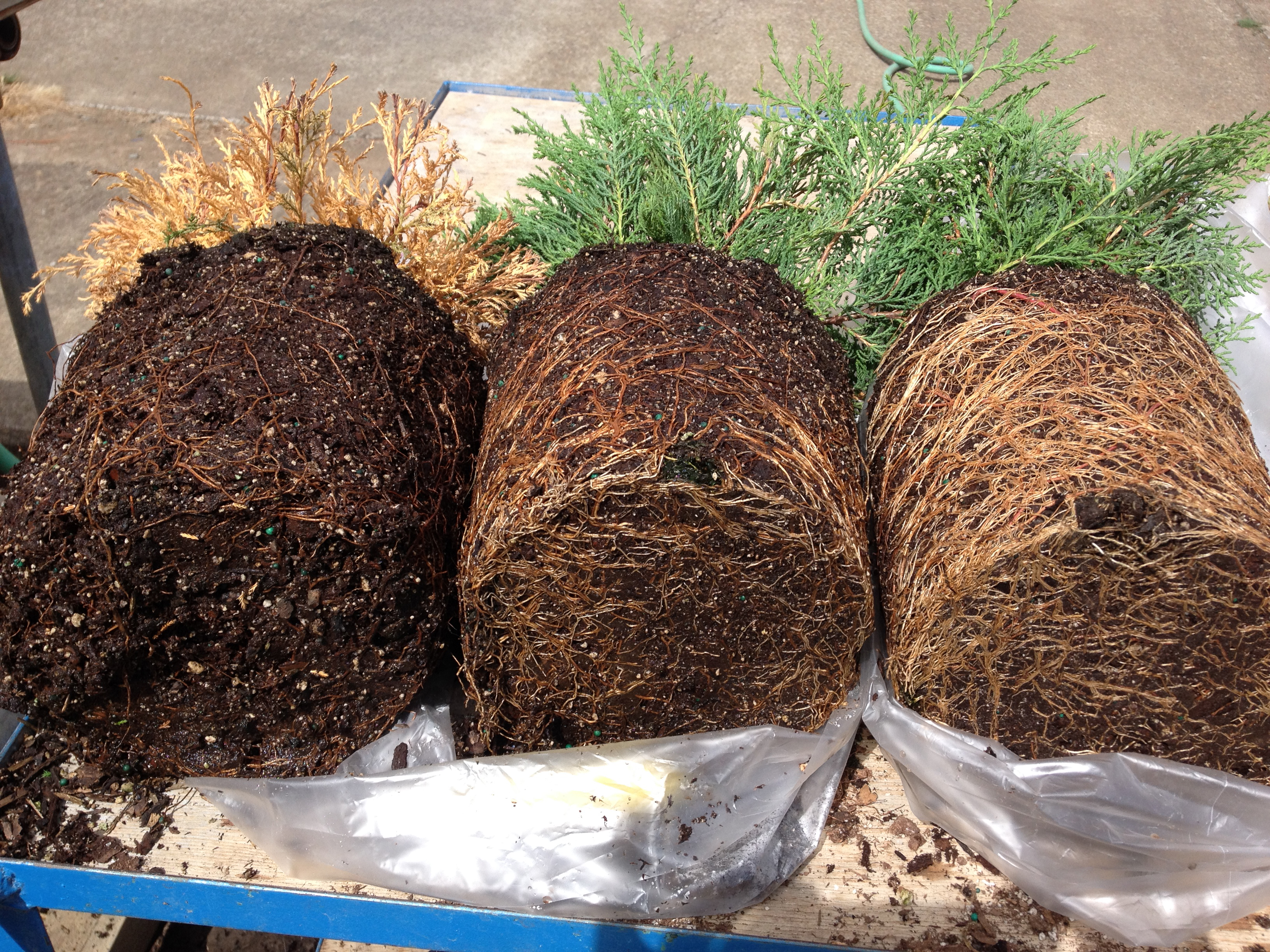
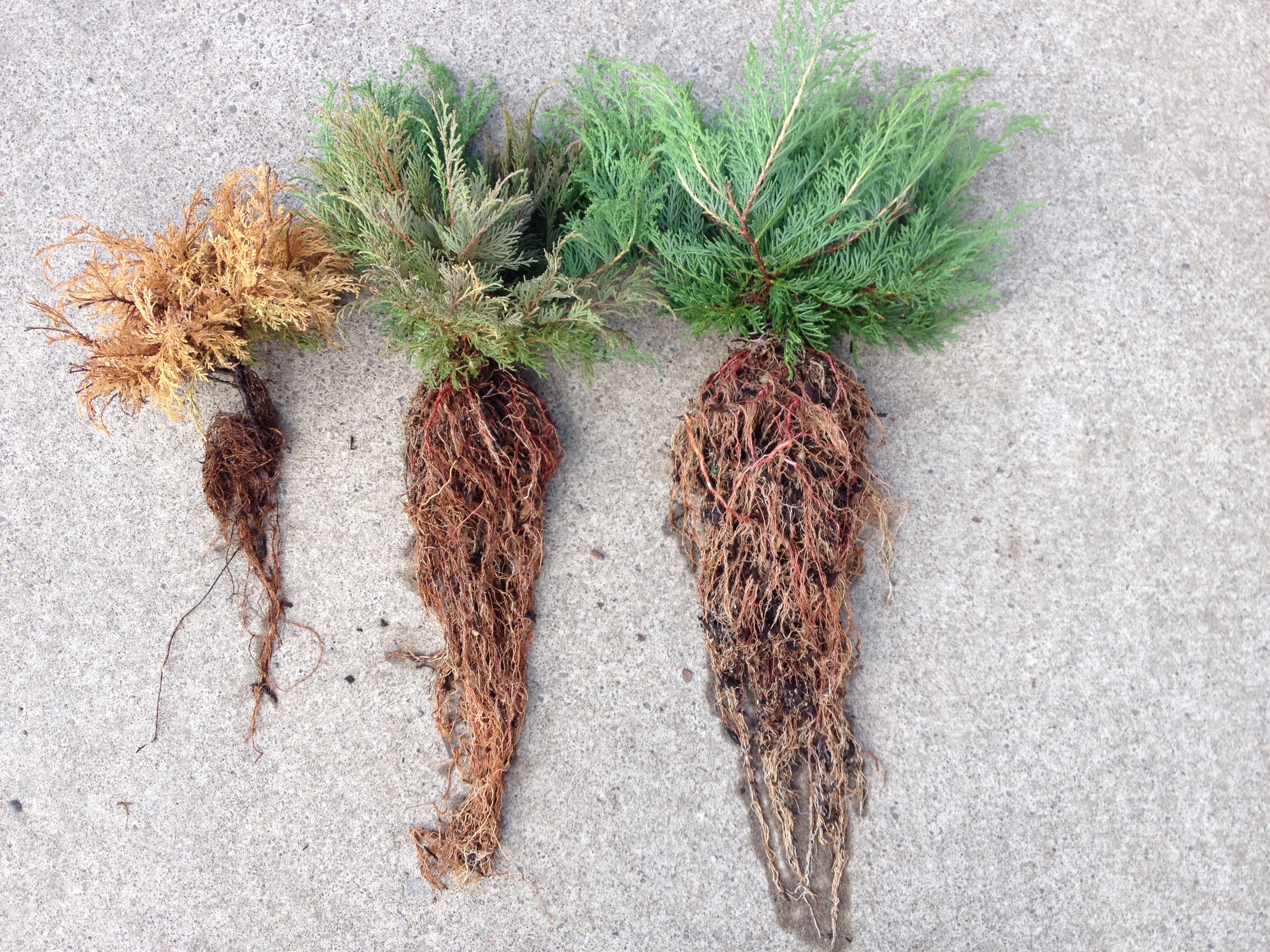
Symptoms Symptoms on Microbiota are consistent with that observed on Port Orford cedar. The organism infects small roots first, then larger and larger roots until the tree is girdled near the collar. The fine roots are at first water soaked, then darken and quickly disintegrate. Infected inner bark turns cinnamon-brown in contrast to the normal cream color of healthy tissue. There generally is a sharp line between infected and healthy tissues. Foliage of infected plants turn bronze, and finally brown. Plants may be stunted, and will eventually die. Foliar infection have not been reported for Microbiota.
Cultural control
- Plant healthy seedlings in soil known to be free of the organism.
- Do not plant in soil with poor drainage or in areas that receive drainage from roads or other C. lawsoniana plantings.
- Prevent wounding at the base of trees or to roots from nearby construction or harvesting operations.
- Avoid extensive gardening (mulching and planting susceptible species) under Microbiota plantings because it may introduce the disease and/or wound tree roots.
- Promptly remove and destroy dead and dying shrubs to help protect other trees in the area. In landscape plantings, also remove healthy-looking shrubs next to diseased ones. Avoid moving infested soil while removing trees and/or stumps. Consider the ground to be infested, even after the removal of affected plants.
- Plant tolerant or resistant species in contaminated ground. If P. lateralis is the only problem (which is very likely) avoid susceptible plants such as C. lawsoniana (unless using resistant root stock), Microbiota, Thuja sp., or Juniperus communis; in general members of the Cupressaceae (cypress family) should be avoided, but tolerant species include Chamaecyparis formosensis, C. thyoides, C. pisifera, and Cupressocyparis leylandii, which may be planted. If P. cinnamomi is the problem (which is possible), there are fewer options for planting. P. cinnamomi has a much wider host range, although a few crabapple and rhododendron species are tolerant. Correct any drainage problems before replanting to minimize disease.
- Avoid reusing pots from a previous crop for propagation. If pots must be reused then wash off all debris and soak in a sanitizing solution or treat with aerated steam for 30 min.
Chemical control These chemicals may help prevent infection or allow slightly infected trees to survive the disease given annual spring and/or fall applications. Severely infected trees will not benefit and will die. Rotate fungicides from different groups that have a different mode of action for resistance management.
- Aliette at 2.5 to 5 lb/100 gal water as a foliar spray to nursery plants. Do not reapply within 30 days. Do not use with adjuvants. Group P7 fungicide. 24-hr reentry.
- ArborFos (from Mauget) can be injected into trees at a rate of 5 ml/inch diameter at breast height. Group P7 fungicide. See label for details. Unknown efficacy in the Pacific Northwest.
- Banrot 40 WP at 6 to 12 oz/100 gal water for container- or bed-grown plants. Group 1 + 14 fungicide. 12-hr reentry.
- Fosphite at 1 to 2 quarts/100 gal water. Do not use copper products within 20 days of treatment and do not use spray adjuvants. Group P7 fungicide. 4-hr reentry.
- Mefenoxam 2 AQ at 0.98 to 1.96 oz/100 gal water as a soil drench or at 1.23 to 2.45 oz/1,000 sq ft followed by at least 0.5 inch rain or irrigation. Group 4 fungicide. No restrictions on reentry when used as a soil drench or media incorporation.
- Monterey Garden Phos at 16 fl oz in 16 fl oz water plus 1 oz Pentra-Bark as a basal trunk spray. Also labeled for injection, see label for details. Can be used in landscape sites. Group P7 fungicide.
- Phospho-Jet at 1 to 2 quarts/100 gal water as a soil drench. Group P7 fungicide. 4-hr reentry.
- Phostrol at 51 fl oz/74 fl oz water plus an organosilicone surfactant used as a basal bark spray. Also labeled for injection, see label for details. Group P7 fungicide. 4-hr reentry.
- Subdue MAXX as a soil surface spray at 1.25 to 2.5 fl oz/1,000 sq ft; irrigate with 0.5 inch water within 24 hr of application. Group 4 fungicide. 48-hr reentry.
- Terrazole 35 WP at 3.5 to 10 oz/100 gal water as a soil drench. Use only in commercial nurseries and greenhouses. Group 14 fungicide.12-hr reentry.
References Orlikowski, L. B. 2010. Occurrence and harmfulness of Phytophthora spp. in Polish hardy ornamental nursery stock. Acta Horticulturae 885:243-248.
Robin, C., Brasier, C., Reeser, P.W., Sutton, W., Vannini, A., Vettraino, A.M., and Hansen, E. 2015. Pathogenicity of Phytophthora lateralis lineages on different selections of Chamaecyparis lawsoniana. Plant Disease 99:1133-1139.
Peterson, E. K., Rupp, F., Eberhart, J., and Parke, J. L. 2020. Root rot of Juniperus and Microbiota by Phytophthora lateralis in Oregon horticultural nurseries. Plant Disease 104:1500-1506.