

See:
Oak (Quercus spp.) - Ganoderma Root and Butt Rot
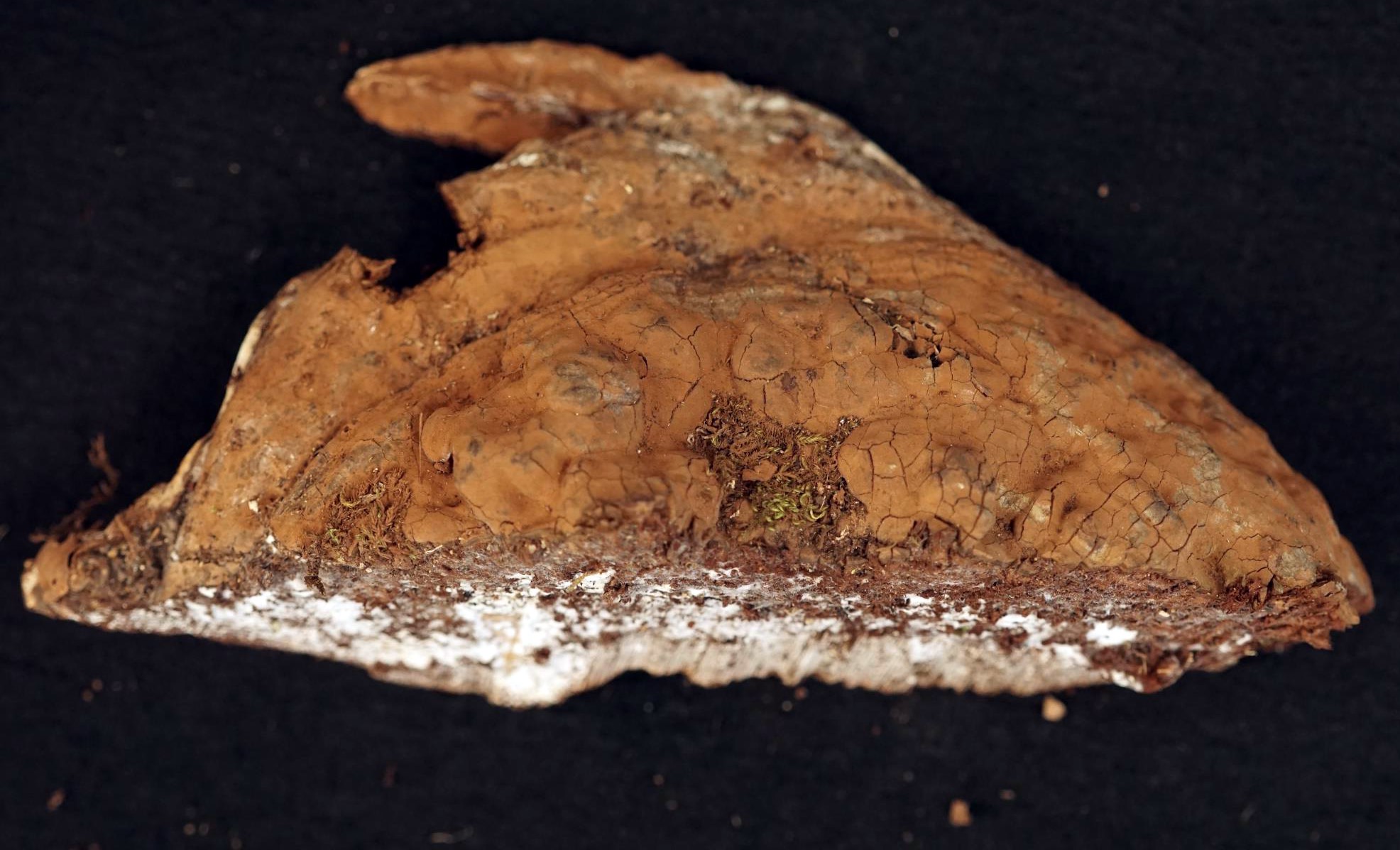
Cause Ganoderma applanatum (formerly Fomes applanatus), also called the "Artist's conk," is a common butt rot fungus on poplar and other trees including conifers. Decay is a white-mottled rot of the trunk and large roots. Decay can extend up to 12 feet above ground. Presence of conks indicates internal decay, but the extent of decay is difficult to determine from external indicators alone because it often is associated with wounds. Decay in large roots and the lower bole increases the failure potential of the tree.
Wood decay fungi enter trees primarily through wounds that expose sapwood or heartwood. Injuries from pruning, sunburn, lightning, or cultivating equipment can expose susceptible wood. Large wounds and stub and horizontal cuts are often entry sites for decay fungi. Mycelial growth of the fungus proceeds with colonization and utilization of wood as a food source. Live trees are able to limit wood decay by walling off and compartmentalizing decay fungi but this can vary between different species and individuals. The CODIT model/principle (compartmentalization of decay in trees) is used by certified arborists to manage landscape trees with decay.
Symptoms The wood appears bleached in the beginning stage of decay and is bordered by a brown band approx. 1 inch or more in width. In the advanced stage the wood is soft and spongy, creamy in color, with fine black lines running through it. When split lengthwise, the wood shows a mottled appearance from which the common name of the rot is derived.
Perennial woody conks appear on the base of the tree or on trunk wounds. Conks are grey-to-brown on top, with a pure white underside (pore layer) that turns brown when scratched (spores are cinnamon in color). The bracket-shaped conks can achieve large size, over 2 feet in diameter.
Cultural control
- Avoid wounding trees to prevent decay. Mowing equipment should not injure the roots, crown, or lower trunk.
- Make pruning cuts adjacent to, but not into, the supporting branch, and prune when branches are small to enhance callus formation and wound healing.
- Inspect trees for decay and/or conks to assess tree stability.
- Remove affected trees to avoid damage to surrounding property.
Reference Shaw, C. G., and Harris, M. R. 1960. Important diseases and decays of trees native to Washington. Ag Extension Service, WSU. Extension Bulletin 540.