
See:
Redbud (Cercis spp.) - Verticillium Wilt
Cause This problem has been associated with a fungus closely related to Ceratobasidium theobromae (Rhizoctonia theobromae). Samples are negative when tested for Verticillium wilt. This is mainly a problem on redbud trees across the southeastern USA impacting seedlings, grafted plants, older nursery stock produced in container or field production settings and landscape plants. The problem has also been found in 20 other woody ornamental species such as dogwood, fothergilla, giant lilacs, red maples and witchhazel. It was diagnosed in one home garden redbud sample in Oregon in 2023.
Redbud cultivars with yellow-colored foliage and papery leaf texture were more susceptible than other cultivars. Redbud cultivars with dark green and purple foliage, along with thick leathery leaves, exhibited symptoms late in the season and are considered tolerant. There are no cultivars found to be resistant.
It is not known how the problem might be spread but it appears that there is potential for graft transmission. Movement of infected nursery stock to other locations has occurred.
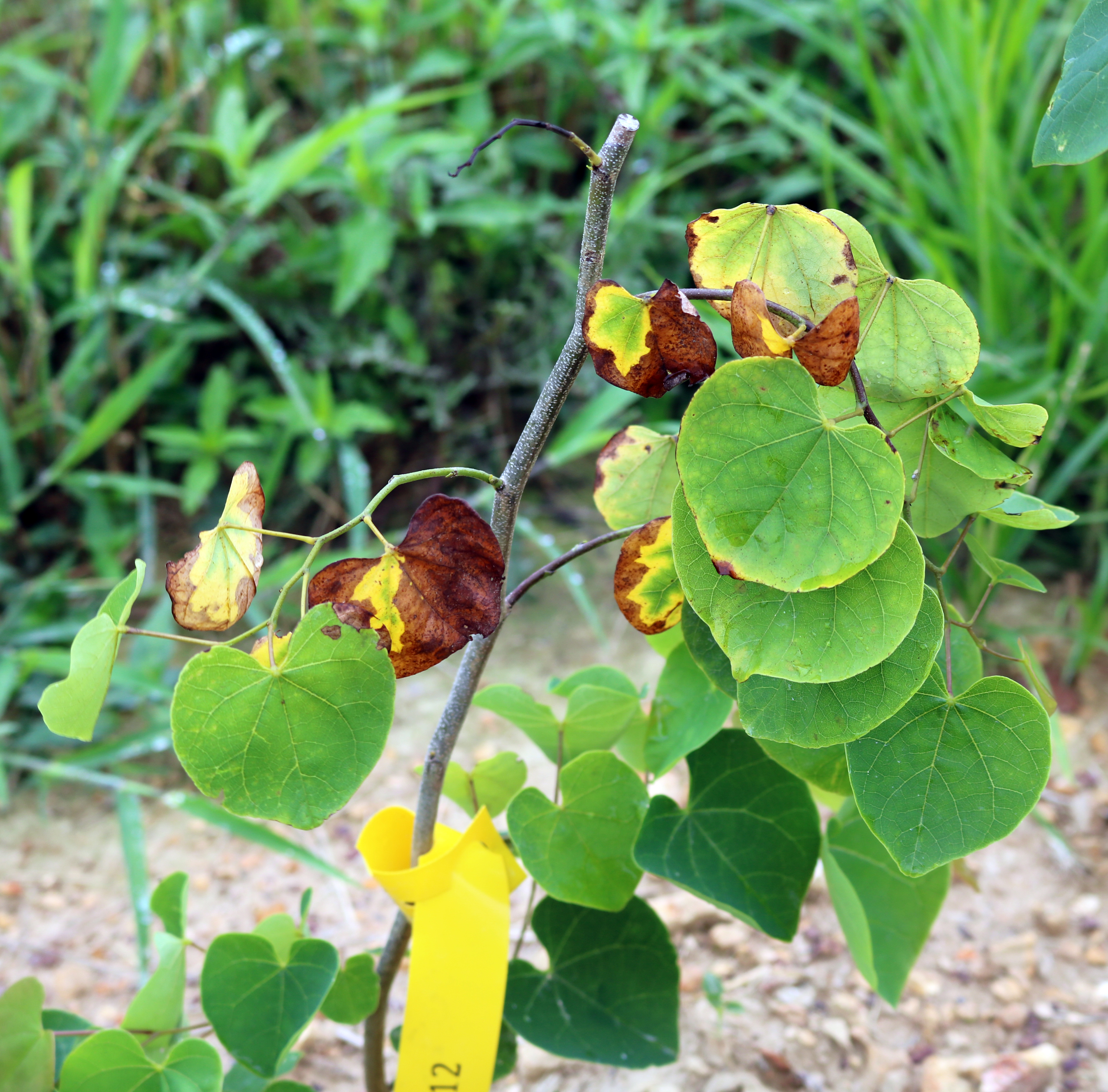
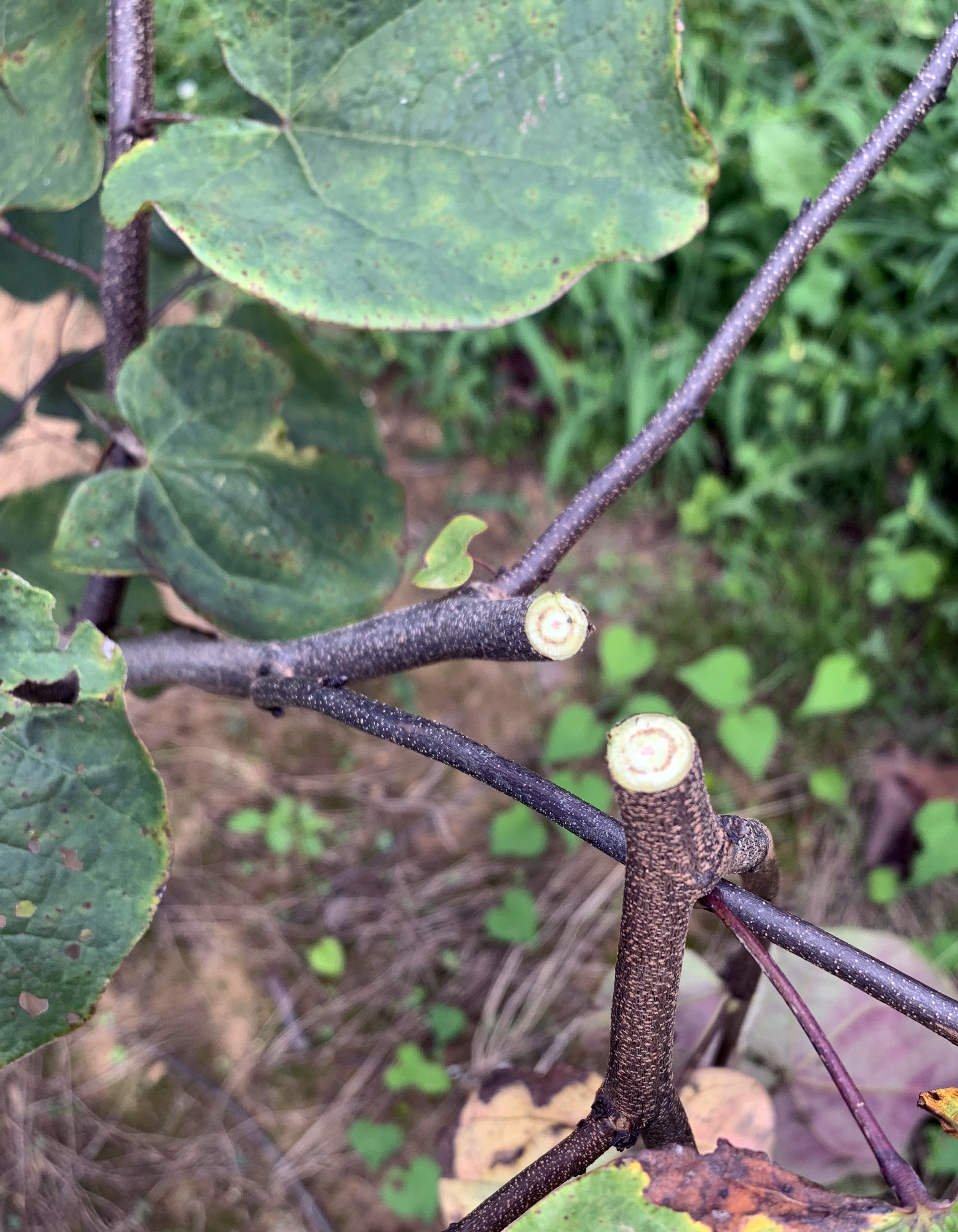
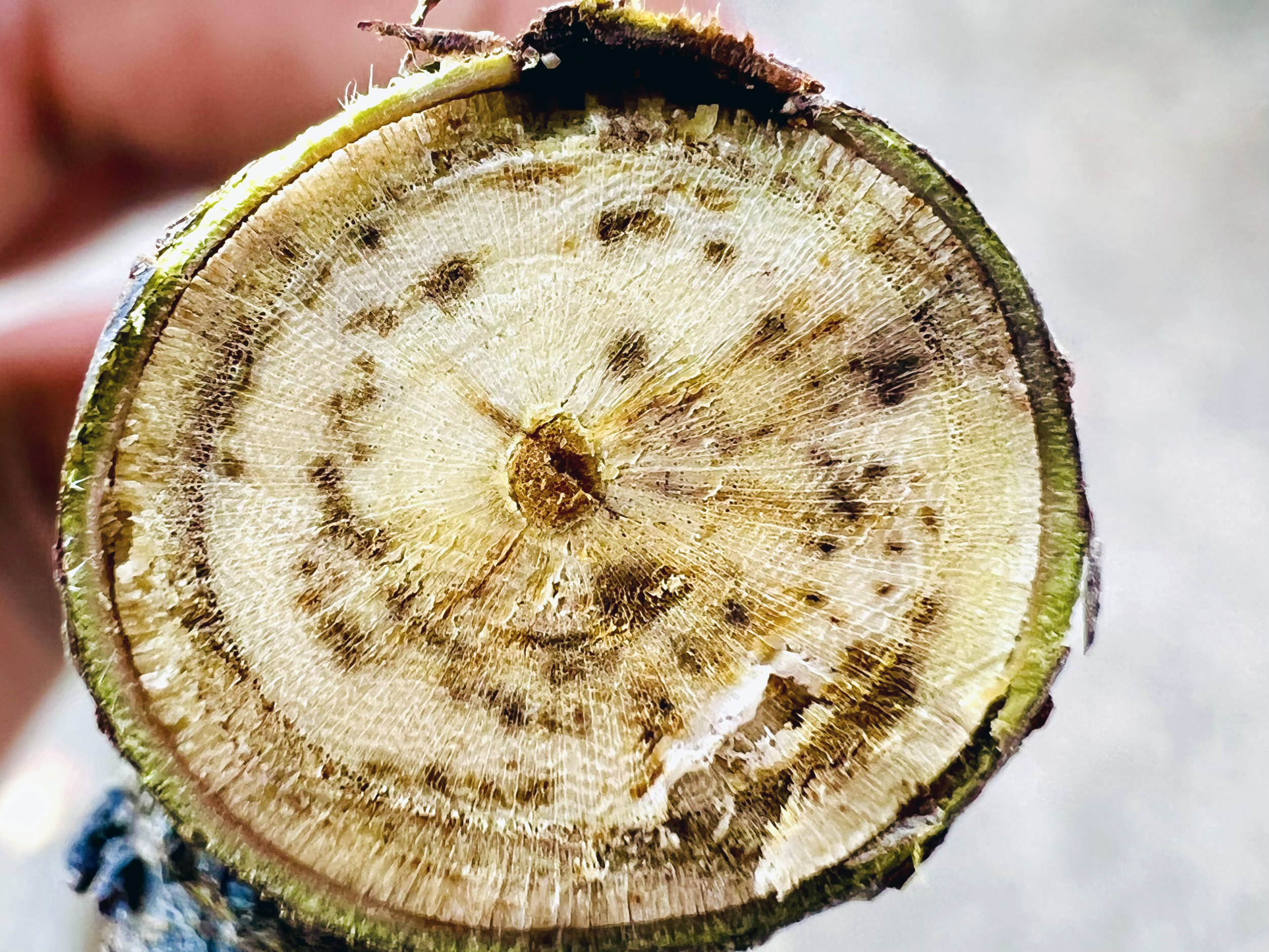
Symptoms Tree experience severe dieback, leaf scorch and stunting. These symptoms include discolored, blighted leaves, with interveinal chlorosis and marginal necrosis followed by wilting, flagging and branch death. This dieback may continue into the main stem of the tree causing severe defoliation and ultimately tree death. A brown-to-gray streaking occurs within the water-conducting tissue (xylem) of infected branches. Streaking can occur in different localized sections of the same plant. Cross-section cuts through stems show vascular discoloration in the form of circular dots, rings, or a characteristic marbled appearance in the wood. This can easily be confused with other disease issues, such as Verticillium wilt, and may have been misdiagnosed in the past.
Cultural control Specific management tactics have not been established but the following are suggested until more research is completed. Regular scouting for the problem will be essential.
- Bring new trees into a quarantine area to observe them for symptom development.
- Be careful not to plant trees too deeply. Many trees with the problem have been associated with being planted too deep. This can occur in the container nursery as well as in the landscape.
- Keep nitrogenous fertilizers to a minimum-enough only to produce normal, not succulent growth.
- Do not prune plants unnecessarily. Wounds might be places where the fungus can gain entry into the tree. If pruning must be done then do it during dry weather.
- For nursery stock, remove the entire infected plant, including root system, and burn.
- Good management of soilborne pathogens, such as Phytophthora spp., Pythium spp. or Fusarium spp., might be beneficial.
Chemical control Preventive foliar applications have suppressed symptoms when used on a 2-week schedule.
- Mural at 7 oz/100 gal water. Group 7 + 11 fungicide. 12-hr reentry.
- Postiva at 20 fl oz/100 gal water. Group 3 + 7 fungicide. 12-hr reentry.
Reference Liyanapathiranage, P., Avin, F. A., Bonkowski, J., Beckerman, J. L., Munster, M., Hadziabdic, D., Trigiano, R. N. and Baysal-Gurel, F. 2025. Vascular streak dieback: A novel threat to redbud and other woody ornamental production in the United States. Plant Disease, 109:953-970.